Explore the rulings behind voting, schools, policing, speech, religion, abortion, presidential authority, and corporate rights.
**Last-mile delivery workers nationally:** Drivers who complete intrastate deliveries of goods that originated out of state — bread, consumer products, Amazon packages — can challenge mandatory arbitration agreements as unenforceable under the FAA. Hundreds of thousands of workers at direct-store-delivery companies, logistics networks, and gig platforms who never cross state lines but handle interstate goods are covered. **Flowers Foods distributors:** Angelo Brock and the class of Flowers Foods distributors who purchased delivery routes and signed arbitration agreements can pursue FLSA misclassification and overtime claims in federal court. Companies that classified such workers as independent contractors and relied on arbitration to block collective litigation now face class-action exposure. **Gig platform exposure:** Amazon DSP network drivers, DoorDash couriers delivering restaurant goods, and Instacart shoppers who handle products with interstate supply chains can invoke Section 1 if they transport goods on the final leg of an interstate journey. The arbitration clauses those platforms use to prevent class actions are vulnerable to FAA exemption challenges. **Direct-store-delivery industry:** Companies using the Flowers Foods distributor model — requiring workers to buy routes and sign arbitration agreements — face potential class actions from thousands of workers who were effectively blocked from litigation. The industry includes large bread, snack, and beverage companies that distribute nationally through local contractors. **Limits of the ruling:** The decision doesn't resolve whether a given worker is an employee or independent contractor — that remains a separate inquiry under federal and state labor law. Companies may attempt to invoke state arbitration statutes not governed by the FAA, which this ruling doesn't address.
**Import-dependent businesses:** Companies importing goods under the now-invalidated IEEPA tariffs — covering an estimated $3.3 trillion in annual U.S. imports — get immediate relief from rates that ranged from 10 percent on most countries to 145 percent on Chinese goods. Small manufacturers like Learning Resources faced cost increases of more than $97 million annually before the injunction took effect. **Future tariff authority:** Any president seeking to impose new tariffs must rely on explicit statutory authority — Section 201, Section 232, or Section 301 — or persuade Congress to pass new legislation. Emergency declarations alone no longer unlock tariff-setting power. **Separation of powers:** The major questions doctrine now applies in trade policy. Courts won't defer to broad executive claims over core legislative prerogatives without a clear congressional statement. The workaround that allowed the executive to restructure the entire tariff schedule through emergency decree is closed. **Congressional leverage:** The ruling hands Congress decisive control over any future executive tariff agenda. Legislators who want to restore broad executive tariff authority must pass a new act. Legislators who want to block tariffs retain the power of inaction. **Non-tariff emergency powers:** Presidents retain the full scope of IEEPA for its original purposes — freezing assets, blocking transactions, and imposing sanctions on specific entities or countries. The ruling narrows IEEPA to the uses every prior administration made of it before 2025.
**Trial judges now have confirmed authority to issue qualified conferral orders**: Courts in all 50 states may restrict defendants from discussing ongoing testimony with counsel during overnight recesses, as long as the restriction targets only that testimony and leaves all other attorney-client communication open. That's the model Villarreal's trial judge used — it's now validated. **Blanket overnight bans are still unconstitutional**: Geders v. United States (1976) survives unchanged. Any order that prohibits a defendant from discussing anything with counsel during an overnight recess is still a Sixth Amendment violation, regardless of where testimony stands. **Villarreal's 60-year sentence stands**: The rejection of his Sixth Amendment challenge means his Bexar County murder conviction isn't subject to reversal on this ground. **Defense lawyers retain full access for everything but the paused testimony**: Attorneys whose clients are mid-testimony during an overnight recess can still advise on cross-examination of other witnesses, trial strategy, sentencing, and any topic not directly tied to the defendant's own paused direct examination. The restricted zone is narrow. **Split authority in the lower courts is resolved**: Courts across multiple jurisdictions had applied inconsistent tests for midtestimony overnight restrictions. The unanimous ruling ends that uncertainty: restrict by subject matter, not by the fact of communication — and never restrict all communication.
**Any nonprofit receiving a government subpoena for donor data can go straight to federal court**: The unanimous ruling establishes that Article III standing attaches the moment a government agency serves a demand for donor information. Organizations don't have to absorb the chilling effect while waiting for a state court enforcement order before they can challenge the subpoena. **New Jersey Attorney General Jennifer Davenport's investigation goes back to the Third Circuit on the merits**: The Court's order doesn't resolve whether New Jersey's subpoena violates the First Amendment. The Third Circuit must now decide whether the consumer-protection investigation of First Choice satisfies exacting scrutiny under Americans for Prosperity Foundation v. Bonta (2021). **First Choice's roughly 40 years of confidential donor relationships gain procedural protection**: The centers, operating since 1985 across multiple New Jersey locations, can now litigate in federal court to block the subpoena before any donor names reach the Attorney General's office. **The ruling protects donor privacy across the political spectrum**: The decision applies to any government demand for donor or membership information from an advocacy organization, regardless of its politics. The ACLU filed an amicus brief supporting First Choice's standing argument, and the Court's logic covers left-leaning organizations just as much as right-leaning ones. **State attorneys general conducting consumer-protection investigations of advocacy groups face higher constitutional costs up front**: The ruling means every civil investigative demand for donor data now carries an immediate risk of federal litigation, before the AG's office sees a single name.
**FCC enforcement power:** The FCC can continue issuing forfeiture orders through its in-house process. Without this ruling, the agency's primary tool for enforcing consumer protection rules — privacy, accessibility, public-interest obligations — would have required a jury trial before any fine took effect, a procedural burden that would have paralyzed enforcement. **The $184 million in carrier fines:** AT&T ($57M), Verizon ($46.9M), and T-Mobile ($80M) face reinstated forfeiture proceedings for selling customer location data without consent. The Fifth Circuit's vacatur of AT&T's fine is effectively reversed. All three carriers return to the forfeiture process they spent years trying to escape. **Carrier litigation strategy:** Telecom companies that used Jarkesy-based Seventh Amendment arguments to delay or defeat agency fines lose that tool in FCC proceedings. AT&T had used it successfully in the Fifth Circuit to avoid a $57 million penalty for two years. That defense is gone. **Broader agency implications:** The 8-1 decision limits Jarkesy's reach in the regulatory context. Agencies like the FTC and CFTC that issue civil monetary penalties subject to de novo judicial review keep their enforcement structures. Only agencies whose in-house proceedings conclusively resolve legal rights — with no meaningful court review afterward — face the Seventh Amendment jury-trial requirement. **Consumer privacy protection:** FCC rules requiring carriers to protect customer location data and call records gain practical force. Carriers who share customer data with unauthorized third parties now know the $50–$80 million fine range is collectable through the existing administrative process.
**Terry Pitchford's death sentence is vacated**: Pitchford, who has been on Mississippi's death row since his 2006 conviction, will receive further proceedings. The state can retry him, but any retrial must give defense counsel a full opportunity to argue pretext at step three of the Batson framework before the trial court rules. **Doug Evans has now had two separate convictions reversed by the Supreme Court for racially discriminatory jury selection**: Evans, whose office struck 41 of 42 available Black prospective jurors across the six Flowers trials, faces a documented pattern that the majority cited as relevant context in Pitchford. Two Supreme Court reversals arising from the same prosecutor's conduct is rare. **Capital defendants who were cut off during Batson step-three have a renewed path to federal habeas relief**: Defense attorneys who can show the trial court prevented counsel from completing the pretext argument — before the court ruled on the Batson challenge — may now satisfy AEDPA's demanding "unreasonable application" standard under 28 U.S.C. § 2254(d)(1). **The Fifth Circuit can't simply defer to state waiver findings that cut off constitutional rights mid-exercise**: The Fifth Circuit reinstated the death sentence by deferring to the Mississippi Supreme Court's waiver ruling. That approach is reversed. Fifth Circuit panels must now scrutinize whether a state waiver finding forecloses a right the defendant had no meaningful chance to exercise. **Dozens of Mississippi capital prosecutions involving similar patterns may qualify for renewed federal habeas review**: The Equal Justice Initiative identified Pitchford's case as representative of Mississippi capital prosecutions with documented patterns of Black juror exclusion by the same prosecutor's office. The ruling opens a renewed avenue for review in those cases.
**Ellingburg's restitution order goes back to the district court**: His December 1995 bank robbery predated the MVRA by four months, so the statute's mandatory rules can't apply. The case returns to the district court to determine what restitution, if any, applies under pre-MVRA discretionary standards — where a judge can weigh his financial circumstances. **Prosecutors must now separate pre- and post-MVRA conduct**: Federal fraud, theft, and conspiracy prosecutions involving conduct that spans the MVRA's April 24, 1996 effective date must identify which specific losses are attributable to post-enactment acts. Losses tied to pre-1996 conduct can't be subject to mandatory restitution under the statute. **Every federal circuit that used the "civil remedy" classification must recalibrate**: Prosecutors face new challenges to restitution orders in any case where the charged conduct started before mid-1996. Defendants serving sentences for multi-year schemes that began before April 1996 can now challenge MVRA-based restitution through habeas or post-conviction proceedings. **Defense lawyers have a new post-conviction argument**: For defendants whose restitution orders stretch back to pre-1996 conduct, the Ellingburg ruling is a direct basis to challenge those orders — the "civil remedy" shield lower courts relied on is gone. **The MVRA itself is untouched**: Mandatory restitution still applies to qualifying federal crimes committed after April 24, 1996, which covers the vast majority of active federal cases. The ruling only bars retroactive application to crimes committed before the statute took effect.
**If the government wins — effects-based venue upheld**: Federal prosecutors in national-security and fraud cases could charge defendants in any district where a statute's intended effects were contemplated. The DOJ could pick from multiple potential jurisdictions — including those with different jury demographics and legal cultures — for any case involving digital conduct that crossed state lines. **If Abouammo wins — conduct-only venue required**: Prosecutors must charge defendants in the district where overt conduct actually occurred. DOJ would need to restructure venue decisions in foreign-agent, espionage, and wire-fraud cases, potentially forcing prosecutions into districts where investigators and cooperating witnesses aren't located. **National-security cases face the most pressure**: Foreign-agent and espionage prosecutions routinely span multiple cities and countries. A narrower venue rule could force the Justice Department's National Security Division to restructure how it brings cases against individuals whose alleged conduct crossed multiple jurisdictions — a significant operational constraint. **Fraud prosecutions across the federal system are affected**: Dozens of federal fraud statutes define offenses in part by their effects on remote victims. A ruling limiting venue to conduct districts could prevent prosecutors from charging in districts where victims actually suffered losses — affecting bank fraud, wire fraud, and computer-fraud cases nationwide. **Al-Zabarah is beyond reach regardless**: Whatever the Court decides, the co-conspirator who allegedly accessed approximately 6,000 Twitter accounts across six months in 2015 faces no extradition prospect from Saudi Arabia. The ruling has no practical effect on cases where defendants are outside U.S. jurisdiction. **No opinion yet**: The Court heard argument on March 30, 2026. This record should be updated when the opinion issues, expected by end of June 2026.
**Colorado's conversion therapy ban must be relitigated under strict scrutiny**: SB 19-130 goes back to lower courts to be tested under the demanding standard the majority applied. All 22 states with similar bans — plus more than 100 municipalities — now face that same harder constitutional test for any law that permits gender-affirming therapy while prohibiting change-oriented talk therapy. **Licensed therapists in Colorado can practice conversion therapy on minors without immediate license-revocation risk**: The strict-scrutiny ruling creates breathing room while litigation continues. The American Psychological Association, the American Psychiatric Association, and the American Academy of Pediatrics have each concluded conversion therapy causes depression, anxiety, and elevated suicide risk in minors — but those findings must now be weighed through strict scrutiny rather than treated as dispositive. **State licensing boards face new First Amendment exposure for viewpoint-specific rules**: States that regulate what therapists, doctors, or lawyers say to clients through viewpoint-based scope-of-practice rules must reassess those rules. Viewpoint-neutral regulations — informed consent requirements, disclosure mandates, rules that apply equally to all therapeutic messages — remain on more solid footing. Rules that favor one therapeutic message over another don't. **Faith-based counseling practices gain immediate protection**: Therapists with religious views about sexuality can now provide talk therapy consistent with those views in states that had conversion therapy bans, without immediate threat of license revocation. The ruling may also strengthen related challenges where licensing boards have disciplined professionals for speech that conflicts with prevailing professional consensus. **The ruling is narrower than it looks**: Justice Elena Kagan's concurrence preserved the question of whether a viewpoint-neutral law targeting all discussion of sexual-orientation change — not just asymmetric affirmation-only laws like Colorado's — could survive. Colorado can redraft SB 19-130 on remand. The case isn't over.
**Louisiana loses its second majority-Black district**: SB8's 6th Congressional District — created after years of litigation demanding a second Black opportunity seat — is invalidated. The state legislature passed a new map in May 2026 dissolving the 6th District before the 2026 elections. **Approximately 537,000 Black voting-age residents lose their majority-Black district anchor**: The Black communities that the 6th District connected across Baton Rouge, Shreveport, and the corridor between them are dispersed back into majority-white districts where their preferred candidates can't win. **Section 2 enforcement gets harder in every Southern state after 2030**: The Callais majority requires courts to independently verify that Section 2 actually compels a specific majority-minority district before treating VRA compliance as a compelling government interest. That inquiry is now the central battleground in post-2030 redistricting for every Southern state with significant Black or Hispanic populations. **Robinson plaintiffs and parallel litigants in Alabama, Georgia, and South Carolina face a tighter standard**: They can't just show that a majority-minority district is geographically possible. They have to show the VRA legally required one — a standard the Thomas-Gorsuch concurrence suggests the Court may tighten further in future cases. **Partisan gerrymandering gains new cover in states where race and party overlap**: After Rucho v. Common Cause (2019) made partisan gerrymandering unreviewable in federal court, Callais's requirement that Section 2 plaintiffs control for partisan preference makes racial vote dilution nearly impossible to prove in Southern states where Black voters register Democratic at rates exceeding 90 percent.
**Candidates can challenge ballot rules before an election is decided**: Federal candidates nationwide can now bring suit in federal court to challenge ballot-counting procedures in their own race without waiting for an outcome that proves harm. The Seventh Circuit's outcome-proof requirement is gone. **Illinois's 14-day window stays in effect while courts decide the merits**: The Court didn't strike down 10 ILCS 5/19-8 or bar Illinois from counting timely-postmarked ballots that arrive after Election Day. That question goes back to the Seventh Circuit on remand and will affect an estimated 100,000-plus Illinois mail voters per election cycle. **Bost's outcome-proof standard is eliminated nationwide**: Any federal candidate in any of the 94 judicial districts can now sue without showing they'd likely lose under the disputed rule. They just need to be running under it. **Election administrators in 16 states plus D.C. face earlier legal pressure**: States that allow mail ballots to arrive after Election Day must now expect candidate standing challenges well before polls close, potentially forcing pre-election preliminary injunction proceedings that compress the ballot-printing and mailing calendar. **The merits question on the federal Election Day statute goes to the Seventh Circuit**: The court must decide whether Illinois's 14-day receipt window conflicts with Congress's statutory Election Day. A ruling against Illinois would affect every state running a postmark-and-receive model — not just Illinois.
**Every police department in the country now operates under one rule**: Officers need an "objectively reasonable basis" to believe a resident is seriously injured or imminently threatened before entering a home without a warrant. That standard is higher than reasonable suspicion but lower than probable cause. The Brigham City v. Stuart (2006) test is now settled, nationwide. **State community-caretaker doctrines tied to the Terry standard are gone**: Courts in states that had borrowed Terry v. Ohio's reasonable-suspicion language for home-entry decisions — including Montana's prior framework — must recalibrate jury instructions, training materials, and suppression standards to align with Brigham City. **Evidence obtained under the objectively reasonable basis test can't be suppressed**: A warrantless entry that satisfies the standard produces admissible evidence — even, as in Case's prosecution, when that evidence forms the basis for a felony charge against the person who was supposedly being helped. **Caniglia confusion is resolved**: The 2021 ruling had prompted conflicting interpretations in roughly a dozen state and federal courts on whether all non-warrant home entries now required near-probable-cause justification. Case closes that circuit split clearly in favor of the broader Brigham City standard. **What officers can do inside stays limited**: Justices Sotomayor and Gorsuch each wrote separately to underscore that an emergency entry authorizes only actions necessary to address the specific threat. It's not a license to search the rest of the house.
**If Chatrie wins — geofence warrants require individualized suspicion**: Courts would no longer let police compel Google, Apple, or any location-data holder to identify who was in a geographic area based solely on proximity. Prosecutors with active cases built on geofence evidence would face suppression motions, and the DOJ's ability to use the technique in counterterrorism and organized-crime investigations would narrow sharply. **If the government wins — geofence searches continue as practiced**: Law enforcement agencies nationwide could keep sweeping in location data for everyone near a crime scene without suspicion pointed at any individual. The DOJ could expand use beyond street crime into national-security and immigration enforcement, with no warrant requirement beyond the area-and-time parameters already in place. **Nineteen people got scrutinized; one was charged**: Google's Sensorvault covers hundreds of millions of user accounts. In the Chatrie warrant alone, 18 people who had nothing to do with the robbery had their location histories reviewed by law enforcement. A ruling for the government leaves every Google Location History user potentially exposed whenever they happen to be near a crime scene. **January 6 prosecutions hang on the exception, not the right**: The Justice Department used geofence warrants covering the Capitol on January 6, 2021. A ruling that finds a Fourth Amendment violation but applies the good-faith exception broadly could preserve those convictions while limiting the tool going forward — the worst of both worlds for privacy advocates. **Tech platforms face a binary**: Google, Apple, and other companies holding location data are watching closely. A win for Chatrie could require platform-level changes to how Location History is stored and what can legally be produced in response to law enforcement demands. **No opinion yet**: The Court heard argument on April 27, 2026. This record should be updated when the opinion issues, expected by end of June 2026.
**Cruise lines face trial on damages:** Royal Caribbean, Carnival, Norwegian, and other cruise operators that docked at the Port of Havana after Title III activated in May 2019 must defend against trafficking liability in court. Title III authorizes treble damages and attorneys' fees in some circumstances, meaning financial exposure for years of Havana port calls could reach into the hundreds of millions of dollars across pending cases. **Hundreds of pending Title III cases:** Title III plaintiffs who held property interests in Cuban facilities used by foreign businesses now face a lower proof standard. They don't need to trace a defendant's specific commercial activity to their precise ownership claim — using the physical property is enough. This affects dozens of pending cases against hotel chains, telecom operators, and other companies with Cuba operations. **Cuban-American claimants:** Families that lost docks, hotels, factories, and other property to the Castro government in the 1960s gain a more viable path to recovery in U.S. courts. The class of eligible claimants under Title III includes U.S. nationals who were Cuban citizens at the time of expropriation and later naturalized. **Foreign companies with Cuba exposure:** Non-U.S. companies — including European hotel chains like Melia and Iberostar that operated Cuba properties — face broader liability under the expansive trafficking definition. Canada, the EU, and Mexico previously threatened trade countermeasures in response to Title III enforcement, and renewed litigation could revive those diplomatic pressures. **Congressional and executive response:** The ruling increases pressure on Congress or the executive branch to modify or re-suspend Title III. Every prior administration that suspended Title III did so partly to avoid this kind of foreign policy friction. The Court's decision takes that context into account but leaves the policy choice to the political branches.
**Alabama ran its 2026 elections under the map a federal court twice found discriminatory**: The Supreme Court's May 11, 2026, vacatur let Alabama proceed under the 2023 congressional map for the 2026 primary calendar, before the district court could enforce its own remedial order. **Shomari Figures's second-district seat is displaced**: The remedial map that produced Representative Figures's 2024 election is gone. Under Alabama's 2023 map, the 2nd Congressional District reverts to a configuration without a Black-majority population sufficient to elect Black voters' preferred candidate. **The Fourteenth Amendment intentional-discrimination finding is unresolved**: The district court made an independent constitutional finding — separate from Section 2 — that Alabama deliberately diluted Black votes. The Supreme Court's vacatur order swept it aside without addressing it, leaving open whether that finding gives plaintiffs an independent basis for injunctive relief on remand. **Section 2 plaintiffs in Alabama must now satisfy the Callais partisan-control standard**: On remand, plaintiffs have to show that observed racial bloc voting can't be explained by partisan preference alone. In Alabama, Black voters register Democratic at rates exceeding 90 percent, which makes that showing structurally difficult. **The redistricting cycle consumed itself without a durable remedy**: Alabama drew a discriminatory map in 2021, passed a noncompliant replacement in 2023, got that map thrown out, and now returns to the same fight under a tighter legal framework. Six years of litigation haven't produced a map that's actually been enforced through a full election cycle.
**GEO Group goes to trial:** GEO can't use a Yearsley pretrial denial to halt the Aurora case before a jury hears it. The class of detainees who performed unpaid sanitation work or earned $1 per day under the Voluntary Work Program — numbering in the thousands at the single Colorado facility — will have their forced-labor claims adjudicated on the merits. **Federal contractor litigation exposure:** Private companies holding federal contracts in immigration detention, defense, healthcare, and logistics can't use Yearsley denials to trigger immediate appellate review and pause litigation. Plaintiffs suing contractors for labor violations, civil rights abuses, or other torts can proceed to discovery and trial without a pretrial Yearsley exit route. **GEO Group's business model under scrutiny:** GEO reported $2.43 billion in revenue in 2024, with ICE contracts constituting a major share. A merits loss on the forced-labor claims would expose the company to TVPA civil liability — potentially including damages for thousands of detainees across facilities using similar work policies. **Detainee labor wages:** The $1-per-day rate in ICE detention Voluntary Work Programs has stayed essentially unchanged since the 1950s. The case now creates a legal path for detainees to challenge that rate as forced labor under federal statute, rather than a permissible contractual arrangement between a private company and the government. **Scope beyond immigration detention:** Defense contractors, private prison operators like CoreCivic, and federal healthcare contractors all face a narrower Yearsley procedural shield. The ruling affects every industry where federal contractors have used derivative sovereign immunity arguments to escape pretrial dismissal.
The ruling gives FDA firm legal ground to reject flavored vaping products based on youth-uptake risk without the decision being second-guessed by courts as procedurally improper. - Flavored e-cigarette manufacturers whose marketing applications have been denied face a much harder path to court review after this ruling - FDA can continue to require applicants to demonstrate that adult-smoker benefits outweigh youth-vaping risks — a high bar for sweet and fruit-flavored products that appeal primarily to young people - Public-health and anti-tobacco organizations praised the ruling as protecting FDA's authority to limit youth access to addictive nicotine products - Vaping retailers and manufacturers who built businesses around flavored products face a more restricted market - The decision does not affect tobacco-flavored or menthol e-cigarettes, which have separate regulatory treatment - Justice Sotomayor's concurrence emphasized the youth vaping epidemic as context for deferring to FDA's public-health judgment
- Texas death row inmates and other convicted persons who have been denied DNA testing under Article 64 now have a confirmed pathway to challenge those denials in federal court under §1983 - The ruling forecloses prosecutorial gamesmanship by which prosecutors assert hypothetical future denials to strip plaintiffs of standing before merits arguments can even be heard - Lower courts must follow Reed v. Goertz and cannot require plaintiffs challenging state DNA testing procedures to prove with certainty that a favorable ruling will produce the actual DNA testing - The case returns to the Fifth Circuit for a merits ruling on whether Texas's Article 64 restrictions violate due process — if Gutierrez prevails on the merits, Texas may have to provide DNA testing - Advocates for wrongful conviction reform and post-conviction DNA access may use this ruling to challenge similar restrictive testing statutes in other states - Ruben Gutierrez's execution remains on hold pending resolution of the federal litigation
The ruling allows Tennessee's SB1 to remain in effect and significantly raises the constitutional bar for challenging similar laws in other states. - Tennessee's ban on puberty blockers and hormone therapy for gender-dysphoria care in minors remains enforceable - More than 20 other states enacted similar restrictions; this decision makes Equal Protection challenges to those laws far harder by foreclosing the heightened-scrutiny argument - Transgender minors in states with bans and their families face limited in-state medical options; many must travel to states without restrictions, delay care, or go without treatment - Major medical associations including the American Academy of Pediatrics and the American Medical Association support gender-affirming care for some minors with gender dysphoria; the Court's ruling does not endorse or reject those clinical positions - Healthcare providers in Tennessee and similarly situated states can no longer prescribe these treatments for transition-related purposes in minors without legal risk - The decision leaves open challenges based on other constitutional theories — including substantive due process and parental rights — and does not resolve Title IX claims
- States can no longer condition unemployment tax exemptions — or similar government benefits — on whether a religious organization's programs look sufficiently religious to government officials - Catholic Charities operations in all 50 states and other religious nonprofits providing social services may argue they are exempt from state unemployment compensation taxes under similar exemption statutes - Government agencies that administer unemployment insurance, tax exemptions, or social service grants may no longer apply "primarily religious" tests that effectively categorize some religious activities as secular - Lower courts adjudicating Free Exercise or Establishment Clause challenges to benefit eligibility standards must now apply *Larson v. Valente*'s denominational preference analysis - Religious organizations that previously lost exemption claims because their charitable work was deemed "too secular" may have grounds to seek reconsideration under this ruling
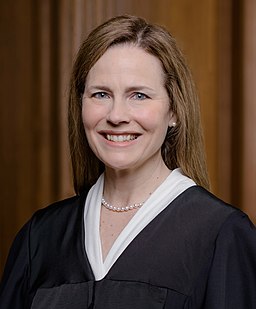
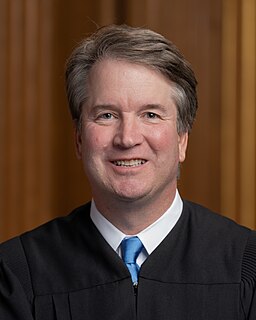
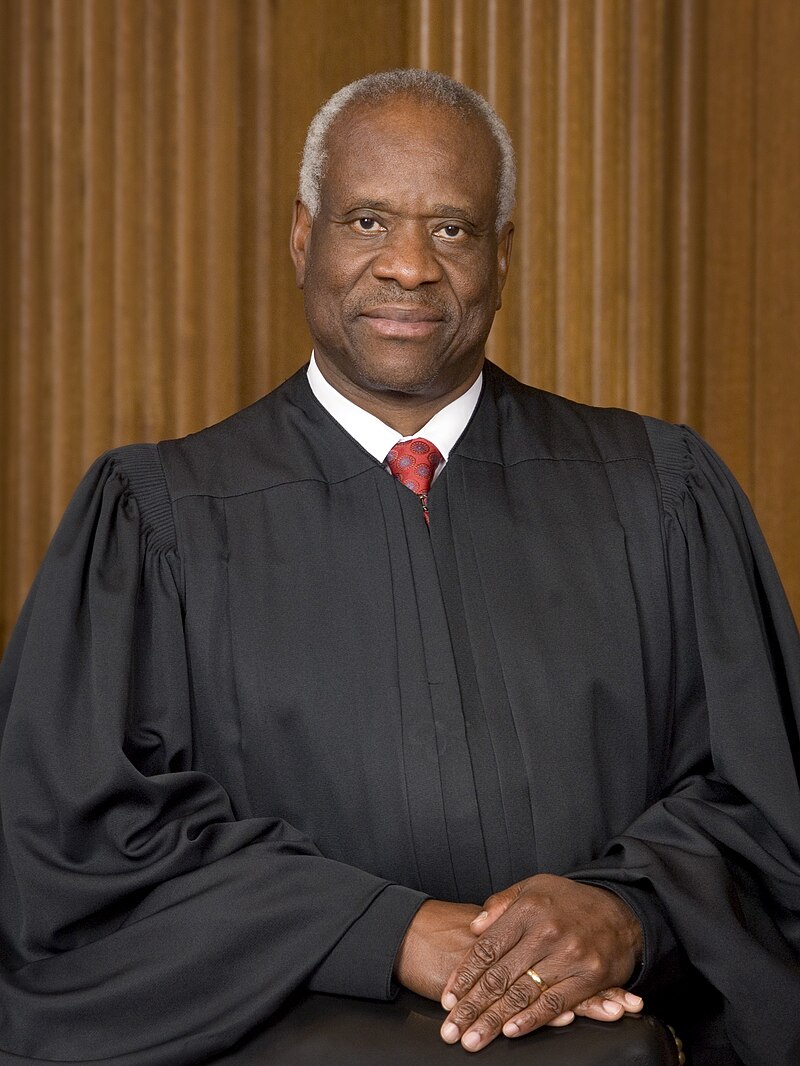
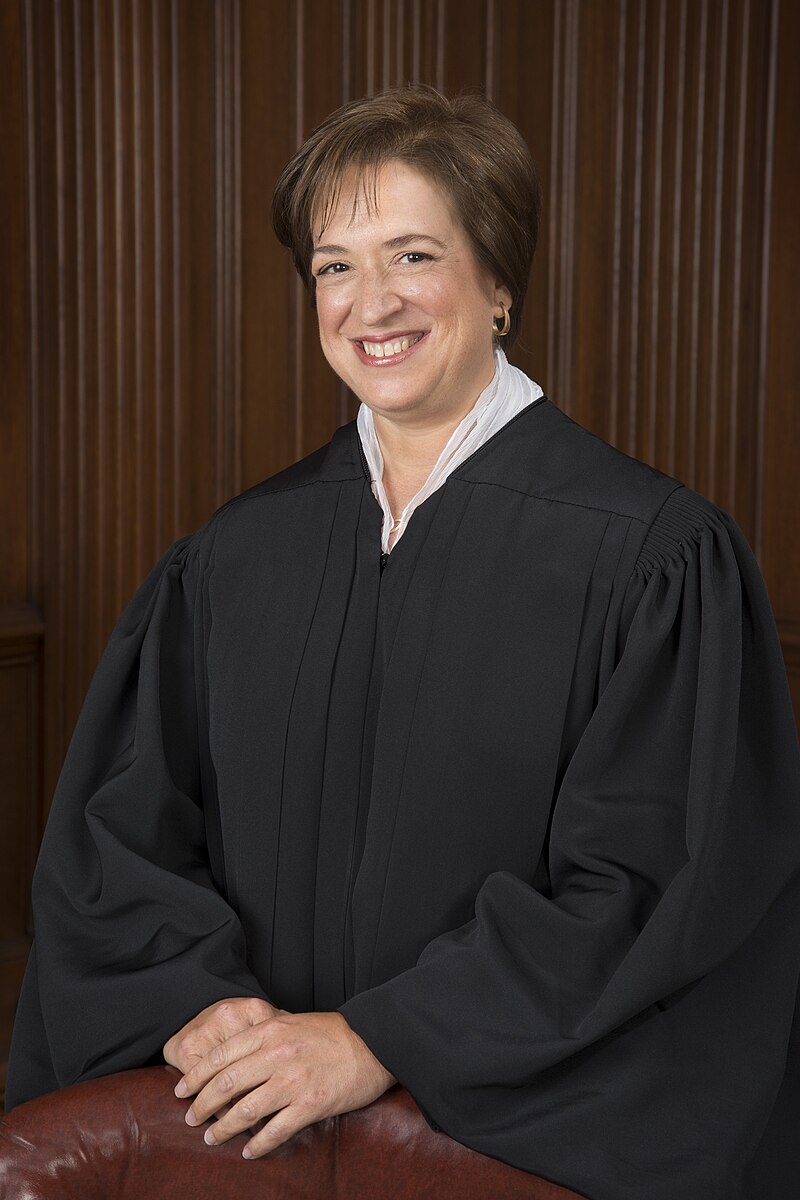
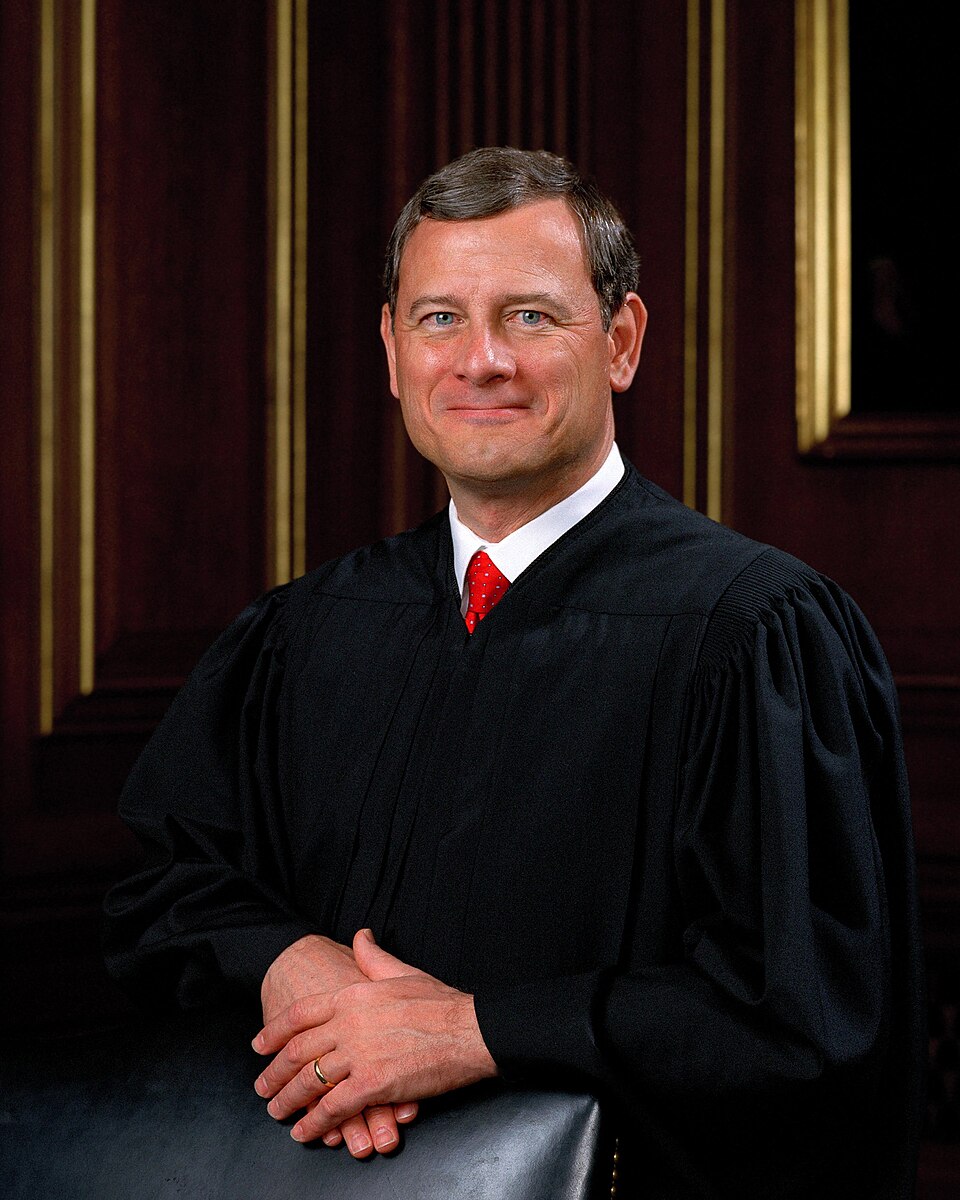
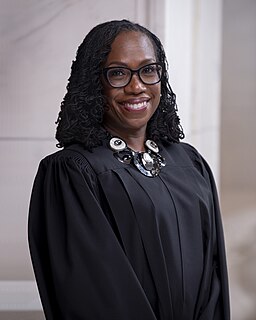
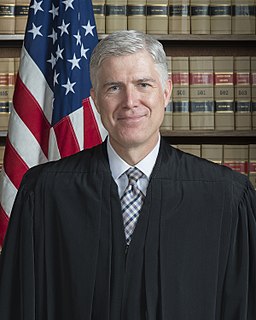
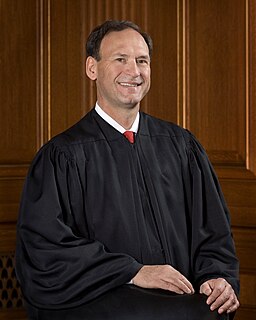
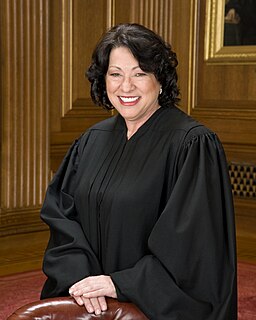
The Court is led by one Chief Justice and eight Associate Justices. These are the justices currently hearing and deciding cases.
Follow the path from a legal dispute to oral argument, opinions, dissents, and the final rule courts use afterward.