Summary
The Court struck down Congress's RFRA as an overreach of its Section 5 enforcement power under the Fourteenth Amendment.
Background & Context
St. Peter Catholic Church in Boerne, Texas — a small city northwest of San Antonio — needed more space. The congregation had grown. Archbishop Patrick Flores wanted to expand the building. But Boerne had enacted a historic preservation ordinance, and city officials denied the permit. The church sat in a historic district. Under city rules, any exterior changes to buildings in the district required approval, and the expansion plans conflicted with preservation guidelines. Archbishop Flores sued, invoking a federal law Congress had passed in 1993: the Religious Freedom Restoration Act, known as RFRA. Congress had passed RFRA specifically to overrule a 1990 Supreme Court decision — Employment Division v. Smith — in which the Court held that neutral, generally applicable laws don't have to accommodate religious practices even when they burden them. RFRA required governments to meet a high bar before enforcing any law that substantially burdened religious practice: a "compelling government interest" served by the "least restrictive means." The constitutional question was whether Congress had the power to pass RFRA in the first place. Congress said it was enforcing the Fourteenth Amendment's guarantee of religious liberty. The Supreme Court disagreed, 6-3. Writing for the majority, Justice Kennedy said Congress had crossed the line between enforcing constitutional rights and redefining them — and that line belongs to the Court, not Congress. The ruling had a practical effect on Archbishop Flores's case: he lost. The city's permit denial stood. But its broader legal effect was far more significant: it reset the constitutional relationship between Congress and the courts on the question of who gets to define what constitutional rights mean.
The Question Before the Court
Did Congress have authority under Section 5 of the Fourteenth Amendment to pass the Religious Freedom Restoration Act — which imposed a higher standard of protection for religious freedom than the Supreme Court had itself required — and apply it to state and local governments?
Petitioner
City of Boerne
Party asking the Court to review or reverse
Argued
- Congress had power under Section 5 to legislate broader protection for religious freedom
- Congress had documented a pattern of state and local laws burdening religious practice
- Congress can interpret constitutional rights more broadly than the Court has
- RFRA restores the pre-Smith standard that courts had applied for decades
Respondent
Flores
Party defending the judgment below
Argued
- Congress's Section 5 power is remedial, not substantive
- RFRA's reach vastly exceeded any documented pattern of constitutional violations
- Allowing Congress to expand constitutional rights by statute would upset the judicial role
- Local governments need certainty about what laws apply to them
The Holding
The Supreme Court ruled 6-3 to strike down RFRA as applied to state and local governments. Justice Kennedy wrote the majority opinion, establishing what became known as the "congruence and proportionality" test for Section 5 legislation: Congress can enact laws to remedy or prevent constitutional violations, but the remedy must be congruent and proportional to the constitutional problem Congress identified and documented. RFRA failed that test. Its sweeping coverage—applying to every law in every jurisdiction that substantially burdened religious practice—vastly exceeded the historical record of First Amendment violations Congress had compiled. More fundamentally, the majority held that Congress had tried to define the substance of a constitutional right, not merely remedy violations of it. That is the Court's role, not Congress's. The ruling left RFRA intact as applied to the federal government (which it has continued to govern), but state and local governments were freed from its requirements. Several states subsequently passed their own state-level RFRAs. Justice Thomas joined the majority.
The Court
How the justices lined up in this decision.
1-0
Vote
Joined decision
1 justice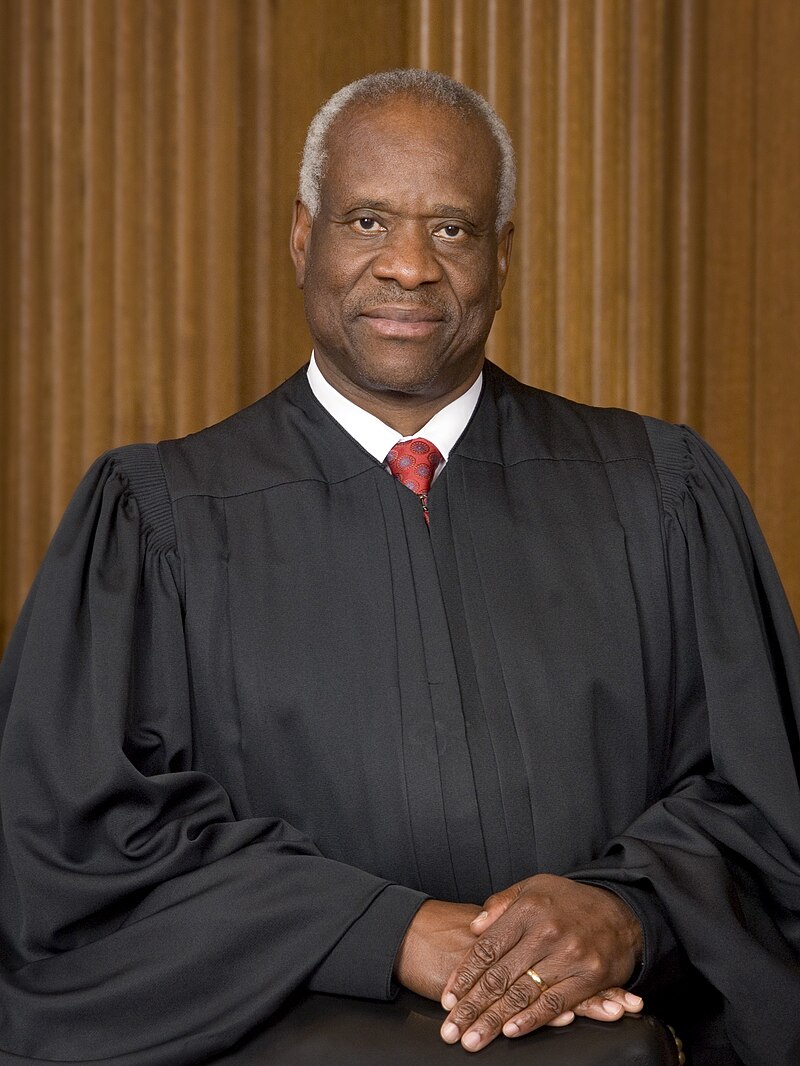
Justice Thomas
Majority
What this means for you
Limits Congress's ability to expand constitutional rights by statute under the Fourteenth Amendment; RFRA continues to apply to federal actions but not to states (prompting state-level RFRAs and other federal responses like RLUIPA), which affects how religious‑liberty claims are litigated against state and local governments.
Key Takeaways
- Congress can pass laws to enforce constitutional rights, but only the Supreme Court can define what those rights actually mean — Congress can't use Section 5 of the Fourteenth Amendment to expand constitutional rights beyond what the Court has interpreted them to require
- The "congruence and proportionality" test this case created is now a major limit on congressional power: any law Congress passes under Section 5 must match the size and scope of the documented constitutional problem it's trying to remedy
- RFRA still applies to the federal government — federal agencies must still meet the compelling-interest test when they burden religious practice. It just doesn't apply to state and local governments after this ruling
- Many states responded by passing their own state Religious Freedom Restoration Acts — so the protection varies significantly depending on where you live
- The case sits at the center of ongoing debates about religious exemptions from generally applicable laws — from vaccine mandates to anti-discrimination requirements to prison regulations
Decision
1-0 decision
- Citation
- 521 U.S. 507 (1997)
- Vote
- 1-0
- Opinion author
- Justice Anthony M. Kennedy