541 U.S. 36 (2004) · 2004
Crawford v. Washington
criminal procedureConfrontation Clauseevidencetrial rightsSixth AmendmentLandmark
Summary
Crawford v. Washington held that testimonial statements cannot be used against a criminal defendant unless the witness is unavailable and the defendant had a prior opportunity to cross-examine. The decision replaced a reliability-focused test with a confrontation-focused rule for testimonial evidence.
Background & Context
This case should be explained as a trial-rights case. The power question is whether the government can use a person’s words against a defendant without producing that person for questioning in court.
The Question Before the Court
Does the Confrontation Clause allow prosecutors to use testimonial out-of-court statements when the defendant had no chance to cross-examine the speaker?
Petitioner
Crawford
Party asking the Court to review or reverse
Argued
- The statement was testimonial and uncross-examined.
Respondent
Washington
Party defending the judgment below
Argued
- The statement was reliable enough to admit.
The Holding
The Confrontation Clause bars admission of testimonial statements by a witness who does not appear at trial unless the witness is unavailable and the defendant had a prior opportunity for cross-examination.
The Court
How the justices lined up in this decision.
1-0
Vote
Joined decision
9 justicesAK
Anthony Kennedy
Majority
AS
Antonin Scalia
Majority
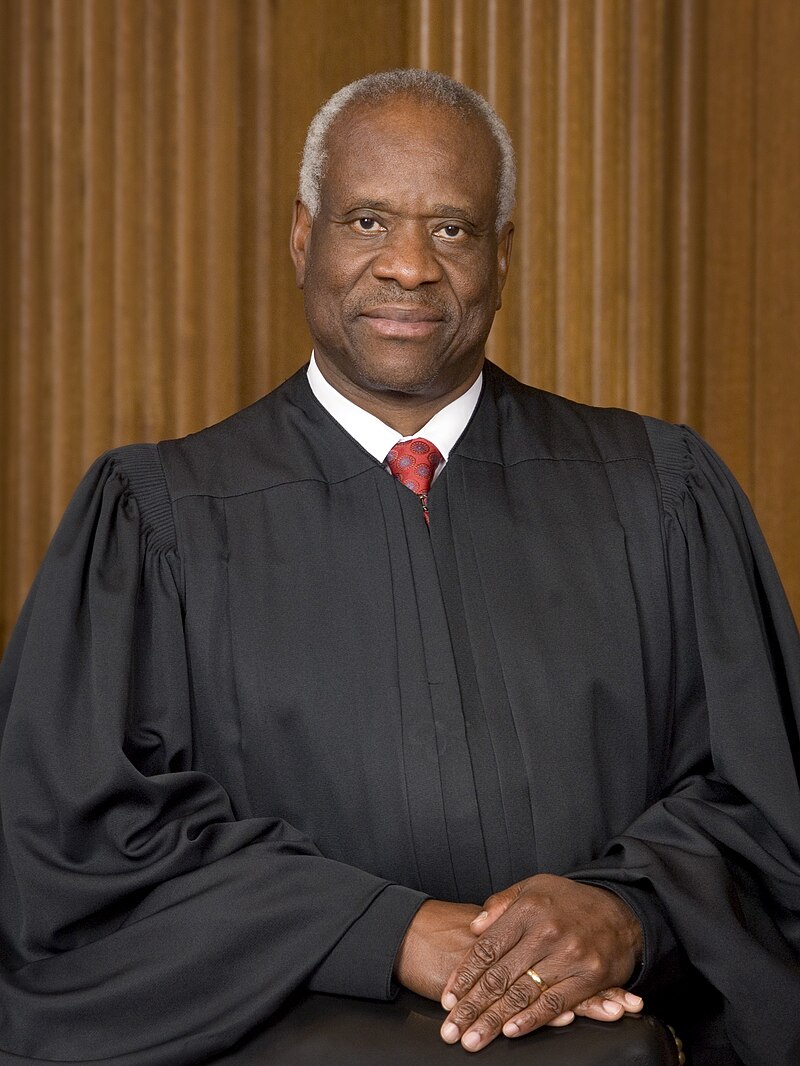
Justice Thomas
Majority
CT
Clarence Thomas
Majority
DS
David Souter
Majority
JP
John Stevens
Majority
RB
Ruth Ginsburg
Majority
SB
Stephen Breyer
Majority
WR
William Rehnquist
Majority
Concurred
1 justiceSD
Sandra O’Connor
Concurred
What this means for you
Crawford strengthened the right to face and question witnesses. It matters when the government tries to use interviews, affidavits, forensic certificates, or other testimonial statements without producing the witness. The ruling also forced courts to rethink evidence in domestic-violence, child-abuse, forensic, and emergency-call cases under later decisions defining testimonial statements.
Key Takeaways
- The Confrontation Clause protects the right to cross-examine testimonial witnesses.
- Reliability alone is not enough for testimonial hearsay.
- A testimonial statement generally requires witness unavailability and prior cross-examination.
- The decision reshaped criminal evidence rules and later cases had to define testimonial evidence.
- The ruling strengthened defendants’ ability to challenge prosecution evidence.
Decision
1-0 majority opinion
- Citation
- 541 U.S. 36 (2004)
- Vote
- 1-0
- Decision type
- Majority opinion
- Argued
- November 10, 2003
- Decided
- March 8, 2004
- Term
- 2003
- Opinion author
- Antonin Scalia
Justice Scalia wrote the Court’s opinion, joined by Chief Justice Rehnquist and Justices Stevens, Kennedy, Souter, Thomas, Ginsburg, and Breyer. Chief Justice Rehnquist concurred in the judgment, joined by Justice O’Connor.