Summary
The Court upheld a law school's limited, individualized use of race in admissions to achieve student-body diversity.
Background & Context
Barbara Grutter was a white Michigan resident who applied to the University of Michigan Law School in 1996. She had a 3.8 undergraduate GPA and an LSAT score of 161 — above average. She was rejected twice. She sued, arguing that the law school's admissions process discriminated against her because of her race in violation of the Equal Protection Clause of the Fourteenth Amendment and Title VI of the Civil Rights Act. The University of Michigan Law School used a "holistic" admissions process designed to produce a "critical mass" of underrepresented minority students — primarily Black, Hispanic, and Native American applicants. Admissions officers were instructed to consider race as one factor among many, including undergraduate GPA, LSAT scores, work experience, personal statements, letters of recommendation, and geographic background. The school did not use a point system or set quotas. Dean Jeffrey Lehman acknowledged that race was a "plus factor" for minority applicants and that the school sought to ensure meaningful representation. The case was decided alongside Gratz v. Bollinger, which challenged the University of Michigan's undergraduate admissions process. The undergraduate process used a point system that awarded 20 points automatically to members of underrepresented minority groups — and that system was struck down 6-3 as mechanically applying race in a way that was not sufficiently individualized. Grutter, by contrast, focused on the law school's more flexible, individualized approach.
The Question Before the Court
Does the Equal Protection Clause allow a public law school to use race as one factor in admissions to achieve a "critical mass" of underrepresented minority students?
Petitioner
Grutter
Party asking the Court to review or reverse
Argued
- The Constitution is colorblind
- Critical mass is an undisguised quota
- Race-neutral alternatives were available and not seriously tried
Respondent
Bollinger
Party defending the judgment below
Argued
- Educational diversity is a compelling government interest
- The admissions process is narrowly tailored
- Diversity in elite institutions has broad social benefits
The Holding
The Supreme Court ruled 5-4 that the Equal Protection Clause permits public law schools to use race as one factor in a holistic, individualized admissions process aimed at achieving educational diversity. Justice O'Connor wrote the majority opinion. O'Connor applied strict scrutiny but found both prongs satisfied. The compelling interest: student body diversity is constitutionally sufficient, consistent with Justice Powell's Bakke opinion. The narrow tailoring: because Michigan's law school considered each applicant holistically, without quotas or mechanical formulas, it satisfied the individualized approach required by the Constitution. The majority also added an important qualifier: "We expect that 25 years from now, the use of racial preferences will no longer be necessary to further the interest approved today." (This sunset language became the basis for Students for Fair Admissions v. Harvard in 2023, when the Court overruled Grutter.)
The Court
How the justices lined up in this decision.
0-1
Vote
Dissented
1 justice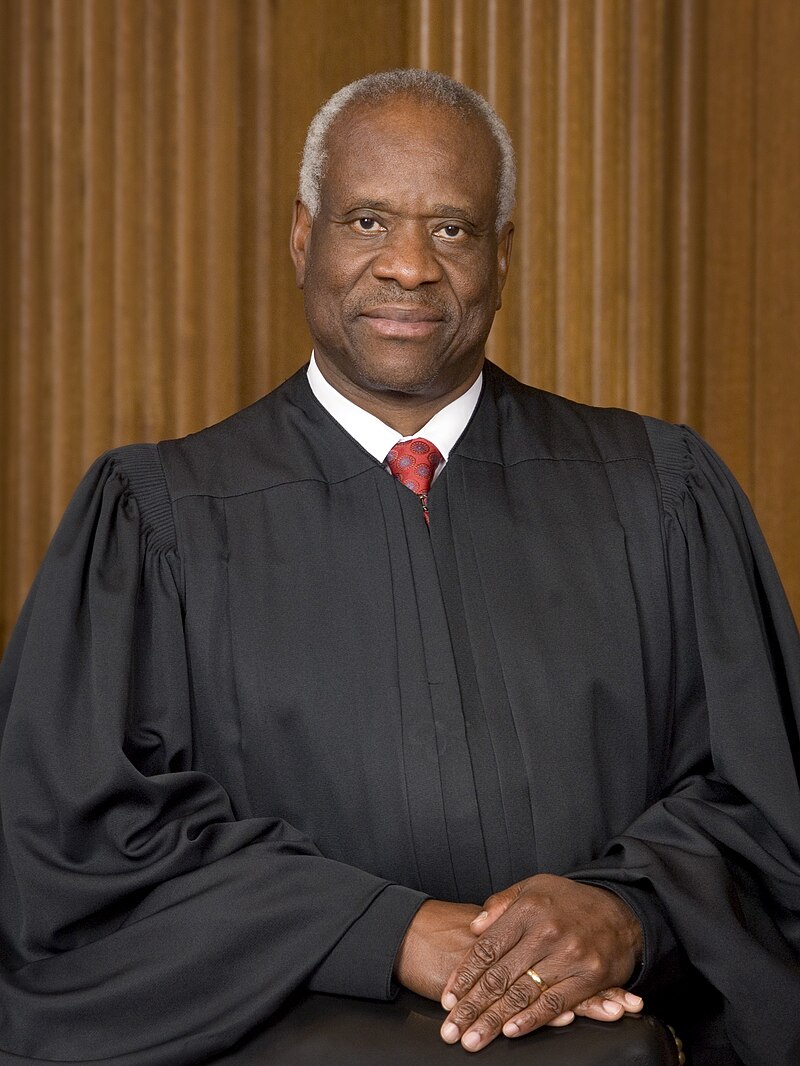
Justice Thomas
Dissent
What this means for you
Allowed selective use of race as one factor among many in higher-education admissions so long as the program is narrowly tailored (no quotas), affects how universities design admissions processes and how applicants are evaluated; it intensified policy debates and led to legislative and voter responses in some states.
Key Takeaways
- Upheld race-conscious law school admissions 5-4; Justice O'Connor wrote the controlling opinion
- Established that educational diversity is a compelling government interest under strict scrutiny
- Required a holistic, individualized process — not quotas or automatic point bonuses
- O'Connor's "25 years" language became the legal basis for overturning Grutter in 2023
- Justice Thomas wrote a lengthy dissent challenging the diversity rationale as paternalistic and harmful
Decision
0-1 decision
- Citation
- 539 U.S. 306 (2003).
- Vote
- 0-1
- Opinion author
- Justice Sandra Day O'Connor.