March 10, 2026
Rubio designates Afghanistan a state sponsor of wrongful detention

The designation was created through executive action rather than legislation passed by Congress
🌍Foreign Policy📜Constitutional Law🏛️Government
March 10, 2026
The designation was created through executive action rather than legislation passed by Congress
Dennis Coyle is a 64-year-old American academic who worked on educational programs in Afghanistan. Taliban intelligence agents arrested him in January 2025. The State Department formally declared him wrongfully detained in June 2025 after months of review . No charges have been filed against him. His family has described conditions of near-solitary confinement with no reliable consular access.
Mahmoud Habibi is the second American named in the March 9, 2026 designation. Secretary of State  Marco Rubio called on the Taliban to release both men immediately. The framing of the demand matters: Rubio described the detentions as hostage diplomacy, not law enforcement. That characterization is the legal predicate for the wrongful detention designation framework.
The State Sponsor of Wrongful Detention framework is different from the better-known State Sponsors of Terrorism list, and understanding that difference matters. The terrorism designations have existed since 1979 under the Export Administration Act, require meeting specific evidentiary criteria, and carry sweeping statutory consequences written into law by Congress, including bans on arms sales and foreign assistance.
Trump created the wrongful detention framework by executive order in September 2025. Congress provided statutory backing through the Countering Wrongful Detention Act of 2025 . The Secretary of State can now impose economic sanctions, export controls, and visa restrictions on countries using detention as political leverage, without meeting the terrorism list's evidentiary threshold and without a country-specific congressional vote. Afghanistan is only the second country designated under it. Iran was designated on Feb. 26, 2026, one day before U.S.-Israeli strikes began.
The timing of both designations is hard to read as coincidental. Iran was designated the day before Operation Epic Fury began. Afghanistan was designated two weeks into the Iran war. In both cases the designation came at a moment of escalating U.S. pressure on a country with documented hostage-taking practices.
Because the President created the authority and Congress ratified it without adding significant procedural constraints, the Secretary of State has broad discretion over when and how to apply it. There is no judicial review of the designation decision. There is no required evidentiary standard beyond the secretary's determination. There is no congressional vote . Critics argue this concentrates unilateral foreign policy power in the executive branch in ways that bypass the accountability mechanisms Congress typically attaches to major sanctions actions.
The Taliban's relationship to American detentions is rooted in 25 years of conflict history. They governed Afghanistan from 1996 to 2001, were removed by the U.S.-led post-9/11 invasion, and returned to power in August 2021 after the Biden administration completed the withdrawal that began under Trump's February 2020 Doha Agreement. Since regaining control, the Taliban's General Directorate of Intelligence has used foreign nationals, including journalists, aid workers, and academics, as leverage for sanctions relief, international recognition, and policy concessions.
The United States has no diplomatic relations with Taliban-controlled Afghanistan and no embassy in Kabul. Normal diplomatic channels operate through third-country intermediaries. Qatar has historically served as the backchannel for U.S.-Taliban negotiations, including the prisoner exchanges that preceded the 2021 withdrawal .
The designation opens four enforcement pathways, all executive branch actions requiring no congressional vote. Treasury's Office of Foreign Assets Control can sanction Taliban officials responsible for the detentions. The Commerce Department can restrict exports to Afghanistan. The State Department can impose visa bans on Taliban leadership. U.S. passport holders can be restricted from traveling to the country.
The Taliban's response followed a familiar pattern: expressions of regret and calls for resolution through talks, with no timeline and no acknowledgment of specific wrongdoing . Afghanistan is already under extensive international sanctions, already isolated from global financial systems, and still seeking access to roughly $7 billion in frozen central bank assets. Whether adding a wrongful detention designation changes the Taliban's calculation depends on whether the administration applies the new tools with enough force to make holding Coyle and Habibi more costly than releasing them.
The administration cited 175 Americans returned since taking office as evidence of the framework's effectiveness. Some of those returns resulted from negotiations begun under the Biden administration. Some involved prisoner swaps. Some involved economic pressure through frameworks similar to the one now being used against Afghanistan. The 175 figure is not independently verifiable from public sources and covers a range of case types across multiple countries.
At any given time, more than 100 Americans are estimated to be wrongfully detained abroad, according to the James W. Foley Legacy Foundation and the Robert F. Kennedy Human Rights organization, which monitor these cases globally . The Afghanistan designation puts two of those cases into a formal accountability framework. Whether that framework produces results depends on a question that is always true of coercive diplomacy: does the other side find the cost of noncompliance higher than the cost of compliance? For the Taliban, that calculation involves leverage they have held for years .
Secretary of State
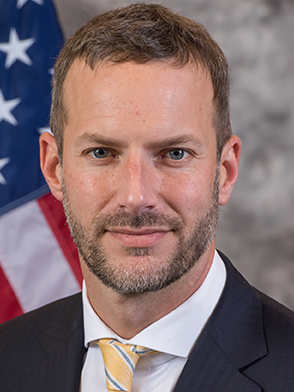
Special Presidential Envoy for Hostage Affairs
Detained American academic
U.S. Ambassador to the United Nations
Taliban spokesperson
research
Track wrongful detention cases at the James W. Foley Legacy Foundation
The Foley Foundation tracks wrongful detention cases, advocates for detained Americans abroad, and provides resources for families. Following their work teaches you how the wrongful detention designation framework operates and what tools families have to advocate for return.
Visit jamesfoleyfoundation.org and review their current case tracking. Look for their analysis of the new State Sponsor of Wrongful Detention executive order framework and how it compares to the State Sponsors of Terrorism list. Read their reporting on Dennis Coyle and Mahmoud Habibi to understand the human stakes behind the designation.
civic action
Contact your senator about Americans wrongfully detained abroad
The Senate Foreign Relations Committee oversees U.S. hostage policy. Demand your senator support legislation to codify the wrongful detention designation framework in statute, giving it consistent legal authority rather than leaving it vulnerable to being reversed by a future executive order.
Hello, I am [NAME], a constituent from [CITY/STATE]. I am calling about Americans wrongfully detained abroad, including Dennis Coyle in Afghanistan.
Key concerns:
Questions to ask:
Specific request: I am asking Senator [NAME] to co-sponsor legislation that would establish the wrongful detention designation process in law and require mandatory sanctions on governments that hold Americans without charges.
Question: What is the Senator's position on codifying the wrongful detention framework?
Thank you for your time.
research
Read State Department wrongful detention reporting
The State Department publishes its official list of wrongfully detained Americans and the diplomatic steps being taken in each case. Reading these reports teaches you how the government defines 'wrongful detention' and what legal and diplomatic tools it uses to pursue each case.
Go to state.gov and search for Wrongful Detention. Read the official reports on Afghanistan and Iran. Compare the definition of wrongful detention used by the State Department — which includes arbitrariness, lack of consular access, and use of detention for leverage — with the broader international human rights law standard. This helps you evaluate how political the designation process actually is.