June 24, 2022
Litigants invoke Ninth Amendment for privacy

Planned Parenthood blocks abortion ban via state constitution
📜Constitutional Law🎓Education
June 24, 2022
Planned Parenthood blocks abortion ban via state constitution
 James Madison demanded explicit protections in 1789 after Anti-Federalists refused to ratify the Constitution without a bill of rights. The Ninth Amendment was written to preserve unenumerated rights but the Supreme Court often sidelined it in favor of other doctrines.
Justice Arthur Goldberg invoked the Ninth Amendment in his concurrence in Griswold v
Connecticut on Jun. 7, 1965, to defend marital privacy
The majority opinion by Justice William O Douglas found privacy protections in penumbras of other constitutional amendments.
Roe v
Wade in 1973 relied on the Due Process Clause of the Fourteenth Amendment rather than the Ninth Amendment as its primary basis, though the decision mentioned the Ninth as a potential source
Dobbs v Jackson Women's Health Organization on Jun. 24, 2022, overturned Roe and returned abortion law to the states.
In Aug. 2024, the Utah Supreme Court in a 4-1 decision rejected the state's request to overturn the preliminary injunction blocking SB 174, Utah's near-total abortion ban. The court found that Planned Parenthood Association of Utah raised serious constitutional questions under the Utah Constitution, including rights to bodily integrity, family composition, and equal protection. Abortion remains legal in Utah up to 18 weeks of pregnancy while litigation continues.
Senator Ron Wyden revealed in Feb. 2024 that data broker Near Intelligence tracked people's visits to nearly 600 Planned Parenthood locations across 48 states and sold that data to anti-abortion groups. The Veritas Society, established by Wisconsin Right to Life, used this location data to deliver over 14 million targeted anti-abortion ads to people who visited reproductive healthcare clinics. Near filed for bankruptcy in Dec. 2023.
Post-Dobbs abortion litigation in state courts focuses primarily on state constitutional protections rather than federal Ninth Amendment claims. In Wisconsin, the state Supreme Court ruled in Jul. 2025 that the 1849 law does not ban abortion, finding that comprehensive legislation enacted over 50 years impliedly repealed the older statute. Pennsylvania's Supreme Court signaled in 2024 that the state constitution's Equal Rights Amendment may protect abortion rights.
Who wins today: state officials in restrictive states and data-holding corporations gain regulatory power and surveillance capabilities. Who loses: low-income people, youth, and marginalized communities who cannot travel or pay for private care, and anyone whose location data is sold to hostile actors without consent.
The Federal Trade Commission has begun sanctioning data brokers who sell location information without adequate consent. In Jan. 2024, the FTC banned Outlogic (formerly X-Mode Social) from sharing or selling sensitive location data that could be used to track visits to medical or reproductive health clinics.
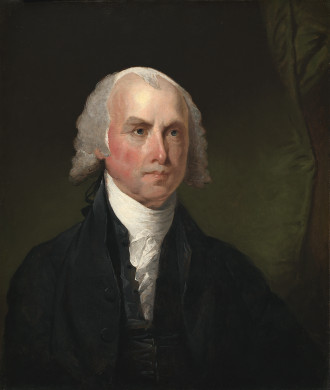
Member, U.S. House of Representatives and principal drafter of the Bill of Rights
Associate Justice, U.S. Supreme Court
Associate Justice, U.S. Supreme Court
Health provider and litigant
U.S. Senator from Oregon
Public-interest litigation organization