Energy · Environment · Constitutional Law·February 23, 2026
Senate to vote on opening Boundary Waters to foreign copper mining
First-ever CRA challenge to a public land order could lock out future protections

The Boundary Waters Canoe Area Wilderness spans more than 1.1 million acres in northeastern Minnesota's Superior National Forest along the Canadian border. It's the most visited wilderness area in the United States, with approximately 250,000 visitors annually. President Theodore Roosevelt protected the Superior National Forest in 1909.
In January 2023, Interior Secretary Deb Haaland signed Public Land Order 7917, establishing a 20-year ban on mineral and geothermal leasing on 225,504 acres of the Superior National Forest upstream from the BWCAW. The order followed a two-year U.S. Forest Service scientific review that found copper-sulfide mining in the Rainy River watershed would cause irreversible harm.
The Congressional Review Act, passed in 1996, gives Congress a fast-track mechanism to overturn new federal agency rules within 60 days. It requires only a simple majority — no filibuster — to pass a resolution of disapproval. Once a rule is overturned under the CRA, the agency can't reinstate it without an act of Congress.
In January 2026, the Trump administration's Interior Department resubmitted the three-year-old 2023 Public Land Order to Congress, restarting the 60-day CRA clock. This was an unprecedented move — the CRA has never before been used to challenge a public land order. Critics say it creates a blueprint to retroactively strip any land protection decision.
Rep. Pete Stauber of Minnesota's 8th congressional district introduced H.J. Res. 140 on Jan. 12, 2026.
The House passed it 214-208 on Jan. 21, with all Republicans voting yes and all Democrats voting no.
The Senate is expected to vote the week of Feb. 23. It needs only 50 votes — no filibuster applies.
Twin Metals Minnesota, a subsidiary of Chilean mining giant Antofagasta Plc, wants to build a copper-nickel mine on Birch Lake, immediately upstream from the BWCAW. The proposed mine sits on land where waterways flow directly into the Wilderness and downstream to Voyageurs National Park and Quetico Provincial Park in Canada. Copper-sulfide mining creates sulfuric acid when sulfide minerals in blasted rock oxidize and mix with water.
Sen. Tina Smith of Minnesota is leading Senate opposition to the resolution
She stated that Antofagasta plans to extract the copper and sell it — potentially to China — leaving Minnesota with the environmental damage
It needs four Republicans to join Democrats to block passage Susan Collins of Maine is considered a possible crossover vote.
Four direct descendants of President Theodore Roosevelt — Theodore Roosevelt IV, Tweed Roosevelt, Kermit Roosevelt III, and Mark Roosevelt — co-signed a letter to senators on Feb. 6, 2026, urging them to vote no. It was the first time the four had jointly signed a letter. They called the mine proposal the opposite of America First, noting that a foreign company would extract the minerals, use Chinese smelters, and sell the metals on the open market.
Related Topics
5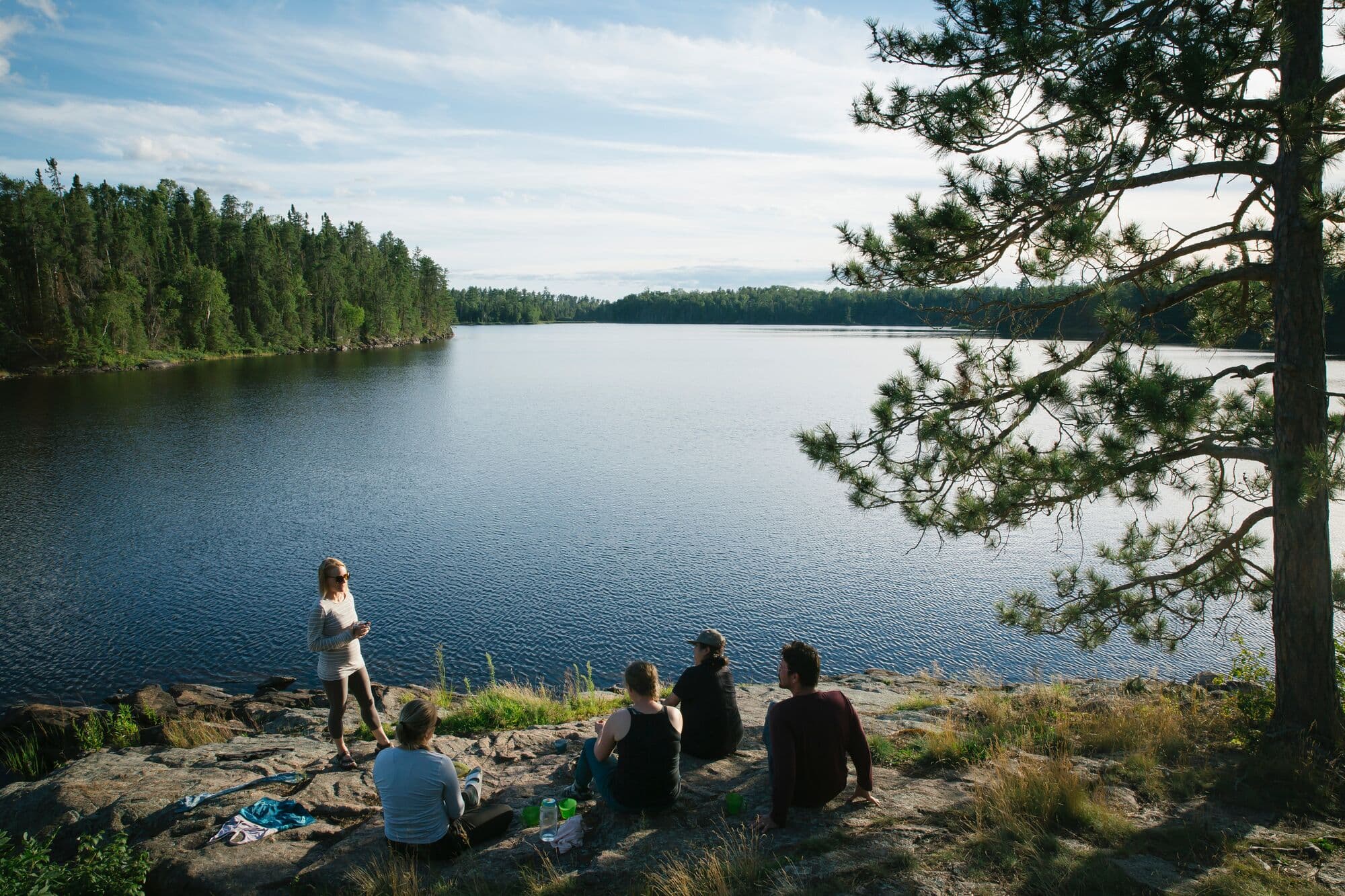
Senate votes to repeal Boundary Waters mining ban after Collins and Tillis oppose
Collins and Tillis voted No on motion to proceed and final passage vote is pending

Trump directs EPA and Army Corps to revise wetland and water permitting rules
Each rule change will require a separate rulemaking process taking 12 to 36 months
Congress used the power of the purse to reverse RFK Jr.'s cuts to CDC, FDA, and NIH
The bipartisan FY2026 bill requires agencies to stay staffed and mandates 60 days' notice before any CDC reorganization

California sued Trump for canceling $1.2 billion in energy programs Congress already funded
Thirteen states say DOE Secretary Chris Wright and OMB Director Russell Vought illegally killed clean energy and infrastructure grants approved by bipartisan majorities in Congress
Iran war sends gas prices to biggest single-day spike since Hurricane Katrina
Futures markets priced in war within hours before a single tanker was actually stopped
15 questions
Start the review