February 21, 2026

Cannon blocked the release of Jack Smith's classified documents report — and as of February 2026 the public still cannot read it

Judge Aileen Cannon blocked the public release of Jack Smith's classified documents report in January 2025, kept it sealed through 11th Circuit pressure for urgency, and set a February 24, 2026 deadline to lift the injunction — a deadline Trump's own Justice Department is now working to extend.

Jack Smith submitted his two-volume final report to Attorney General Merrick Garland on Jan. 7, 2025, 13 days before Trump's inauguration. Volume 1 — the Jan. 6 election interference investigation — was released publicly after Trump's lawyers lost a last-minute suppression effort before the 11th Circuit. Volume 2 — the Mar-a-Lago classified documents investigation — was sealed the day after Trump's inauguration, on Jan. 21, 2025, when Cannon issued an injunction preventing the DOJ from releasing it outside the department.

The injunction came at the request of Trump, Walt Nauta, and Carlos De Oliveira — the three defendants in the case Cannon had already dismissed in July 2024. She had a jurisdictional hook at the time: a pending appeal of her own dismissal. The Trump DOJ subsequently dropped that appeal in early 2025, eliminating that rationale. Cannon kept the injunction anyway.

According to Cannon's own Jan. 22 order, Volume 2 contains: interview transcripts, search warrant materials, business records, toll records, video footage, grand jury subpoena materials, attorney-client privilege assertions, and classified national security information that was never entered into public court filings. In her words: 'Volume II includes detailed and voluminous discovery information. Much of this information has not been made public in Court filings.'

This means the full evidentiary record developed during the investigation into Trump's handling of classified documents — everything gathered over three years of investigation — is in a report that no member of the public, press, or Congress has seen. The 40-count indictment itself revealed only the outlines of the government's case.

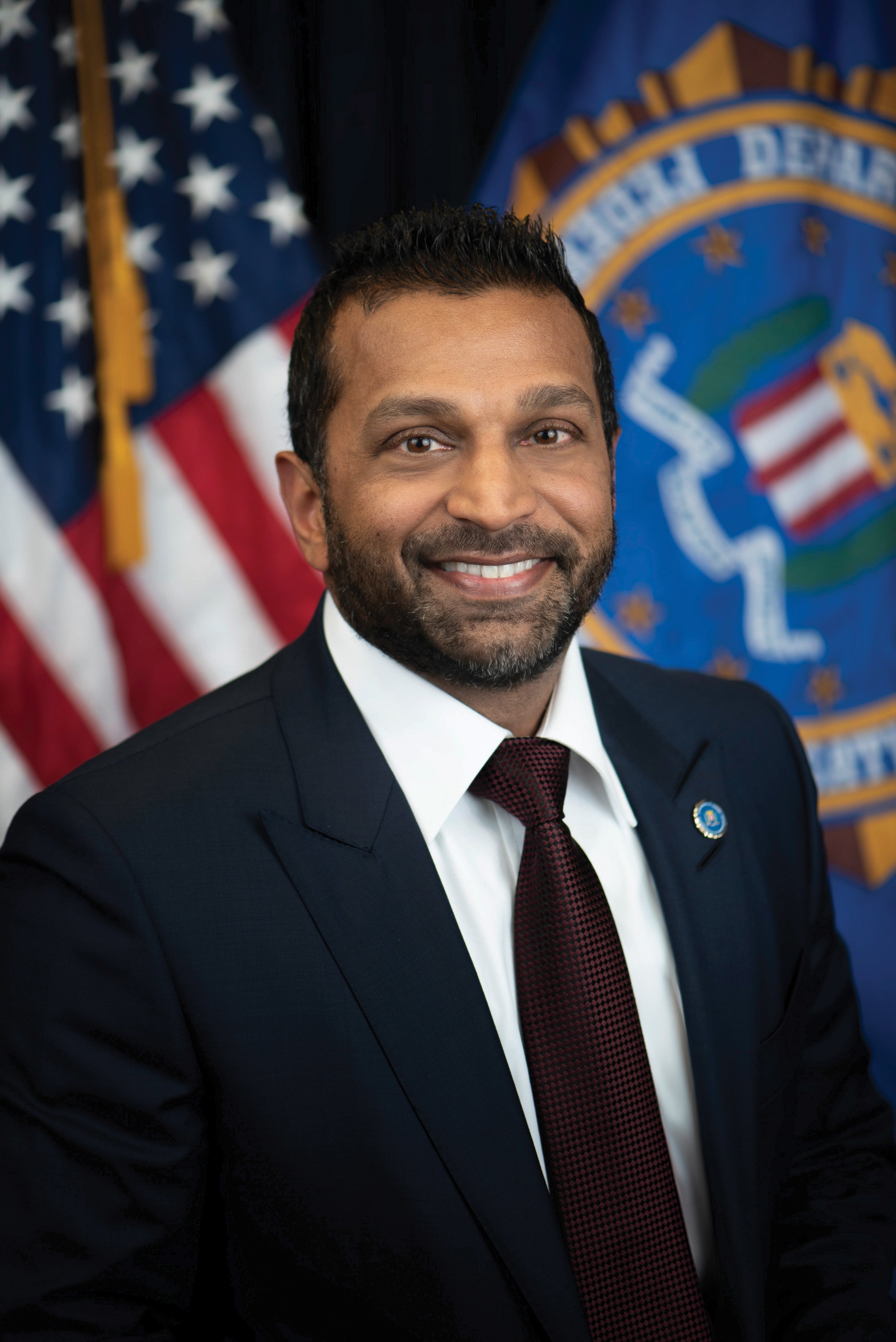
Volume 2 is directly connected to Kash PatelKash Patel, now the FBI director. In 2022, Patel invoked the Fifth Amendment and refused to testify before the grand jury. Prosecutors granted him immunity in November 2022, compelling his testimony. The subject: his public claim that Trump had declassified all documents before leaving office — a claim multiple Trump administration national security officials publicly said was false and that no formal declassification process had been followed.

The Senate Judiciary Committee's Democratic members — Durbin, Schiff, Coons, Booker, Hirono — formally requested access to the Patel-related sections of Volume 2 on Jan. 29, 2025, before his confirmation vote, citing their constitutional advice-and-consent authority. The request was not fulfilled. Patel was confirmed as FBI director while the section of Smith's report covering his testimony remained sealed in Cannon's court.

The Knight First Amendment Institute filed a motion in Cannon's court in February 2025 asking her to lift the injunction. She ignored it for 218 days without ruling. After the Knight Institute petitioned the 11th Circuit for a writ of mandamus, the appeals court issued an order on Oct. 31, 2025, calling out Cannon's 'undue delay' and directing her to rule on the pending motions within 60 days. The three-judge panel included judges appointed by Obama, Biden, and Trump — a bipartisan rebuke of her pace.

Cannon denied the transparency groups' intervention motions on Dec. 23, 2025 — 11 days before the 60-day window closed — ruling they lacked standing to participate in the closed criminal case. Her ruling did not address the merits of their First Amendment access claims.

Cannon's December ruling then set a Feb. 24, 2026 automatic expiration date for the injunction — explicitly inviting the parties to seek relief before then. It was a roadmap. Trump's personal lawyers filed a motion on Jan. 13, 2026, asking Cannon to permanently block the report. Nauta and De Oliveira went further: they asked Cannon to order all copies destroyed so 'the public will never have access to the Special Counsel's findings,' as American Oversight described it.

The Trump DOJ filed its own papers agreeing the report should be permanently suppressed. The move reversed the Biden-era DOJ's position that the report should be released — placing the Justice Department that wrote the report on the same side as the defendant the report investigated.

American Oversight and the Knight Institute asked Cannon on Feb. 10, 2026, to stay all proceedings in her court while they appealed to the 11th Circuit — arguing that Cannon acting while their appeal was pending would divest the appellate court of jurisdiction. Legal scholars at Just Security noted Cannon's jurisdiction over a dismissed, closed case was itself legally questionable: courts are generally divested of jurisdiction after final judgment and a filed notice of appeal.

The 11th Circuit now faces an extraordinary question: can a federal judge in a dismissed criminal case permanently seal a prosecutorial report — at the request of the report's subject — when that subject is now the sitting president and controls the Justice Department that wrote it?

Jack Smith testified behind closed doors before the House Judiciary Committee for more than eight hours in December 2025. According to American Oversight's account, Smith told the committee his investigation produced 'proof beyond a reasonable doubt' that Trump unlawfully attempted to overturn the 2020 election, and had found 'powerful evidence' that Trump willfully retained highly classified documents after leaving office. Cannon's December ruling blocking Volume 2's public release came just days after that testimony.

The Republican-controlled House Judiciary Committee had also subpoenaed Smith in October 2025, citing what it called 'politically motivated' prosecutorial conduct and alleging his team had obtained private phone records of at least eight senators and one House member during an investigation called 'Arctic Frost' — a claim that came from documents released by FBI Director Patel.

The common law and First Amendment right of access to judicial records — established in Nixon v. Warner Communications (1978) and Press-Enterprise Co. v. Superior Court (1986) — allows courts to seal records only when there is a compelling governmental interest that outweighs the public's right to access. Courts have applied this right to records submitted in connection with criminal proceedings.

The transparency groups argue: the prosecution is over, the defendants face no trial, the report was submitted in connection with a criminal case, and no compelling interest justifies permanent sealing. The Trump administration's counter-argument is that the report contains grand jury material, classified information, and privileged communications. What is unprecedented is that the executive branch — which controls the DOJ that wrote the report — is now aligned with the defendant in arguing for permanent suppression of its own prosecutor's findings.

👨‍⚖️Judicial Review⚖️Justice🔐Ethics

People, bills, and sources

Aileen Cannon

U.S. District Judge, Southern District of Florida (Trump appointee, confirmed Nov. 12, 2020 — five days after the 2020 election was called for Biden)

Jack Smith

Former Special Counsel, Office of Special Counsel (2022-2025)

Kash Patel

Kash Patel

FBI Director (confirmed Feb. 20, 2025); former Trump national security aide

Walt Nauta and Carlos De Oliveira

Former co-defendants; Trump's valet and Mar-a-Lago property manager

Pam Bondi

Pam Bondi

Attorney General of the United States

Chioma Chukwu

Executive Director, American Oversight

Scott Wilkens and Jameel Jaffer

Senior Counsel and Executive Director, Knight First Amendment Institute at Columbia University

Dick Durbin, Adam Schiff, and Senate Judiciary Democrats

U.S. Senators; members of the Senate Judiciary Committee

Jill Pryor, Nancy Abudu, Britt Grant

11th Circuit panel judges (mandamus ruling, Oct. 31, 2025)

What you can do

1

civic action

Contact your senator to demand they ask Kash Patel publicly what he told the grand jury

The Senate confirmed Patel as FBI director without seeing Volume 2's section on his immunized testimony. Senate Judiciary Committee members have constitutional authority to press Patel in hearings. Citizens can contact their senators and ask them to use it.

Hi, my name is [Name] and I'm a constituent in [state]. FBI Director Kash Patel received immunity to testify before Jack Smith's grand jury about whether Trump declassified Mar-a-Lago documents. That testimony is in Volume 2 of Smith's report, which is still sealed. The Senate confirmed Patel without seeing it. I want to know if [Senator's name] will demand that Patel publicly disclose what he told the grand jury, and whether they support releasing Volume 2 so the public can evaluate whether the FBI director was truthful.

2

legal support

Follow and support American Oversight's 11th Circuit appeal and FOIA litigation

Two legal tracks are running simultaneously: the First Amendment appeal in the 11th Circuit and a parallel FOIA lawsuit in D.C. The 11th Circuit appeal is the faster track but the FOIA case provides a separate avenue if the appeal stalls. Citizens can follow both cases and support the organizations financially — public interest litigation is expensive.

Hi, I'm calling because American Oversight is appealing Judge Cannon's ruling sealing Jack Smith's Volume 2 report in the 11th Circuit, and also pursuing a FOIA lawsuit in D.C. I want to support this work and understand its current status. Can you tell me where the 11th Circuit appeal stands, what the expected timeline is, and how donations support the litigation?

3

civic action

Understand the First Amendment right of access to judicial records

The legal basis for demanding Volume 2's release is the First Amendment and common law right of access to judicial records — established in Nixon v. Warner Communications (1978) and Press-Enterprise Co. v. Superior Court (1986). This right applies to records submitted in connection with court proceedings. Understanding it lets citizens evaluate what courts can legitimately seal and why the public has a legal — not just political — claim to this document.

Hi, I want to understand the legal right of public access to judicial records — specifically as it applies to Jack Smith's sealed Volume 2 report. Can you explain how the First Amendment right of access established in Press-Enterprise v. Superior Court applies to prosecutorial reports submitted in criminal cases? And what standard must a court meet to legitimately seal a record against the public's access right?