CBO scores China currency accountability bill at under $500K
House bill would block U.S. IMF voting if China manipulates exchange rates
House bill would block U.S. IMF voting if China manipulates exchange rates
H.R. 8290, the China Exchange Rate Accountability Act of 2026, was introduced by Rep. Pete Sessions (R-TX-25) on April 15, 2026, and ordered reported by the House Committee on Financial Services on April 21 by a 32-20 vote. The bill directs the Treasury Secretary to report to Congress on whether China is complying with the IMF's Articles of Agreement and maintaining transparent and fair exchange-rate practices, specifically whenever the IMF is scheduled to consider increasing China's voting power.
If China fails the bill's compliance test, the Treasury Secretary in his role as U.S. Governor of the IMF must vote against any such quota increase for China. The bill's provisions expire after seven years, and a presidential waiver is available if the president certifies the opposition would harm national interests. The Congressional Budget Office released its cost estimate for the bill on April 29, 2026, finding implementation would cost less than $500,000 over 2026-2031 — a minimal administrative cost reflecting the bill's structure as a reporting and voting directive rather than a new program.
CBO found no intergovernmental mandates and no private-sector mandates in the bill. CBO Director Phillip L. Swagel's office noted any spending would be subject to the availability of appropriated funds, consistent with the bill's reliance on existing Treasury staff and processes.
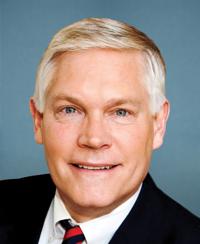
U.S. Representative (R-TX-25); bill sponsor
Introduced H.R. 8290, the China Exchange Rate Accountability Act of 2026, on April 15, 2026, and carried it through the House Financial Services Committee markup on April 21. Sessions represents the 25th Congressional District of Texas and has served on the Financial Services Committee. He sponsored the bill as a binding escalation of earlier Chinese currency accountability legislation.
Chairman, House Committee on Financial Services (R-AR)
Presided over the April 21, 2026, committee session at which H.R. 8290 was ordered reported 32-20. Hill described the committee's agenda as focused on promoting economic growth and strengthening market integrity. As chairman, he set the hearing calendar that advanced H.R. 8290 alongside three other bills in the same markup session.
U.S. Representative (R-PA-9); sponsor of predecessor legislation
Introduced H.R. 692, the bipartisan China Exchange Rate Transparency (CERT) Act, which passed the House 388-7 on February 10, 2025. Meuser's bill directed the U.S. Executive Director at the IMF to advocate for enhanced transparency in China's exchange rate arrangements. H.R. 8290 builds on his framework by converting the advocacy requirement into a binding voting directive tied to IMF quota increases.
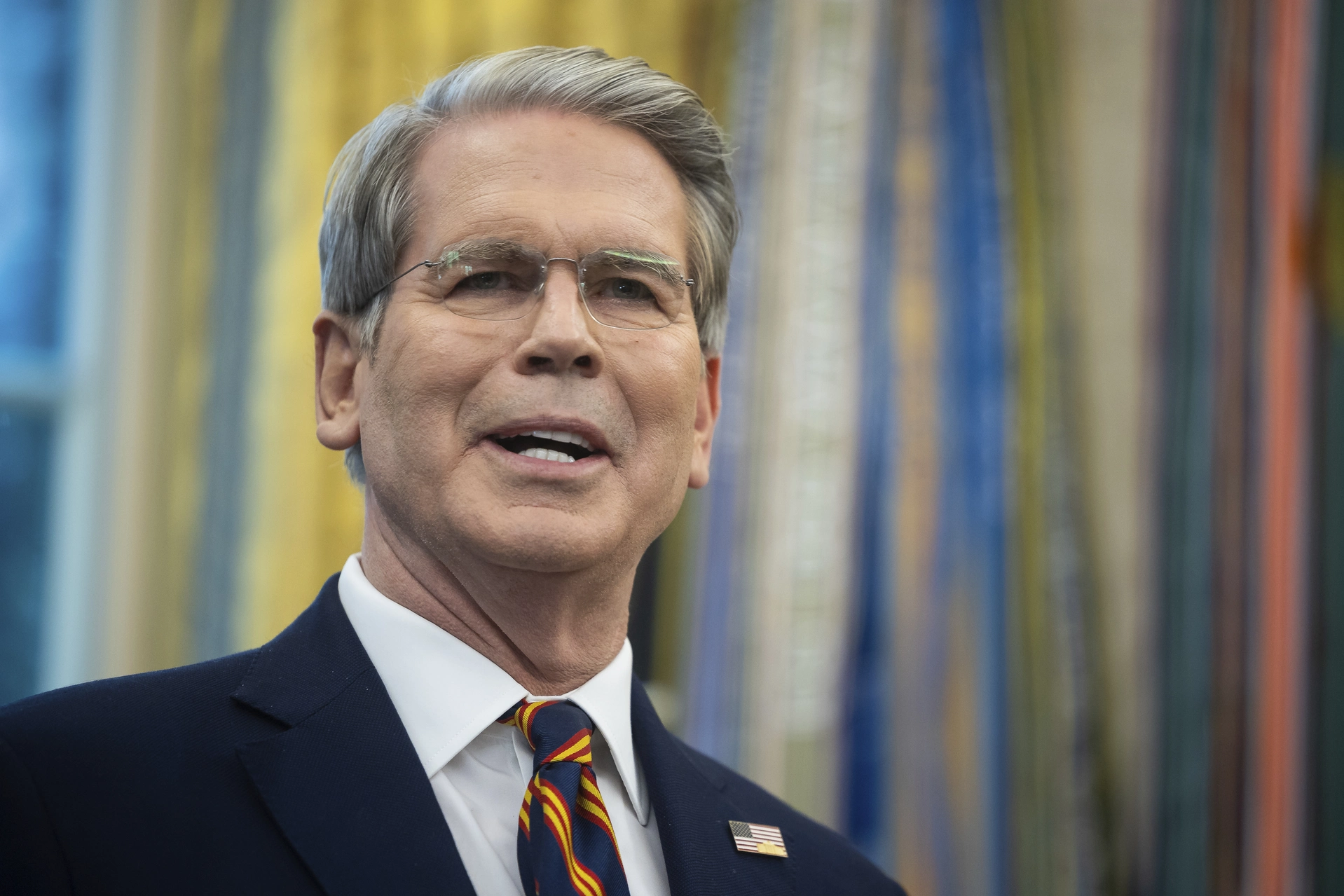
Secretary of the Treasury
Released the January 29, 2026, semiannual report to Congress on macroeconomic and foreign exchange policies of major U.S. trading partners. Declined to designate China as a currency manipulator but described China as standing out among trading partners for its lack of exchange-rate transparency and maintained China's 'substantially undervalued exchange rate' as a priority concern. Under H.R. 8290, Bessent or a successor would be responsible for the compliance report to Congress and for directing U.S. voting at the IMF.
Director, Congressional Budget Office
Led the CBO team that produced the April 29, 2026, cost estimate for H.R. 8290, finding the bill would cost less than $500,000 over 2026-2031 and contain no intergovernmental or private-sector mandates. CBO's role is to provide independent, nonpartisan economic and budgetary analysis that Congress relies upon to evaluate legislation before floor consideration.
Deputy Director of Budget Analysis, CBO
Reviewed the CBO cost estimate for H.R. 8290 as the budget analysis division's deputy director. CBO's internal review process requires the deputy director of budget analysis to sign off on cost estimates before publication, ensuring the estimates meet agency methodological standards. The review process is significant because it provides independent verification of fiscal projections for legislation touching complex international financial mechanisms.
CBO Staff Contact for H.R. 8290 estimate
Served as the Congressional Budget Office staff contact for the H.R. 8290 cost estimate published April 29, 2026. CBO staff contacts are responsible for the underlying research, modeling, and analysis that supports the published estimate and are available to answer congressional staff questions during the legislative process.
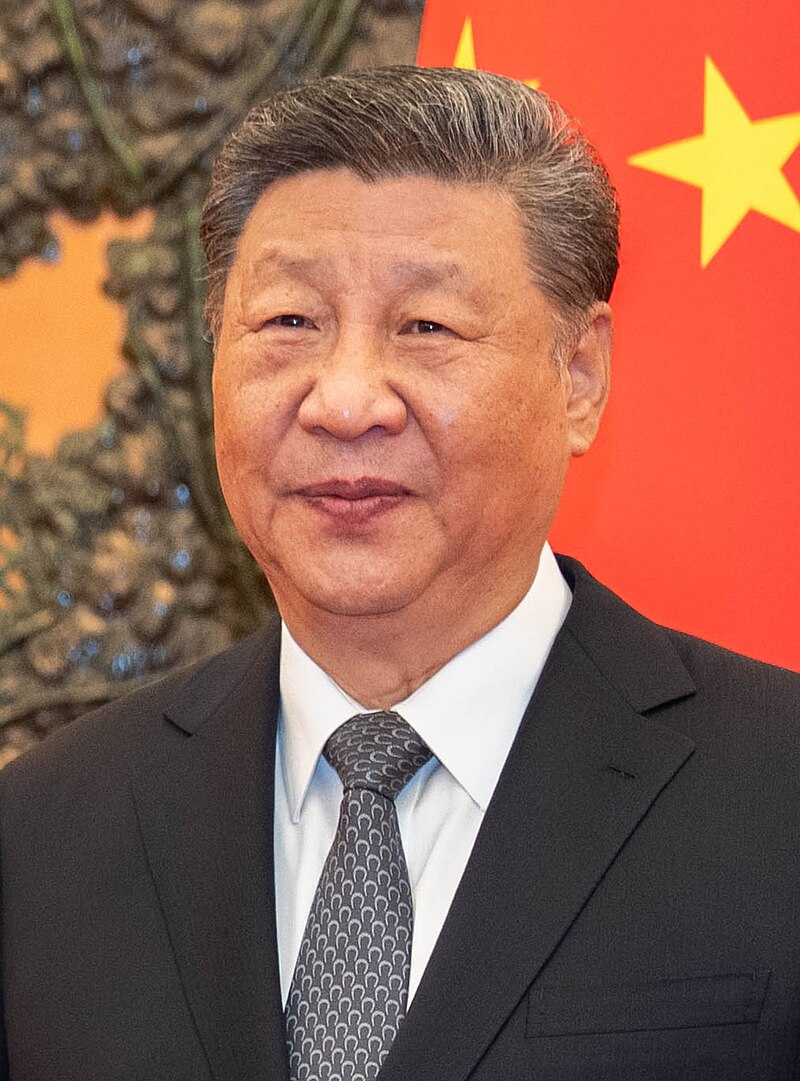
General Secretary, Chinese Communist Party; President of the People's Republic of China
Heads the government whose exchange-rate and monetary policies are the direct subject of H.R. 8290. Xi has publicly called for the RMB to attain global reserve currency status and directed the People's Bank of China toward a 'slow and orderly' appreciation strategy that maintains China's export competitiveness. A Wall Street Journal editorial noted Xi was expected to receive a visit from Trump in May 2026 around which the U.S. IMF quota increase request was a sensitive backdrop.
True
H.R. 8290 passed the House Financial Services Committee 32-20 on April 21, 2026
The House Committee on Financial Services official press release confirms HR 8290 passed 32-20 on April 21, 2026. Quiver Quantitative's bill tracking confirms the same committee markup date and vote count. [1][2]
True
CBO estimated H.R. 8290 would cost less than $500,000 over five years to implement
CBO's April 29, 2026, cost estimate states explicitly: 'CBO estimates that implementing H.R. 8290 would cost less than $500,000 over the 2026-2031 period.' The estimate confirms zero direct spending or revenue effects, with only minimal discretionary administrative costs. [1]
True
Treasury did not formally designate China as a currency manipulator in its January 2026 report
Treasury's January 29, 2026, report to Congress stated: 'Treasury... concluded that no major U.S. trading partner manipulated the rate of exchange between its currency and the U.S. dollar... during the four quarters through June 2025.' China was placed on the monitoring list but not formally designated as a currency manipulator. [1]
True
H.R. 692, the predecessor bill, passed the House 388-7 in February 2025
Rep. Dan Meuser's official press release confirms HR 692 passed the House 388-7. Trackbill's bill tracking confirms the vote on February 10, 2025, with the exact same count. The bill was subsequently received in the Senate and referred to the Senate Foreign Relations Committee. [1][2]
True
The IMF found the Chinese yuan to be approximately 8.5 percent undervalued in mid-2025
The U.S.-China Economic and Security Review Commission's February 4, 2026, bulletin stated: 'A July 2025 IMF assessment found RMB undervaluation of 8.5 percent.' Using the same methodology with updated October 2025 IMF data, experts calculated the undervaluation may be 18 percent; Goldman Sachs estimated 25 percent undervalued on a trade-weighted basis. [1]
True
The Trump administration's FY2027 budget requests a 50 percent U.S. IMF quota increase of approximately $55 billion
The Wall Street Journal reported the Trump administration's FY2026 budget sought congressional approval for a 50 percent IMF quota increase, approximately $55 billion, and the same request was reintroduced in the FY2027 budget. The IMF members approved a 50 percent quota increase in December 2023 that each member country must legislatively authorize. [1]
True
H.R. 8290 contains no intergovernmental or private-sector mandates
CBO's cost estimate explicitly states the bill 'contains no intergovernmental or private-sector mandates as defined in the Unfunded Mandates Reform Act.' The bill operates entirely through requirements on the federal executive branch, specifically the Treasury Secretary and the U.S. IMF Governor. [1]
True
China's trade surplus reached a record $1.2 trillion in 2025
The U.S.-China Economic and Security Review Commission's February 4, 2026, bulletin reported: 'China's trade surplus reached a record $1.2 trillion in 2025 as domestic economic imbalances from overproduction and weak domestic demand continued.' Exports rose 5.5 percent year-on-year to $3.8 trillion. [1]
Sources
Contact your House representative to support or oppose HR 8290 advancing to a floor vote
civic action
H.R. 8290 has passed committee but must clear the full House floor before going to the Senate. Citizens can contact their representatives to share views on whether the U.S. should use its IMF voting power as leverage over China's currency practices, and whether the Trump administration's concurrent IMF quota increase request is consistent with that accountability goal.
Urge your senators to advance H.R. 692, the bipartisan China Exchange Rate Transparency Act, which passed the House 388-7 but stalled in the Senate
civic action
The Senate Foreign Relations Committee has held H.R. 692 since February 2025 without scheduling a vote. Citizens can contact their senators to press for action on the more bipartisan predecessor bill, which would establish IMF advocacy for China exchange-rate transparency even if the binding voting directive in H.R. 8290 faces more resistance.
Submit public comment or contact the Treasury Department about the U.S. semiannual currency report's treatment of China
advocacy
Treasury's semiannual currency reports determine whether trading partners are designated as currency manipulators and which countries appear on the monitoring list. Advocates and businesses affected by currency manipulation can contact Treasury's Office of International Affairs to provide input on data and methodology used in these determinations.
Engage your representative on whether Congress should approve the administration's proposed U.S. IMF quota increase given the China currency accountability context
civic action
The Trump administration has requested a 50 percent increase in U.S. IMF quota — approximately $55 billion — in both its FY2026 and FY2027 budget requests. A Wall Street Journal editorial argued this would benefit China's bad loans at the IMF. Congress has not yet approved the increase, and the accountability legislation in H.R. 8290 creates a direct policy tension that citizens can raise with their elected representatives.