Justice · Constitutional Law · Government · Civil Rights·May 22, 2026
Colorado closes legal gap for defendants found unfit to stand trial
Colorado law stops incompetent defendants from walking free without treatment

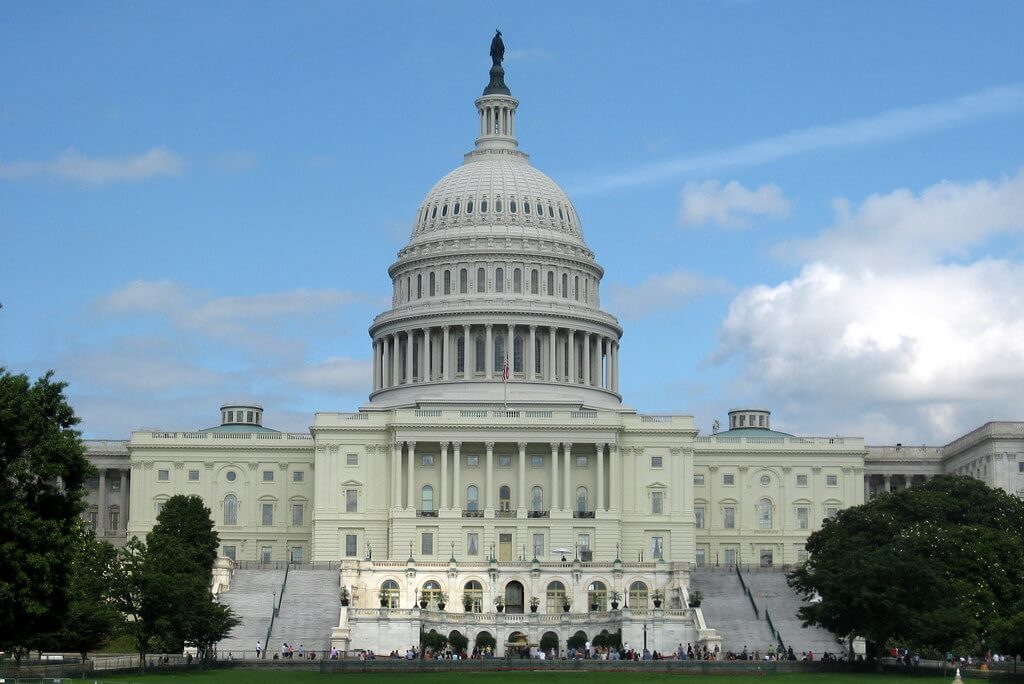
Photo: U.S. House of Representatives Photosource ↗
On May 22, 2026, Colorado Governor  Jared Polis signed SB26-149, the Pathways for Individuals with Mental Health Disorder Act, a bipartisan law that rewrites what happens when a criminal defendant can't be restored to mental competency. Under the old system, Colorado courts had to dismiss charges against defendants deemed permanently incompetent to stand trial, even in murder cases, and defendants walked free without any guaranteed treatment or supervision. The new law lets prosecutors petition for 📖civil commitment or a new category called "enhanced protective placement" for violent offenders whose cases would otherwise be dropped.
The legislation passed unanimously in both chambers and was sponsored by Sen.  Judy Amabile (D-Boulder), Senate Minority Leader
  Cleave Simpson (R-Alamosa), House Speaker
  Julie McCluskie (D-Glenwood Springs), and House Minority Leader
  Jarvis Caldwell (R-Yuma). The $30 million appropriation expands inpatient and outpatient bed capacity to support the new placement requirements. If the Department of Human Services can't secure placement within 70 days, it must place the individual in a state hospital or skilled nursing facility.
The law's passage followed a string of high-profile cases where charges were dismissed and defendants reoffended. Joel Lang, accused of killing Kristy Kerst in a 2024 Monument hit-and-run, walked out of El Paso County Courthouse in August 2025 after his charges were dropped because he was found permanently incompetent. Kerst's daughter Britany Visage lobbied for the law. Colorado had the third-highest per-capita waitlist for forensic psychiatric beds in the nation, with court-ordered competency services growing 159.7% between 2017-18 and 2022-23.
Key facts
Colorado's criminal competency system operates under a constitutional floor set by three Supreme Court cases. In Dusky v. United States (1960), the Court held that a defendant must have the ability to consult with counsel and understand the proceedings against them to be tried. In Pate v. Robinson (1966) and Drope v. Missouri (1975), the Court extended this requirement, holding that trial courts have a continuous duty to watch for incompetency and that the of the 📖Fourteenth Amendment requires a hearing whenever a bona fide doubt arises.
The 📖Sixth Amendment adds a separate layer: a defendant's right to assist in their own defense is meaningless if they can't understand the charges. Colorado's pre-SB26-149 law satisfied these federal requirements, evaluating defendants, attempting restoration, and dismissing charges when restoration failed. It didn't require that anything happen to incompetent defendants after dismissal.
Before SB26-149, Colorado's competency statute required a judge to dismiss charges against any defendant found permanently incompetent to stand trial. A 2024 amendment tightened this further, changing the language from 'may dismiss' to 'shall dismiss,' removing any residual judicial discretion. In practice, once a defendant's incompetency was deemed unrestorable, the case ended and the individual walked out of the courthouse, often without a referral to any mental health service.
Colorado courts ordered competency restoration services , up from 1,054 orders in fiscal year 2017-18, a 159.7% increase in five years. In September 2021, 55% of defendants awaiting restoration services were sitting in jail while they waited. Colorado ranked for per-capita forensic psychiatric bed waitlists.
The case that most directly drove the legislation involved Joel Lang, a 41-year-old man with a childhood brain injury who was charged with second-degree murder after a November 2024 hit-and-run at a Monument McDonald's. Lang allegedly struck Kristy Kerst as she got out of her car to assess damage, dragging her hundreds of feet. On June 27, 2025, an El Paso County judge after two mental health evaluators agreed Lang was permanently incompetent to stand trial. Lang walked out of the courthouse on August 1, 2025.
Kerst's daughter Britany Visage launched a petition and lobbied the legislature. 'I'm feeling hope that I haven't felt in a long time,' Visage said when lawmakers proposed SB26-149 in March 2026. Her family's case was one of several, including Guillermo Ramirez, whose DUI murder charges were also dropped due to incompetency in April 2025, that lawmakers cited when building bipartisan support for the bill.
SB26-149, Pathways for Individuals with Mental Health Disorder, was signed by Governor Polis on May 22, 2026, and took effect immediately. The bill's prime sponsors were Sen. Judy Amabile (D-Boulder) and Senate Minority Leader Cleave Simpson (R-Alamosa) in the Senate, and House Speaker Julie McCluskie (D-Glenwood Springs) and House Minority Leader Jarvis Caldwell (R-Yuma) in the House. It passed .
The bipartisan architecture was deliberate. Legislative sponsors spent months negotiating with district attorneys, public defenders, disability advocates, mental health providers, and county attorneys before finalizing the bill language. The Senate Judiciary Committee advanced it after the weeks-long amendment process.
The law's core mechanism works like this: when a defendant is found incompetent and unlikely to be restored to competency, prosecutors can now file written notice seeking 📖civil commitment or enhanced protective placement instead of accepting automatic dismissal. If prosecutors can prove by clear and convincing evidence that the defendant has a mental disability or developmental disability and poses a substantial risk of serious harm, the court must suspend the order dismissing the case and set a trial date within 91 days.
The Department of Human Services must then identify an appropriate provider and placement for the defendant. For defendants with mental illness, the outcome is 📖civil commitment to CDHS custody. For defendants with intellectual and developmental disabilities or neurocognitive disorders like traumatic brain injuries or Alzheimer's disease, the bill creates a new category called enhanced protective placement, with custody transferred to the Department of Health Care Policy and Financing.
If CDHS can't secure a placement within 70 days, the law requires it to place the individual in a state hospital if the primary diagnosis is mental illness, or in a skilled nursing facility if the primary diagnosis is intellectual or developmental disability. This 70-day clock addresses a recurring failure mode in Colorado's system: defendants ordered to inpatient facilities who waited months in jail because beds weren't available.
The Colorado Mental Health Hospital in Pueblo, the state's 516-bed acute psychiatric facility, was operating only as of early 2024, constrained by a 48% nursing vacancy rate. The $30 million in the bill funds an expansion of both inpatient and outpatient capacity to support the new placement mandate.
The law doesn't eliminate the requirement to dismiss charges for misdemeanor offenses. Defendants whose highest charge is among certain misdemeanor categories still have their cases dismissed under the previous rules. The 📖civil commitment and enhanced protective placement pathway applies only to defendants charged with violent or sexual felony offenses who are found incompetent and unrestorable.
For those defendants, the case isn't permanently closed. The court is required to suspend the dismissal order and set a trial date. The new 📖civil commitment or protective placement proceeding runs alongside the suspended criminal case. This structure keeps the 📖Sixth Amendment framework intact: the defendant isn't tried while incompetent, but the case can potentially be revived if competency is later restored.
Mental health advocates raised concerns during the bill's development. Jennifer Turner, executive director of Bridges of Colorado, said the bill creates 'a whole host of concerns around wholesale warehousing folks.' The core objection: 📖civil commitment for criminal defendants whose charges must be dropped raises questions about whether the state is effectively punishing people for illness rather than conduct, and whether the clear and convincing evidence standard adequately protects people with permanent cognitive disabilities from indefinite confinement.
These concerns shaped the amendment process. Public defenders and disability advocates secured language limiting the pathway to violent and sexual felony offenses, requiring the 91-day trial date, and distinguishing between mental illness (📖civil commitment to CDHS) and developmental or cognitive disability (enhanced protective placement to a different agency), which carries different oversight and review standards.
Colorado's new law fits into a national pattern of states grappling with the same incompetency gap. The underlying constitutional constraint, that you can't try an incompetent defendant, is federal, but states have wide latitude in what they do after charges are dismissed. Some states have 📖civil commitment statutes that already cover this gap. Others, like Colorado, had relied on the criminal court's dismissal as the end of state authority over the defendant.
SB26-149 goes further than most prior Colorado attempts. A 2024 law, HB24-1355, created the Bridges Wraparound Care Program to divert incompetent defendants into community-based support. SB26-149 addresses the higher-risk tier, defendants charged with violent offenses for whom community diversion isn't appropriate, and creates a legal mechanism to keep them in supervised placement regardless of the criminal case's outcome.
The law went into effect immediately upon signing. The Governor's Office said the will fund expanded inpatient beds, outpatient capacity, and improved coordination between courts, mental health providers, and state agencies. Whether the law achieves its goals depends significantly on CDHS's ability to build out that capacity: without enough beds, the 70-day placement deadline becomes a mandate the state can't fulfill.
The broader test is whether the new 📖civil commitment pathway withstands constitutional challenge. Defendants civilly committed under SB26-149 retain the right to periodic judicial review of their placement. A defendant confined under enhanced protective placement can petition for release if their condition changes. Civil liberties attorneys may challenge specific placements, particularly for defendants with developmental disabilities whose charges involve less severe offenses, but the unanimous legislative vote and bipartisan framing suggest the law was drafted to minimize those vulnerabilities.
Related
Categories that may be relevant to you
5 topics available

May 23, 2026
Trump declares Iran peace MOU largely negotiated
May 22, 2026
Gabbard resigns as director of national intelligence
May 21, 2026
House GOP cancels Iran war powers vote, shielding Trump from rebuke
May 21, 2026
Supreme Court rules cruise lines liable for Cuba's confiscated docks

May 20, 2026
DOJ indicts Raul Castro over 1996 Brothers to the Rescue shootdown
View All Foreign Policy Topics
322 topics
30 questions
Start the review