March 4, 2026
Trump invokes Defense Production Act as Iran war burns through $3.7B in munitions in first 100 hours

THAAD inventory at 50% after five days as DPA discussions begin without a war authorization
🛡️National Security💰Economy🎖️Veterans
March 4, 2026
THAAD inventory at 50% after five days as DPA discussions begin without a war authorization
By day five of Operation Epic Fury, March 4, 2026, U.S. Central Command had struck nearly 2,000 Iranian targets using more than 2,000 precision-guided munitions — a pace of expenditure that military planners had privately warned could not be sustained indefinitely.
The Center for Strategic and International Studies calculated that the first 100 hours of Epic Fury cost an estimated $3.7 billion, with other estimates reaching $5.82 billion. This burn rate exceeded peak Iraq War spending and represented the most expensive military operation since the 2003 invasion of Iraq.
The Center for Strategic and International Studies, cited by CNN, found the U.S. may have fired up to 50% of its THAAD interceptor inventory in those five days. THAAD — Terminal High Altitude Area Defense — is the system U.S. forces use to shoot down the ballistic missiles Iran has been launching at regional allies and at Israel.
Each interceptor costs millions of dollars, and Lockheed Martin had only been producing 96 THAAD interceptors per year before the conflict. The rapid depletion raised urgent questions about how long the U.S. could sustain high-intensity combat operations against a peer adversary.
The Defense Production Act gives presidents broad authority to prioritize domestic production for national defense emergencies, including the ability to compel private companies to accept and prioritize government contracts. Trump invoked the DPA on March 4 to accelerate munitions production for the Iran conflict.
The DPA invocation marked one of the most significant uses of the authority since World War II, demonstrating how the Iran conflict had become a national industrial mobilization priority on par with historical wartime production efforts.
Raytheon, Lockheed Martin, and RTX received priority contracts worth billions to replenish depleted stockpiles of missiles, interceptors, and precision-guided munitions. These companies represent the core of the U.S. defense industrial base, but their production lines had been running at peacetime levels before the Iran conflict.
The contracts came as RTX stock surged 4.36% to $209.82, with Raytheon shares rising 15%, Lockheed Martin gaining 12%, and Northrop Grumman climbing 10% in the week after the DPA orders were announced. The defense sector witnessed an unprecedented rally as Epic Fury triggered a massive industry re-rating.
Munitions production lines were running 24/7 but still couldn't keep pace with expenditure rates. Defense officials told Congress that even with three-shift operations, it would take months to replace the munitions expended in the first week of fighting.
Lockheed Martin had signed a framework agreement with the Pentagon just weeks before the conflict to quadruple THAAD production from 96 to 400 interceptors per year, but even that expanded capacity would need years to replenish the depleted stockpiles.
Military planners had warned the strike pace could not be sustained indefinitely. Internal Pentagon assessments, leaked to the press, showed that at current rates, the U.S. would face critical shortages of key munitions within 60-90 days.
The warnings had been delivered to the White House before Operation Epic Fury began but were reportedly downplayed by civilian leaders eager for a decisive victory against what they called Iran's "nuclear threat."
The war revealed critical gaps in U.S. industrial base capacity for prolonged conflicts. Decades of outsourcing, offshoring, and just-in-time manufacturing had left the U.S. dependent on foreign suppliers for some critical components.
Defense executives met with Trump at the White House on March 6 to discuss production schedules, with representatives from Lockheed Martin, Raytheon, Boeing, Honeywell Aerospace, and other major contractors attending the emergency summit.
Defense contractors saw stock gains as the war created direct demand for their products. Raytheon shares rose 15%, Lockheed Martin gained 12%, and RTX climbed 10% in the week after the DPA orders were announced.
The contrast between soaring defense contractor profits and mounting taxpayer costs sparked criticism from progressive lawmakers, who noted that companies like Lockheed Martin had reported record $75 billion in sales with a $194 billion backlog in the previous quarter.
The conflict exposed America's dependence on foreign suppliers for some critical components. Certain electronic parts, rare earth minerals, and specialized materials still come primarily from China or other potential adversaries.
The supply chain vulnerabilities complicated efforts to surge production when the DPA orders came down, forcing defense companies to scramble for alternative sources while trying to maintain production schedules.
Congressional Democrats questioned whether Trump had adequate authority to compel private production without clearer congressional authorization. The constitutional questions added another layer of complexity to the already challenging task of rebuilding munitions stockpiles while fighting an active war.
The debate over DPA authority highlighted broader tensions between executive power and congressional oversight during national emergencies, with some lawmakers demanding greater legislative input into major industrial mobilization decisions.
The long-term implications for U.S. defense industrial policy remained unclear. Some experts argued the war would spur a much-needed renaissance in American manufacturing, while others worried it would simply reinforce dependence on a few large defense contractors.
The debate over how to balance efficiency with national security would shape defense policy for years to come, particularly as the U.S. confronted the reality that modern wars could burn through munitions stockpiles faster than they could be replaced.

Secretary of Defense
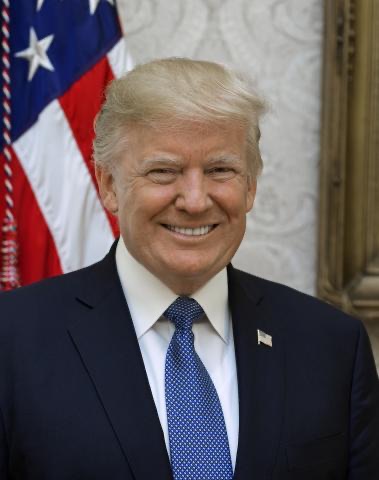
President and Commander-in-Chief

Former Secretary of Defense (2021–2025)
U.S. Representative (D-CT), Ranking Member, House Intelligence Committee
Primary manufacturer of THAAD interceptors and PAC-3 Patriot missiles
Manufacturer of Patriot Advanced Capability-3 (PAC-3) interceptors
Manufacturer of B-2 Spirit stealth bombers used in Operation Epic Fury opening strikes
Former U.S. Representative (R-WI), former Chair, House China Select Committee; Marine Corps veteran (retired from Congress January 2025)

U.S. Representative (R-OK), Chair, House Appropriations Committee

U.S. Representative (D-MA), Marine Corps veteran, House Armed Services Committee member
civic action
Contact your representative about the Defense Production Act invocation discussions
The Defense Production Act allows the president to direct private industry to prioritize national defense production. Invoking it for munitions during an unauthorized war without a clear end state raises questions about the scope of executive war-making powers — and creates long-term obligations for defense contractors that affect defense budgets for years.
Hello, I am [NAME], a constituent from [CITY/STATE]. I'm calling about the Defense Production Act and the munitions stockpile depletion in the Iran war.
Key concerns:
Questions to ask:
Specific request: I am asking Representative [NAME] to demand the administration provide a public assessment of munitions stockpile status and the projected cost of replenishment before any DPA invocation.
Question: Does Representative [NAME] believe the American public has a right to know whether U.S. munitions stockpiles are adequate for the war the president launched?
Thank you.
research
Read the Defense Production Act and understand presidential industrial powers
The Defense Production Act gives the president sweeping authority to direct private industry for national defense purposes. Reading the statute — and understanding when it has been invoked historically — helps citizens evaluate whether its use in a specific conflict is appropriate and what oversight mechanisms Congress has over its application.