Immigration · Judicial Review · Constitutional Law · Civil Rights·February 19, 2026
DHS orders detention of legal refugees who lack green cards
DHS creates detention trigger for refugees whose green card process the government itself has frozen

The Department of Homeland Security issued a memo on February 18, 2026, directing federal immigration agents to detain any refugee who entered the United States legally but has not yet obtained a green card at the one-year mark of residency. The memo was signed by USCIS Director  Joseph Edlow and acting ICE Director
 Todd Lyons and was filed in federal court in Minnesota just hours before a scheduled hearing before U.S. District Judge John Tunheim. Tunheim had already issued a January 28 temporary restraining order blocking the detention of approximately 5,600 Minnesota refugees targeted by "Operation PARRIS," calling the detention argument "nonsensical" because it would mean refugees celebrate their one-year anniversaries in jail. The memo creates a legal catch-22: DHS paused green card processing for refugees from countries on Trump''s travel ban list — including Somalia — making it impossible for those refugees to obtain the documentation required to avoid detention. The policy affects an estimated 200,000 refugees who entered under the Biden administration.
Key facts
The February 18, 2026 memo, jointly signed by USCIS Director Joseph Edlow and acting ICE Director Todd Lyons, establishes what it calls a 'detain-and-inspect' protocol for refugees who have lived in the U.S. for at least one year without adjusting to lawful permanent resident (green card) status. Previous guidance from 2010 did not treat the failure to apply for a green card as grounds for deportation.
The memo was submitted to federal court in Minnesota as part of documents in the Operation PARRIS litigation — a Trump administration effort to detain and re-examine 5,600 Somali refugees in the Minneapolis-Saint Paul area. It was filed roughly 24 hours before U.S. District Judge John Tunheim was scheduled to hear arguments on extending the temporary restraining order he had issued on January 28.
Judge John Tunheim, a Bill Clinton appointee, issued a temporary restraining order on January 28 blocking the detention of the targeted Minnesota refugees and ordering the immediate release of those already detained. In his January opinion, he wrote that the government's argument 'would lead to many refugees celebrating their one-year anniversary in this country in jail' and labeled it 'nonsensical.' His TRO was set to expire February 25.
The memo creates a legal impossibility for refugees from countries on Trump's travel ban list, including Somalia: DHS separately announced in December 2025 a pause on all green card applications for people from high-risk countries. Refugees from those countries are therefore unable to comply with the memo's requirement to obtain a green card, yet they face detention for failing to do so. Krish O'Mara Vignarajah, president of the refugee resettlement organization Global Refuge, called this 'indefensible.'
Edlow and Lyons cited an internal, unpublished USCIS review of refugees admitted between 2021 and 2024 from Ecuador, El Salvador, Guatemala, Honduras, and Venezuela, finding that 10% of the 31,000 reviewed had 'evidence of public safety concerns' and over 42% had not been 'sufficiently vetted.' The review's methodology has not been made public and cannot be independently verified. The memo uses this review to justify the broader detention policy.
Laurie Ball Cooper, vice president of U.S. legal programs at the International Refugee Assistance Project — one of the lead plaintiffs in the Minnesota lawsuit — said the memo 'is part of a broad and concerted effort to strip refugees of their legal status and render them deportable.' The IRAP was founded by law students at Yale in 2008 and is one of the primary legal organizations defending refugee rights in U.S. courts.
The policy is part of Operation PARRIS, a broader Trump administration enforcement effort targeting refugee communities. DHS has also, in a related program called Operation Twin Shield, been coordinating immigration enforcement across multiple states. The U.S. government set the lowest-ever annual refugee admission cap — 7,500 — under Trump's second term, a dramatic reduction from the 125,000 cap set by Biden.
If the TRO is not extended by Judge Tunheim, approximately 5,600 Minnesota refugees would face potential detention after February 25. The broader memo, however, applies nationally to an estimated 200,000 refugees admitted under the Biden administration who have not yet obtained permanent resident status.
Related
Categories that may be relevant to you
5 topics available

May 23, 2026
DOJ scrubs hundreds of Jan. 6 prosecution records from website
May 22, 2026
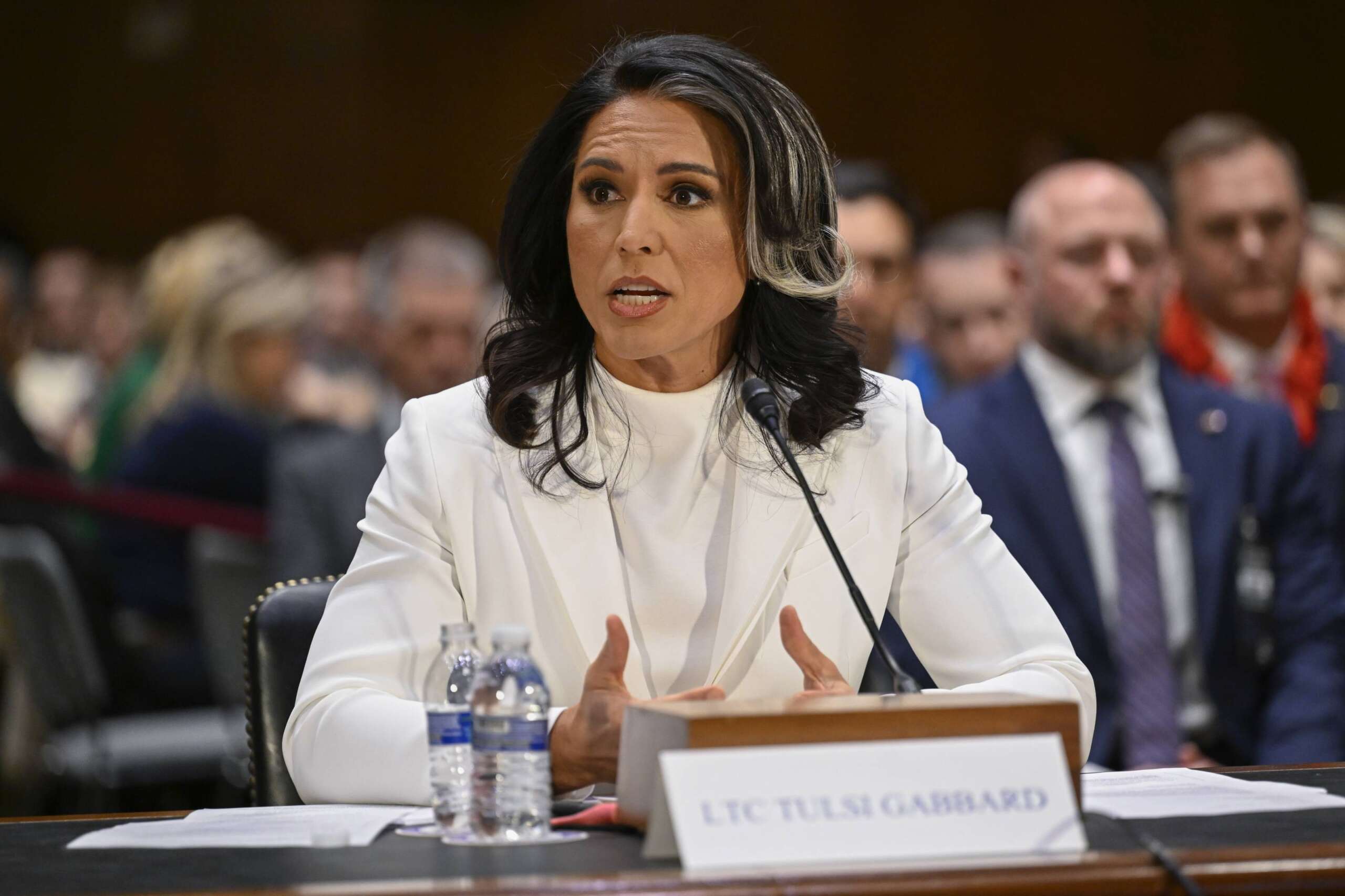
Gabbard resigns as director of national intelligence
May 22, 2026
Colorado closes legal gap for defendants found unfit to stand trial
🔍
May 22, 2026
FTC fines Cox Media Group $930K for fake AI listening ad service
🏫
May 22, 2026
Tennessee governor signs Memphis schools state takeover into law
View All Government Topics
769 topics
12 questions
Start the review