March 12, 2026
DHS shutdown enters fourth week as TSA lines hit 4 hours

260,000 federal workers unpaid as airports face spring break gridlock
🏛️Government🛂Immigration🏢Legislative Process
March 12, 2026
260,000 federal workers unpaid as airports face spring break gridlock
The Department of Homeland Security has been operating without approved funding since February 14, 2026, when a short-term continuing resolution expired without a replacement. DHS is the only federal agency caught in this partial shutdown. The rest of the federal government has been funded through the rest of fiscal year 2026, which ends September 30 . This DHS-specific impasse is the second government funding lapse in recent months, following a record 43-day shutdown that affected DHS last fall.
More than 260,000 DHS employees are legally required to keep working as essential personnel but are not receiving paychecks. That group includes 61,000 TSA airport screeners, members of the Coast Guard, and a majority of FEMA staff. Workers received a partial paycheck on February 28, but a full missed paycheck was scheduled to hit on March 14, 2026, meaning the financial pressure on frontline workers is intensifying as the spring break travel season peaks.
Senate Democrats and Republicans held an hours-long floor debate on March 11, 2026, that ended without a deal. Sen.  Patty Murray of Washington, the ranking Democrat on the Senate Appropriations Committee, offered a bill that would fund all DHS agencies except ICE and Customs and Border Protection. Sen. Katie Britt of Alabama, the Republican chair of the DHS appropriations subcommittee, countered with a two-week continuing resolution to fund all of DHS without any policy conditions . Murray objected to Britt's proposal. Britt objected to Murray's. Both sides needed unanimous consent to move forward, and neither got it.
Senate Majority Leader  John Thune of South Dakota said his side had made repeated overtures to Democrats and that the last White House offer on DHS funding came nearly two weeks before the March 11 debate. 'Usually, around here, in order to get a deal, there has to be a negotiation where the two sides sit down together,' Thune said. 'And my understanding is that has been completely rebuffed by the senator from Washington.'
The core policy dispute is over ICE and CBP accountability. Democrats are demanding that any DHS funding bill include requirements for ICE agents to wear body cameras, remove masks during enforcement operations, cooperate with state and local investigators, and follow standards that local police departments already observe . Republicans have called these demands a nonstarter. 'They want to separate ICE from DHS. We're not going to do that,' one senior Republican senator told The Hill.
Murray has specifically named Stephen Miller, the White House deputy chief of staff and the architect of Trump's immigration enforcement strategy, as an obstacle to any deal that senators negotiate. 'I am willing to talk to people, but I'm not willing to sit in a room, have coffee, give away a few things and have Stephen Miller override whatever we all agree to,' Murray said on the Senate floor on March 11. Her demand that Miller's boss, the White House itself, guarantee any agreement reflects the unusual degree to which Miller has become the effective enforcer of immigration policy from within the executive office.
ICE and CBP are in the anomalous position of continuing to operate at full capacity despite the DHS shutdown. That is because both agencies had separate funding streams. The One Big Beautiful Bill Act, a sweeping domestic policy package signed earlier in 2026, allocated $170 billion to DHS specifically for immigration enforcement over several years . That funding remains available, so ICE continues to conduct arrests and detentions even as TSA officers work unpaid and FEMA operates with 15 percent of its staff furloughed.
The result is a shutdown that cuts essential civilian services like airport security and disaster response while leaving the enforcement arm of the immigration apparatus fully functional. Critics, including Sen. Tim Kaine of Virginia, have pointed out that the practical effect is to punish TSA workers and disaster victims while ensuring that immigration enforcement is immune to the funding crisis.
TSA staffing is deteriorating in measurable ways. By March 9, 2026, 305 TSA employees had separated from the agency since the shutdown began, driven by financial strain from working without pay . CBS News reported that TSA absences doubled at some airports. Former TSA Administrator John Pistole warned in a CBS interview that the staffing situation represents 'a huge morale hit for TSA,' and that the agency's adversaries could try to exploit what he called 'a perceived vulnerability' if officer call-outs continue to rise.
Airports in the South and Southwest have been hit hardest. At Houston's William P. Hobby Airport, passengers faced waits of up to four hours over the weekend of March 8-9. Security lines stretched into the airport's parking garage at Louis Armstrong New Orleans International Airport, and airport officials there urged passengers to arrive at least three hours before their flights. Atlanta's Hartsfield-Jackson Airport reported waits approaching one hour. The disruptions are arriving at the worst possible time: the spring break travel season and the run-up to the 2026 FIFA World Cup, which will bring a surge of international visitors to US airports this summer.
President Trump fired Homeland Security Secretary  Kristi Noem on March 5, 2026, and announced on Truth Social that Sen.
  Markwayne Mullin of Oklahoma would replace her effective March 31 . The firing came amid growing frustration with Noem's handling of the shutdown and the TSA staffing crisis. However, Democrats and some Republicans signaled that Noem's removal did not fundamentally change the underlying dispute. Senate Minority Leader Chuck Schumer of New York said that 'ICE needs to be overhauled legislatively, and not just a change in personnel.'
Mullin's nomination would require Senate confirmation. Senate Homeland Security Committee Chair Rand Paul of Kentucky had not announced a confirmation hearing timeline as of March 11. The transition is adding to DHS's institutional instability: the department is simultaneously coping with a funding lapse, a staffing drain, a leadership change, and the fallout from the Iran war, which has diverted some national security attention and resources.
The constitutional mechanics of the shutdown reflect the Appropriations Clause of Article I, Section 9 of the Constitution, which states that no money may be drawn from the Treasury except through appropriations made by law . Congress's power of the purse is one of its most fundamental tools for checking executive power. When Congress withholds funding from a specific executive agency, it is exercising that power directly, though the practical effects fall primarily on frontline workers rather than policymakers.
The Senate requires 60 votes to advance most legislation, a threshold designed to force bipartisan agreement. Because neither party has 60 seats, funding bills for DHS must attract crossover votes. The 60-vote requirement explains why both Murray's and Britt's proposals failed on March 11 even though each had majority support within its own party. The structural design of the Senate, intended to moderate legislation, is in this case prolonging a shutdown that affects tens of thousands of workers.

US Senator, Washington (D) — Ranking Member, Senate Appropriations Committee
US Senator, Alabama (R) — Chair, Senate Appropriations Subcommittee on Homeland Security

US Senator, South Dakota (R) — Senate Majority Leader
White House Deputy Chief of Staff

US Senator, Oklahoma (R) — Nominee for DHS Secretary
Senior Official Performing Duties of TSA Administrator
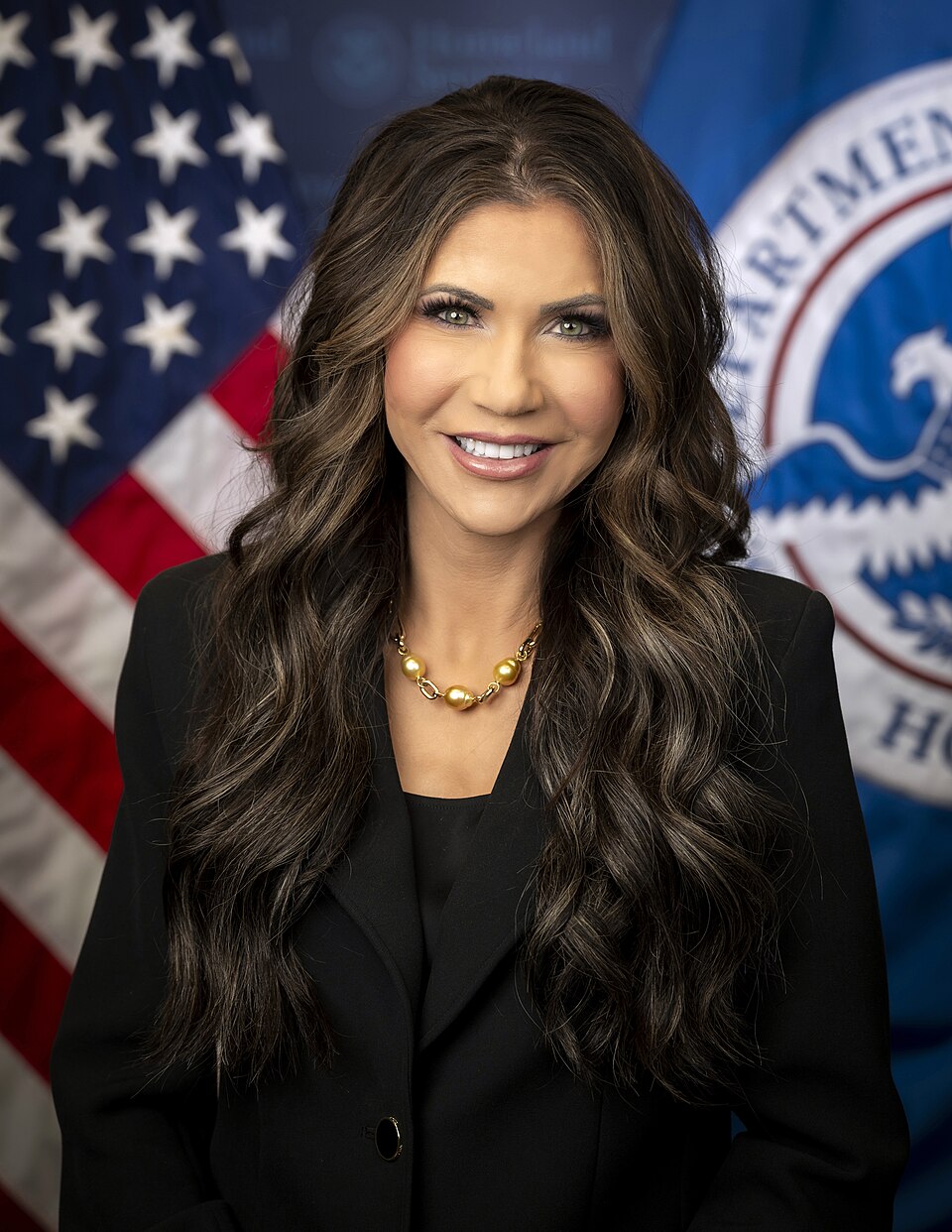
Former DHS Secretary (fired March 5, 2026)
civic action
Demand immediate DHS funding resolution as TSA workers face missed paychecks
The Department of Homeland Security shutdown entered its fourth week on March 12, 2026, with 50,000 TSA officers working without pay since February 14. Airport wait times have reached up to 4 hours at some locations, with lines extending to parking lots during spring break travel. Over 300 TSA officers have quit during the shutdown, exacerbating staffing shortages. TSA workers are scheduled to miss their first full paycheck on March 14, creating urgent pressure for a funding resolution before the situation further deteriorates.
Hello, I am [NAME] from [CITY/STATE]. I am calling about the urgent need to end the DHS shutdown. Key points: DHS shutdown entered fourth week on March 12, 2026. 50,000 TSA officers working without pay since February 14. Airport wait times up to 4 hours during spring break travel. 300+ TSA officers have quit during shutdown. Workers face first full missed paycheck on March 14. Questions to ask: Will Senator [NAME] support immediate DHS funding resolution? Will Senator [NAME] support partial funding bill for TSA, Coast Guard, and FEMA? Will Senator [NAME] demand ICE accountability reforms Democrats request? Specific request: I want Senator [NAME] to take immediate action to end the shutdown and ensure TSA workers receive their paychecks. Thank you for your time.
advocacy
Support legislation to guarantee federal workers get paid during government shutdowns
A bipartisan group of 16 House members introduced legislation in January 2026 that would require federal employees, military service members, and contractors to be paid in full and on time even during a government shutdown. This reform would prevent workers from being used as leverage in budget fights.
When contacting your representative, ask whether they support the Federal Employee Pay Protection Act or any equivalent legislation ensuring that essential federal workers are paid during government shutdowns. Note that TSA officers are legally required to work without pay during a shutdown and that the current situation is causing long-term damage to TSA staffing and morale.
civic education
Track the DHS shutdown''s real-time impact through federal employee and aviation industry groups
The American Federation of Government Employees and the US Travel Association publish regular updates on shutdown impacts including worker hardship data, airport wait time trends, and legislative developments. Staying informed is the first step toward meaningful civic engagement on this issue.
Follow the US Travel Association and AFGE''s shutdown trackers for daily updates on airport conditions, worker pay status, and congressional activity. Their data and advocacy materials can be directly cited when contacting members of Congress.