April 28, 2026
DOJ re-indicts Comey over seashell photo officials call Trump threat
Comey faces 20 years for a beach photo; scholars say case can't survive First Amendment
⚖️Justice✊Civil Rights🏛️Government🔐Ethics
April 28, 2026
Comey faces 20 years for a beach photo; scholars say case can't survive First Amendment
James Comey served as FBI Director from 2013 until President Trump fired him in May 2017, an act that triggered the appointment of Special Counsel Robert Mueller. Trump publicly cited Comey's handling of the Hillary Clinton email investigation as justification, but later told NBC News that 'the Russia thing' was on his mind. Since his firing, Comey has written two books critical of Trump, given frequent media interviews, and built a substantial social media following.
On May 15, 2025, Comey posted an Instagram photo showing seashells arranged to form '86 47' on a North Carolina beach, captioning it 'Cool shell formation on my beach walk.' The post went viral within hours after Trump allies argued '86' — long-used slang meaning to remove or discard something — combined with '47' for the 47th president was a veiled call to harm Trump. Comey deleted the post the same day and wrote that he 'didn't realize some folks associate those numbers with violence.'
The federal charges filed April 28, 2026 in the Eastern District of North Carolina include Count 1 under 18 U.S.C. § 871 — knowingly and willfully threatening the life of or bodily harm to the president — and Count 2 under 18 U.S.C. § 875(c) — transmitting in interstate commerce a communication containing a threat to injure another person. U.S. Attorney W. Ellis Boyle announced the indictment, and Assistant U.S. Attorney Matthew R. Petracca is prosecuting the case. Each count carries a maximum of 10 years in prison, for a combined maximum of 20 years.
The indictment is the second criminal action brought by Trump's DOJ against Comey. The first charges, filed in September 2025 under U.S. Attorney Erik Siebert's office, alleged Comey lied to Congress about authorizing disclosure of investigative information to a journalist. That case collapsed when a federal judge ruled the prosecutor who brought it was illegally appointed. The repeated prosecutions have raised questions among legal scholars about selective prosecution — bringing charges against a specific individual because of their criticism of a government official.
The Supreme Court's 2023 decision in Counterman v. Colorado established the constitutional standard for prosecuting speech as a 'true threat.' The court held that prosecutors must prove the defendant was at minimum reckless — meaning they consciously disregarded a substantial risk that their communication would be viewed as threatening. It's not enough that a reasonable observer might see the speech as threatening; the government must prove what was in the speaker's mind.
Applying Counterman, First Amendment legal scholars said the Comey case faces severe obstacles. Eugene Volokh, a senior fellow at the Hoover Institution at Stanford who specializes in the First Amendment, told CNN the case was 'not going anywhere' and was 'clearly not a punishable threat.' The government would need to prove Comey knew or recklessly disregarded that a photo of seashells he described as a 'cool formation' would be interpreted as a death threat. But the indictment doesn't allege that Comey even knew about the '86' slang or Trump's 47th president designation beforehand.
The prosecution sits in a broader pattern of Trump DOJ actions against political critics. Acting Attorney General  Todd Blanche — who served as Trump's personal defense attorney in his criminal trials — oversees a Justice Department pursuing charges against former Fauci adviser David Morens, Southern Poverty Law Center officials, and Comey. According to court filings, Trump personally urged Attorney General
  Pam Bondi (Blanche's predecessor) to prosecute Comey, telling her he believed Comey deserved jail time.
Comey's attorneys filed pre-indictment motions arguing the case constituted selective prosecution — bringing charges against someone specifically because of their criticism of a government official. The same DOJ that prosecuted Comey dropped the investigation of Federal Reserve Chair  Jerome Powell despite public pressure from Trump, which will likely form the core of Comey's selective prosecution argument in pretrial motions.
The true threats doctrine has a long history in First Amendment law, tracing back to Watts v. United States (1969), where the Supreme Court held that not all threatening language is unprotected speech. The Watts case involved a young man arrested for saying he wouldn't be drafted into the Army and 'if they ever make me carry a rifle the first man I want to get in my sights is LBJ.' The Court ruled this was political hyperbole, not a true threat.
Counterman v. Colorado (2023) tightened the standard further after years of courts applying different tests. The case involved a man arrested for making hostile comments about a bartender on Facebook. The Supreme Court ruled courts can't prosecute ambiguous statements as threats under the recklessness standard — speakers must consciously disregard a substantial risk their words would be seen as threatening. This means prosecutors bear a heavy burden proving subjective intent, not just that reasonable observers could interpret speech as threatening.
Comey has steadily built a public presence as a Trump critic since his 2017 firing. He published 'A Higher Loyalty' in 2018, which detailed his version of events leading to his termination and the Russia investigation. A second memoir, 'Saving Justice,' came out in 2021. On social media, Comey's posts frequently comment on Trump administration decisions and broader questions about ethics and governance in law enforcement. His Instagram following, which remained relatively small until Trump's second term, grew substantially after he began more regularly posting.
The May 2025 seashell post fit into this pattern of public commentary. Comey's account primarily consists of vacation photos, reflections on faith, and occasional political observations. Nothing in his post history suggested he understood '86 47' as code for harming anyone. His immediate deletion and explicit statement that he 'opposed violence of any kind' became central to First Amendment scholars' assessment that the case couldn't survive legal scrutiny.
Todd Blanche's role as acting attorney general creates a profound appearance problem for the prosecution, regardless of its legal merits. Blanche served as Trump's defense attorney in three criminal cases — the Manhattan hush-money trial, the classified documents case in Florida, and the election interference case in Washington. In those cases, Blanche argued vigorously that the prosecutions were politically motivated and constitutionally flawed.
Now, as the nation's chief law enforcement officer, Blanche oversees prosecutions of Trump's critics that appear to follow Trump's public statements. In April 2026, Trump publicly stated his belief that Comey should face prosecution. Days later, Blanche moved from deputy AG to acting AG, inheriting full control of the Comey indictment. Federal prosecutors have historically maintained independence from the president's wishes, but this administration has explicitly rejected that norm. Blanche told a CNN interviewer that he doesn't view Trump's direction to investigate his enemies as 'pressure' but rather as 'the president working every day to make sure we're doing our jobs.'
The political context surrounding Comey's prosecution illuminates questions about institutional independence and rule of law. Comey's first indictment, brought under previous attorney general Pam Bondi, collapsed when a judge found the prosecutor was illegally appointed. Rather than accept that outcome, the Trump DOJ brought a new prosecution on different charges — a pattern known as successive prosecution that Congress has tried to limit through statute.
Meanwhile, investigations of some Trump critics have been dropped. The DOJ closed the investigation of Federal Reserve Chair Jerome Powell around the same time it was ramping up pressure on Comey. Comey's lawyers argue this selective enforcement violates the constitutional principle that government power can't be used against someone because of their exercise of free speech. That defense will likely require testimony from DOJ officials about why Comey was prosecuted while others facing similar scrutiny were not.
The case will likely move through federal court on a compressed timeline, given the 2026 election year. If Comey is convicted, he'd appeal to the Fourth Circuit Court of Appeals (which covers North Carolina), where First Amendment precedent strongly favors speech protections. The Supreme Court's Counterman v. Colorado decision is recent and decisive, and all eight sitting justices agreed on the recklessness standard, making reversal unlikely.
The bigger question is whether courts will even reach the First Amendment merits or instead dismiss on grounds of selective prosecution or vindictive prosecution. The Supreme Court has recognized that using criminal prosecution as retaliation for protected speech violates due process. Comey's attorneys will argue that Trump's public statements demanding his prosecution, combined with the drop of Powell's investigation and the collapse of the first indictment, constitute a pattern of retaliation.
Former FBI Director (2013–2017), defendant in criminal proceedings
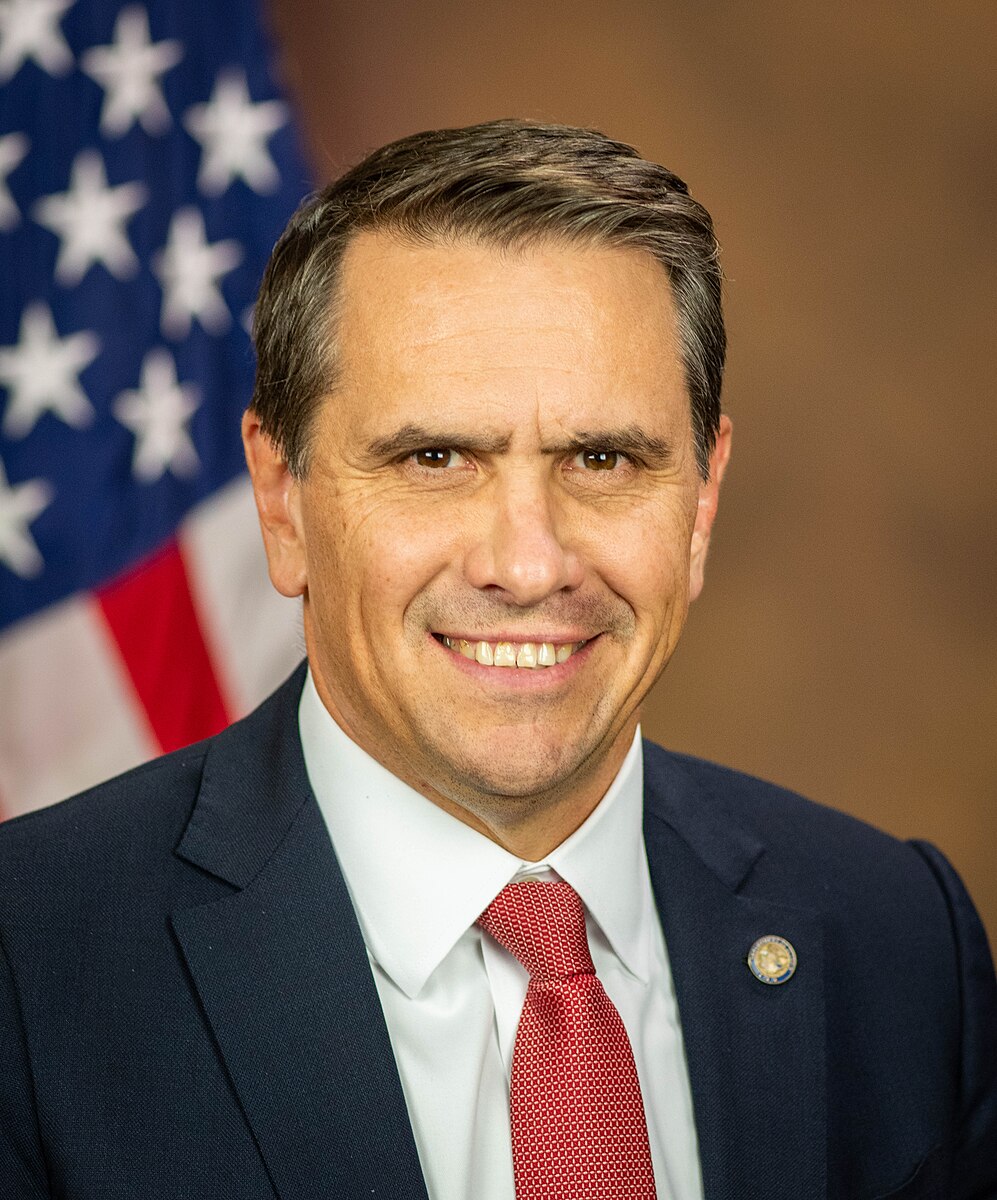
Acting Attorney General of the United States
U.S. Attorney, Eastern District of North Carolina
Assistant U.S. Attorney, Eastern District of North Carolina
Senior Fellow, Hoover Institution at Stanford University; First Amendment scholar
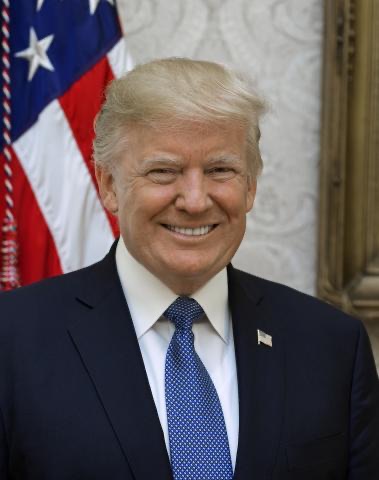
President of the United States, named victim in the indictment
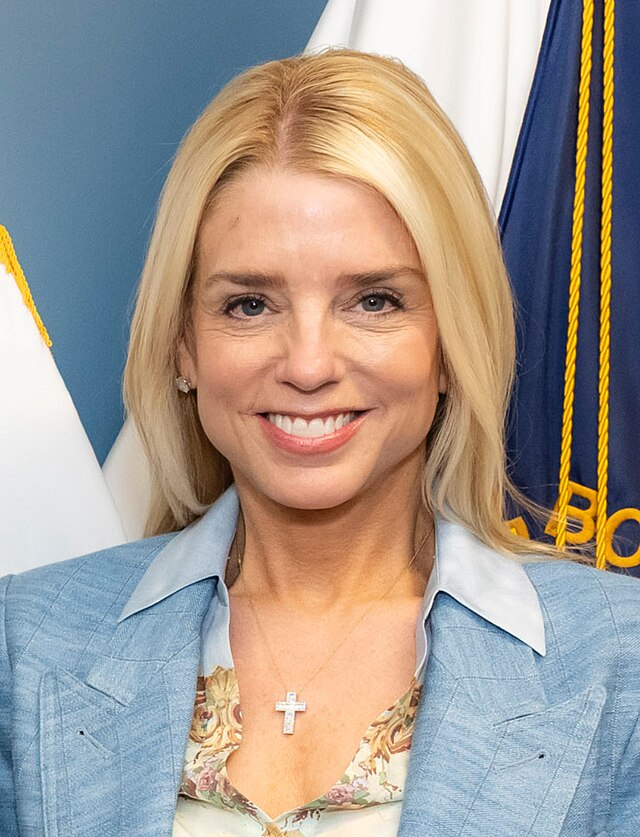
Former Attorney General (served until April 2026)
U.S. Attorney, Eastern District of Virginia
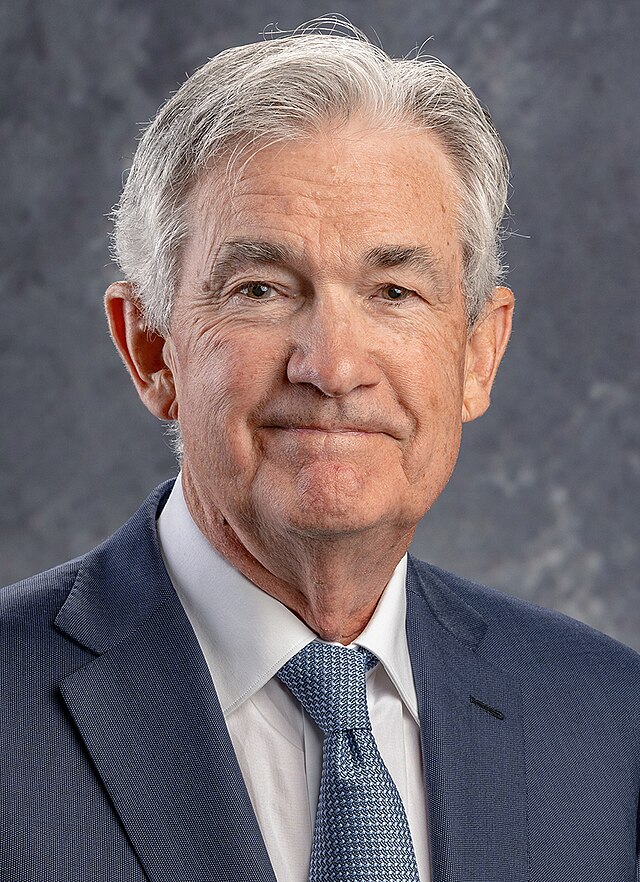
Chair of the Federal Reserve Board
Special Counsel (2017–2019)
civic action
Contact your representative about DOJ prosecutorial independence
The Justice Department is supposed to make prosecution decisions based on law, not political loyalty. When acting AG Todd Blanche — Trump's former personal attorney — oversees prosecutions of Trump critics, it tests the department's independence. Your representative can demand oversight hearings through the House Judiciary Committee to investigate whether the DOJ is being weaponized against political opponents.
Hello, my name is [NAME] and I'm a constituent from [CITY, STATE]. I'm calling about the DOJ's second prosecution of James Comey over a seashell photograph. I'd like to ask: Does [Representative NAME] support a Judiciary Committee hearing on whether the DOJ is using prosecutions to target political critics?
Key concerns:
Specific request: Call for a House Judiciary Committee hearing on DOJ independence and selective prosecution.
Question: What is [Representative NAME]'s position on protecting prosecutorial independence from political interference?
Thank you for your time.
legal resource
Support legal organizations defending First Amendment press freedoms
The Reporters Committee for Freedom of the Press and other civil liberties organizations are filing amicus briefs in the Comey case. Their legal arguments will help courts understand the broader implications for press freedom and political speech. Supporting these organizations strengthens the legal defense of First Amendment protections.
The Reporters Committee for Freedom of the Press and similar organizations are tracking this case as a test of First Amendment protections for political speech. You can support their work through donations or volunteer efforts. The case will set precedent for whether ambiguous or symbolic speech can be prosecuted as threats to government officials.
research
Monitor and report on prosecutorial patterns in federal criminal cases
Government accountability organizations monitor federal prosecutions to identify patterns suggesting political motivation. By tracking which cases are brought, which are dropped, and who is prosecuted, citizens can help demonstrate selective prosecution. This public scrutiny becomes evidence courts consider in motions to dismiss.
American Oversight and similar government accountability organizations track patterns in federal prosecutions to identify potential selective prosecution. You can report information about prosecution decisions or patterns you observe. Courts increasingly rely on public pressure and transparency to evaluate selective prosecution claims.
legislative
Contact Senate Judiciary Committee members about confirmation standards
Congress can require ethics safeguards when DOJ officials move from representing the president privately to leading federal prosecutions. Senators can support legislation establishing independent review of prosecutions brought by officials with prior conflicts of interest, protecting both the integrity of the justice system and the rule of law.
Hello, my name is [NAME] and I'm a constituent from [CITY, STATE]. I'm calling about Todd Blanche's role as acting attorney general. Blanche served as Trump's personal defense attorney before becoming the nation's top law enforcement officer. I'd like to ask: Does Senator [NAME] support legislation requiring independent review when DOJ officials with prior conflicts of interest oversee prosecutions?
Key concerns:
Specific request: Support legislation requiring DOJ ethics review when officials with prior client relationships oversee relevant prosecutions.
Question: What is the Senator's position on DOJ independence and conflict-of-interest safeguards?
Thank you for your time.