Judicial Review · Constitutional Law · Justice·March 3, 2026
DOJ drops then reverses its fight against law firms that beat Trump in court
Four courts found the orders unconstitutional. Then DOJ dropped them. Then it did not

Photo: Annabelle Gordon / Sipa USA/AP
On March 3, 2026, the Department of Justice reversed course and filed to resume its appeals against four law firms, including Perkins Coie, WilmerHale, Jenner and Block, and Susman Godfrey, in less than 24 hours after dropping the cases and conceding to federal judges who had found 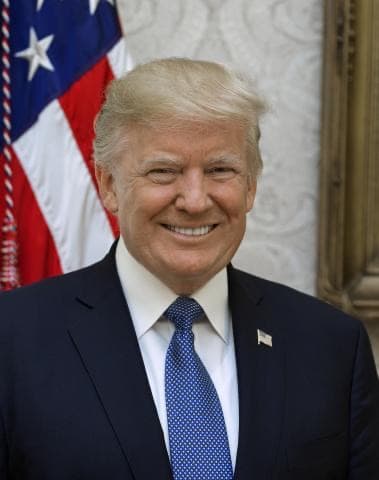 Trump's retaliatory executive orders unconstitutional. Trump had signed executive orders in early 2025 targeting the four firms because of their clients and legal work, including representing Hillary Clinton, employing lawyers from Robert Mueller's investigation, and representing Dominion Voting Systems against Fox News. The orders stripped the firms' employees of security clearances, terminated their government contracts, and barred them from federal buildings. Each firm sued. Four separate federal judges unanimously struck the orders down as unconstitutional. On Monday, March 2, the DOJ filed to voluntarily dismiss all four appeals. The firms declared victory and called it a capitulation. But Tuesday morning, a DOJ official emailed all four firms apologizing for the short notice and saying the department would file to withdraw the dismissal. The DOJ gave no explanation for the reversal. Nine other major law firms, including Paul Weiss, Skadden, and Kirkland and Ellis, who had previously declined to fight the orders and instead agreed to provide nearly $1 billion in pro bono legal work for Trump and his causes.
Key facts
"In early 2025, President Trump signed executive orders targeting four prominent law firms: Perkins Coie, WilmerHale, Jenner & Block, and Susman Godfrey. The orders stripped security clearances from firm employees, terminated government contracts, and barred firm lawyers from entering federal buildings. The stated justification in each order was explicitly based on the firms' past legal work — not any allegation of current wrongdoing. Perkins Coie had represented Hillary Clinton's 2016 campaign; WilmerHale had employed Robert Mueller and Andrew Weissmann after the Russia investigation; Jenner & Block had employed Weissmann; Susman Godfrey had represented Dominion Voting Systems in its $787 million defamation settlement against Fox News. "
"All four firms refused to negotiate and filed suit. Four separate federal district court judges — hearing the cases independently — found the executive orders unconstitutional. Judge Beryl Howell ruled the Perkins Coie order was 'an unprecedented attack' on the U.S. judicial system, invoking Shakespeare: 'The first thing we do, let's kill all the lawyers.' Judge John Bates found the Jenner & Block order violated the First, Fifth, and Sixth Amendments. Judge Loren AliKhan ruled the Susman Godfrey order reflected 'a personal vendetta' and an attempt 'to dictate the positions that law firms may or may not take.' The unanimity across four judges was itself legally significant. "
"Nine other major firms chose not to fight. Paul Weiss was the first to settle, agreeing to eliminate its DEI programs and provide $40 million in pro bono legal services to Trump-aligned causes — before the executive order targeting Paul Weiss was even formally signed. Skadden agreed to $100 million in pro bono work. At least seven additional firms followed. Combined, firms that negotiated rather than litigated committed nearly $1 billion in free legal services to the Trump administration. By June 2025, reporting showed that 11 client companies — including Oracle, Microsoft, Morgan Stanley, and McDonald's — had shifted business toward the fighting firms and away from those that settled. "
"On the evening of Monday, March 2, the DOJ moved to voluntarily dismiss all four remaining appeals of the lower-court rulings. The four fighting firms publicly celebrated. Jenner & Block said the withdrawal 'makes permanent the rulings of four federal judges that the executive orders targeting law firms were unconstitutional.' Susman Godfrey called it 'a fitting end to its plainly unconstitutional attack on Susman Godfrey and the rule of law.' WilmerHale called the decision 'clearly the right one.' Rep. Jamie Raskin (D-MD) said the outcome proved 'there is no safety in appeasement.' "
"By Tuesday morning, March 3, the government had reversed itself. A DOJ motion filed with the D.C. Circuit sought to withdraw the voluntary dismissal filed less than 24 hours earlier. The motion, signed by Associate Attorney General Stanley Woodward, offered no explanation. It said only that it was the 'prerogative' of the government to pursue its appeal regardless of the prior day's filing. The D.C. Circuit had not yet formally granted the dismissal, leaving a procedural window the government exploited to pull its own concession. "
"The four firms jointly opposed the reversal in a filing with the D.C. Circuit. They noted all parties had agreed to the voluntary dismissal and called the government's conduct 'an unexplained about-face.' Their filing stated: 'Under no circumstances should the government's unexplained about-face provide a basis for an extension of its brief.' The episode — concede, celebrate, reverse — left the constitutional questions entirely unresolved and the firms back in the appellate posture they had been in before Monday's filing. The DOJ brief in the ongoing appeal was due by March 6. "
"The broader pattern the case exposed raised foundational questions about the legal profession and access to justice. As multiple legal commentators noted, the purpose of Trump's original orders was to send a message while extracting pain — and the settlement firms demonstrated that this leverage worked even when the orders themselves were unconstitutional. Nine firms paid nearly $1 billion in legal work to avoid a fight that four firms were winning for free. The Rule of Law Defense Fund called the combined effect a tax on independence: firms that maintained their autonomy from political pressure were punished; firms that surrendered were rewarded. "
"The First Amendment implications extended beyond the specific firms targeted. Over 500 law firms signed an amicus brief supporting Perkins Coie's lawsuit. By June 2025, reporting documented 'anxious clients' leaving the settling firms and moving business to the fighting firms — a market signal that clients valued independence from political pressure. The cases moved constitutional law into new territory: no prior administration had used executive orders to strip a law firm's government contracts and security clearances based solely on the clients the firm chose to represent. "
Related Topics
6🏛️
Former President Trump appeals hush money conviction on multiple legal tracks
After receiving an unconditional discharge at his January 10, 2025 sentencing, Trump launched a two-track legal campaign to erase his 34 felony convictions for falsifying business records. On the state track, Trump filed a formal notice of appeal to the New York Appellate Division, First Department, in January 2025 and filed his main appellate brief in October 2025, arguing the trial was fatally marred by the introduction of evidence tied to his official presidential acts. His attorneys pointed specifically to testimony from former White House communications director Hope Hicks — which prosecutors called devastating — and to posts Trump made on social media during his presidency as examples of official-act evidence that the Supreme Court's July 2024 immunity ruling in Trump v. United States should have barred from trial. Judge Merchan had previously ruled that this evidence related entirely to unofficial conduct and received no immunity protection. On the federal track, Trump's attorneys tried to move the entire case from state court to federal court by invoking the federal officer removal statute, which allows federal officials to move cases involving their official duties to federal court. A federal appeals court revived this effort in November 2025, ordering U.S. District Judge Alvin Hellerstein to reconsider his earlier rejection. At a February 4, 2026 hearing, Hellerstein told Trump's lawyers they had waited too long — 58 days after the Supreme Court immunity ruling, beyond the 30-day grace period — before seeking removal in federal court. "You sought two bites at the apple," Hellerstein said. He had not yet issued a ruling as of late February 2026.
108% match
18 questions
⚖️
Federal judges pushed back on Trump Jan. 6 pardons and blocked DOJ expansion attempts
On January 20, 2025, Trump signed a proclamation granting blanket pardons to roughly 1,500 people convicted of Jan. 6 offenses. The judges who had spent years overseeing those cases refused to stay silent. Judge Tanya Chutkan wrote that "no pardon can change the tragic truth of what happened on January 6, 2021." Judge Beryl Howell called the clemency order's framing of the prosecutions as a "national injustice" a "revisionist myth." Judge Colleen Kollar-Kotelly noted that jury verdicts, thousands of videos, and judicial opinions would preserve the record regardless of executive action. Judge Royce Lamberth said in open court on January 25, 2025, he had never seen "such meritless justifications of criminal activity." The judicial resistance went beyond written statements. Within two months of the pardons, the Justice Department reversed its initial narrow reading of the clemency order and began arguing that pardons covered not only Jan. 6 conduct but unrelated crimes discovered during FBI searches of defendants' homes — including illegal firearms, drugs, and in one case child pornography. Trump-appointed Judge Dabney Friedrich rejected that expanded interpretation in writing, saying it would "defy rationality." Three federal appeals court panels also questioned or pushed back on DOJ's position. William Colton, convicted of receiving child pornography during a Jan. 6 FBI search, argued the pardon covered those charges — a federal judge disagreed. These disputes forced courts to define the constitutional limits of presidential pardons in real time. Under Article II, Section 2 of the Constitution, the president may pardon "Offenses against the United States" — federal crimes only. Courts established that a vaguely worded proclamation does not automatically expand to cover crimes committed in different jurisdictions or at different times, even if federal agents discovered them while investigating Jan. 6.
105% match
18 questions
📋
Goldman and Raskin demand all documents mentioning Trump
Rep. Dan Goldman (D-NY) and Rep. Jamie Raskin (D-MD), the ranking member of the House Judiciary Committee, led committee Democrats in a letter to Attorney General Pam Bondi on July 8, 2025. The letter demanded the full release of Special Counsel Jack Smith's Volume 2 report on Trump's classified documents case and all Epstein investigation files that mention or reference Donald Trump. Goldman and Raskin told Bondi to "stop protecting your boss and former client." The letter came one day after the DOJ and FBI released a two-page memo concluding there was no Epstein "client list," no evidence of blackmail, and that Epstein died by suicide. Democrats argued the DOJ "has all but turned into President Trump's personal law firm." The push followed months of pressure, including Goldman's May 12 letter asking whether Trump personally intervened to block the files, and Elon Musk's June 5 post on X claiming "Trump is in the Epstein files." CNN later reported that Bondi had briefed Trump in May that his name appeared in the files before the DOJ changed course on release.
103% match
21 questions
✊
DOJ drops charges against Army vet who burned flag to protest Trump's flag-burning order
On March 14, 2026, the Department of Justice moved to dismiss charges against Jay Carey, a 55-year-old Army veteran from Arden, North Carolina, who was arrested on August 25, 2025 after burning an American flag in Lafayette Park — minutes after President Trump signed an executive order directing the attorney general to "vigorously prosecute" flag burning. Carey, who served from 1989 to 2012 and was deployed to Bosnia, Iraq, and Afghanistan, was not charged with flag burning itself — the Supreme Court ruled in 1989 that flag burning is protected speech under the First Amendment. Instead, he was charged with two misdemeanors: igniting a fire in an undesignated area and lighting a fire causing damage to park property. Video from police body cameras showed officers discussing Trump's executive order as the basis for the arrest. A federal judge ruled in January 2026 that Carey had shown "enough evidence of actual vindictiveness to merit further inquiry" into whether the prosecution was driven by Trump's executive order rather than legitimate criminal concern. The DOJ moved to dismiss the case before that inquiry could proceed. The dismissal, filed through the office of U.S. Attorney Jeanine Pirro for the District of Columbia, was described by Carey's attorneys as a "significant victory" for First Amendment rights — and as evidence that the administration dropped the case to avoid a court ruling that would have exposed the political basis of the prosecution.
103% match
20 questions
⚖️
Cannon permanently seals Jack Smith's Mar-a-Lago report, citing unlawful appointment
On Feb. 23, 2026, U.S. District Judge Aileen Cannon issued a 15-page order permanently barring the Justice Department from releasing Volume 2 of former Special Counsel Jack Smith''s report on the Mar-a-Lago classified documents investigation. The order prohibits the DOJ and all future attorneys general from releasing, distributing, or sharing any information from the report with anyone outside the department. Cannon''s reasoning relied on her own 2024 ruling — which legal experts widely criticized and which the 11th Circuit had questioned — that Smith was unlawfully appointed as special counsel. She wrote that since Smith lacked lawful authority, Trump and co-defendants Walt Nauta and Carlos De Oliveira retained the presumption of innocence and therefore the report could not be made public. Volume 2 is believed to contain the findings of the investigation, including the substance of immunized testimony from Kash Patel — now the FBI director — who invoked the Fifth Amendment before prosecutors granted him immunity. Two watchdog groups, American Oversight and the Knight Institute, immediately announced they would appeal to the 11th Circuit. Attorney General Pam Bondi had already independently decided the report should remain secret; Cannon''s order now binds all her successors.
102% match
14 questions
📈
Trump's 15% Section 122 global tariff takes effect after IEEPA defeat
On Feb. 20, 2026, the Supreme Court ruled 6-3 in Learning Resources, Inc. v. Trump that the International Emergency Economic Powers Act does not authorize the president to impose tariffs. Chief Justice John Roberts wrote the majority. Within hours, Trump signed an executive order revoking all IEEPA tariffs and invoked Section 122 of the Trade Act of 1974 to impose a new 10% global tariff on all imports, effective Feb. 24, 2026. On Feb. 21, Trump announced he'd bump it to the maximum 15% rate Section 122 allows. The new tariff runs 150 days through July 24, 2026, unless Congress votes to extend it. The Tax Foundation estimated the struck-down IEEPA tariffs had raised more than $160 billion in what it called illegal collections. The Supreme Court declined to resolve what happens to that money, sending the refund question back to the U.S. Court of International Trade.
101% match
43 questions
Related
Categories that may be relevant to you
5 topics available

May 23, 2026
DOJ scrubs hundreds of Jan. 6 prosecution records from website
🔍
May 22, 2026
FTC fines Cox Media Group $930K for fake AI listening ad service
May 22, 2026
Colorado closes legal gap for defendants found unfit to stand trial
May 22, 2026
Gabbard resigns as director of national intelligence
🏫
May 22, 2026
Tennessee governor signs Memphis schools state takeover into law
View All Government Topics
769 topics
20 questions
Start the review