Congress grills Zeldin over plan to cut EPA budget in half
Bipartisan senators reject plan to cut state environmental grants by 83%
Bipartisan senators reject plan to cut state environmental grants by 83%
The Trump administration proposed an EPA budget of $4.2 billion for fiscal year 2027, a $4.6 billion reduction from the FY2026 enacted level of $8.8 billion. The 52.4 percent cut is the deepest proposed reduction to the EPA in the agency's history and would bring its budget to levels not seen since the Reagan administration. Zeldin appeared before three congressional committees in one week to defend the proposal, including the Senate Environment and Public Works Committee on April 29.
The hearing was chaired by Sen. Shelley Moore Capito (R-WV) with Sen. Sheldon Whitehouse (D-RI) as ranking member. Zeldin argued the budget captures significant efficiencies and refocuses the agency on work that Congress has directly mandated, describing it as a leaner, more efficient, and more accountable EPA.
EPA Administrator
Zeldin defended the FY2027 budget proposal across three separate congressional hearings in one week, including before the House Appropriations Interior subcommittee on April 27, the House Energy and Commerce Environment subcommittee on April 28, and the Senate Environment and Public Works Committee on April 29. He argued that a leaner EPA focused on statutory mandates could do more with less.
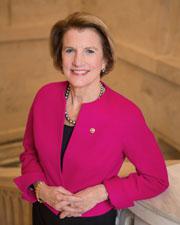
U.S. Senator (R-WV), Chair, Senate Environment and Public Works Committee
Capito chaired the April 29 Senate hearing on the EPA FY2027 budget. As committee chair, she sets the agenda for EPA oversight and appropriations hearings. Her committee ultimately controls Senate input into the final EPA spending level, and Republican committee members have historically resisted the administration's deepest proposed cuts.
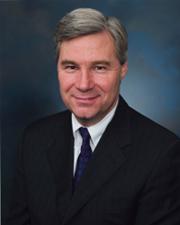
U.S. Senator (D-RI), Ranking Member, Senate Environment and Public Works Committee
Whitehouse is the leading Democratic voice challenging Zeldin's EPA agenda and used the April 29 hearing to accuse Zeldin of executing the fossil fuel industry's agenda. He stated that a massive reckoning is coming. Whitehouse has delivered over 300 Senate floor speeches on climate change and has been the most vocal Senate Democrat on EPA oversight.

U.S. Representative (R-ID), Chair, House Interior, Environment and Related Agencies Appropriations Subcommittee
Simpson chaired the April 27 House Appropriations hearing on the EPA budget and made the most significant Republican statement against the proposed cuts, declaring that the Senate and House are not going to see state and tribal grants cut by 83 percent. His statement directly contradicted Zeldin's defense of the full budget proposal.
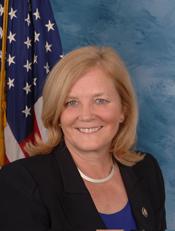
U.S. Representative (D-ME), Ranking Member, House Interior, Environment and Related Agencies Appropriations Subcommittee
Pingree led the Democratic critique at the April 27 House hearing, arguing that the administration's playbook is to slash the federal commitment and dump costs on the states. She has consistently opposed the Trump administration's EPA budget proposals and argued the cuts would harm states that rely on federal environmental grants.

Chief Financial Officer and Chief Administrative Officer, EPA
Hanson testified alongside Zeldin at the April 27 House Appropriations hearing. As EPA CFO, she oversees the budget request and financial management of the agency. Her presence at multiple hearings alongside Zeldin indicates she is the primary internal official responsible for explaining and defending the budget's details.
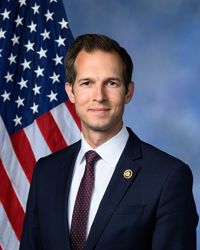
U.S. Representative (D-MA), House Appropriations member
Auchincloss posed the pointed question at a House hearing asking how the EPA plans to remove PFAS from municipal water supplies with 90 percent fewer dollars. The question highlighted a tension between the administration's deregulatory posture and its stated support for addressing PFAS contamination, a bipartisan concern in many congressional districts.
U.S. Representative (D-CA), House Energy and Commerce Committee
Barragan grilled Zeldin at the April 28 House Energy and Commerce hearing about cuts to the Chemical Safety Board in the proposed budget. She pressed the administrator on the frequency of EPA inspections at facilities with histories of violations, connecting the budget cuts to specific public safety risks in her California district.
True
The Trump administration proposed cutting EPA's budget from $8.8 billion to $4.2 billion, a 52 percent reduction
Multiple sources including AP, the Vinyl Institute industry analysis, and Bergeson & Campbell's legal summary confirm the $4.2 billion request represents a $4.6 billion reduction (52.4 percent) from the FY2026 enacted level of $8.8 billion.
True
House subcommittee chair Mike Simpson said the 83 percent grant cut would not happen
Both E&E News and the AP report quote Rep. Simpson saying: 'You're not going to see state and tribal grants cut by 83 percent. That was not Democrats fighting back. That was Republicans and Democrats.' The quote indicates bipartisan opposition to the grant cuts.
True
Congress reduced EPA spending by only 3.5 percent in FY2026 despite the administration's request for more than 50 percent
AP's reporting, as published by multiple outlets, confirms Congress reduced EPA spending by just 3.5 percent in FY2026 despite the Trump administration's request to cut it by more than half. This historical context is a key anchor for understanding how Congress is likely to respond to the FY2027 request.
True
The budget proposes cutting clean water state revolving funds by 74 percent, leaving $300 million
The Vinyl Institute's analysis of the EPA budget request states the proposal includes a $2.5 billion reduction to state revolving funds, leaving $300 million. The FY2026 enacted level included a major boost from the Bipartisan Infrastructure Law, which expires in 2026.
True
The EPA's staffing is at its lowest level in decades under Zeldin
AP's reporting confirms that the EPA has already seen its staffing reduced to its lowest level in decades under Zeldin's leadership prior to the FY2027 budget proposal, which would further reduce the agency's workforce and funding.
True
Zeldin appeared before three separate congressional committees in one week to defend the budget
Official committee records confirm Zeldin appeared before the House Appropriations Interior subcommittee on April 27, the House Energy and Commerce Environment subcommittee on April 28, and the Senate EPW Committee on April 29, completing three budget hearings in one week.
True
The budget would eliminate the Atmospheric Protection Program and end climate research
The Vinyl Institute analysis and E&E News both confirm the budget proposes eliminating the Atmospheric Protection Program and ending funding for what the administration calls radical climate research, along with eliminating environmental justice programs.
Contact your senators and House representative about the EPA FY2027 budget
civic action
Congress controls final appropriations, and individual constituent contacts matter in the budget process. Senators on the Environment and Public Works Committee and members of House and Senate appropriations subcommittees have direct influence over the final EPA spending level. Last year, Congress rejected similar cuts and reduced spending by only 3.5 percent.
Track the EPA FY2027 appropriations process on Congress.gov
civic monitoring
The EPA budget goes through the House and Senate Appropriations subcommittees before reaching the floor. Citizens can monitor the Interior, Environment, and Related Agencies spending bill through Congress.gov, which provides real-time tracking of committee markups, floor votes, and conference proceedings.
Contact your state environmental agency to understand the impact of potential federal grant cuts
civic action
State environmental agencies rely on categorical grants from the EPA to fund enforcement, monitoring, and technical programs. If the proposed 83 percent grant reduction takes effect, state agencies would face drastic cuts to programs that conduct air and water quality monitoring, pesticide enforcement, and drinking water regulation. Your state agency can explain what programs are at risk.
Submit written comments to the EPA on specific proposed regulatory rollbacks
regulatory engagement
Separate from the budget, the EPA has been reversing specific rules, including the endangerment finding on greenhouse gases and mercury emission standards. When the EPA proposes formal rule changes, the public has the right to submit comments under the Administrative Procedure Act. EPA's public comment portal at regulations.gov allows anyone to submit comments on open rulemakings.