Constitutional Law · Judicial Review · Ethics · Government · Historical Precedent·May 20, 2026
Federal judge orders White House to preserve records under 1978 law
Judge blocks DOJ bid to let Trump ignore Watergate-era records law

Photo: National Archives Sculpture by Robert Aitkensource ↗
On May 20, 2026, U.S. District Judge  John D. Bates ordered the White House Office, the National Security Council, the Council of Economic Advisers, the U.S. Secret Service, and senior aides including Chief of Staff Susie Wiles and Deputy Chief of Staff Stephen Miller to comply with the 📖Presidential Records Act — the 1978 law that established public ownership of all records created in the course of a president's official duties. The 54-page ruling, which takes effect May 26, came in direct response to a DOJ 📖Office of Legal Counsel memo dated April 1, 2026, in which Assistant Attorney General T. Elliot Gaiser declared the PRA unconstitutional and wrote that Trump "need not further comply" with it.
Judge Bates — appointed by President George W. Bush and confirmed 97-0 by the Senate in 2001 — found the law "likely constitutional" under the Property Clause of Article IV, which grants Congress power to designate federal property and regulate its management. He wrote that "it is not for this Court, the 📖Office of Legal Counsel, or the White House to second-guess Congress's lawful determination — made pursuant to at least two different enumerated powers — that citizens ought eventually to have access to these records."
The lawsuit was filed April 7, 2026, by the American Historical Association and the watchdog group American Oversight. Bates stopped short of ordering President Trump or Vice President JD Vance directly — citing the long-standing principle from Franklin v. Massachusetts that courts generally cannot enjoin the president in the performance of official duties. But he required all named Executive Office offices and aides to file a notice with the court by June 2, 2026, confirming steps taken to comply.
Key facts
Congress passed the 📖Presidential Records Act in 1978 directly because of Richard Nixon. After Nixon resigned in 1974, he tried to destroy the White House tapes and documents from his presidency — materials the public would eventually use to understand Watergate. Congress responded by declaring that all records created by the president and White House staff in the course of official duties belong to the United States government, not the president personally. The at the end of each administration and manages public access through a FOIA process that begins five years after the president leaves office.
Before the PRA, presidential papers were treated as private property. Nixon wasn't the first president to take records home — many did — but his was the first resignation, and Congress decided the public's stake in those records was too important to leave to presidential discretion. The law covers all records on any medium: paper, email, text messages, and encrypted messaging apps like Signal.
On April 1, 2026, the DOJ's 📖Office of Legal Counsel issued a 52-page memo declaring the 📖Presidential Records Act unconstitutional. Assistant Attorney General T. Elliot Gaiser — a Trump appointee leading the OLC — wrote that the PRA 'exceeds Congress's enumerated and implied powers' and 'aggrandizes the Legislative Branch at the expense of the constitutional independence and autonomy of the Executive.' The memo concluded that with the law's requirements.
The OLC functions as the executive branch's internal legal arbiter. Its opinions are binding on federal agencies unless overturned by a court. Gaiser's memo effectively made it executive branch policy that the PRA was optional — giving the White House legal cover to stop preserving, forwarding, and archiving records that the public would otherwise have a statutory right to eventually access.
White House Counsel David Warrington followed up the OLC memo in April 2026 with internal guidance to White House staff, telling employees his guidance replaced the 📖Presidential Records Act. Warrington's new rules only addressed preservation of emails and standard text messages — they like Signal chats entirely, even though Signal's 'disappearing messages' feature had already drawn scrutiny from congressional oversight committees after a Signal group chat about military operations was exposed earlier in the administration.
The gap was significant: Signal allows messages to auto-delete after a set time, and once deleted, those records can't be recovered. Warrington's guidance created a policy window in which senior aides could legally claim compliance with his internal rules while Signal messages about official business vanished permanently.
The American Historical Association and the watchdog group American Oversight filed suit in federal court in Washington, D.C., on , challenging both the OLC memo and the Warrington guidance. Case number 26-01169, assigned to Judge John D. Bates, asked the court to declare the PRA constitutional, block the administration from relying on the OLC memo, and compel compliance with the law.
The American Historical Association argued that the loss of official records would cause concrete harm to historians, researchers, and the public's ability to understand how government decisions were made. American Oversight, a government accountability watchdog, argued that the OLC memo functioned as a permission slip for officials to circumvent federal law with no democratic accountability.
Judge Bates issued a 54-page 📖preliminary injunction on May 20, 2026. The ruling rejected the OLC's constitutional theory on two grounds. First, Bates found the PRA validly enacted under the Property Clause of Article IV — Congress can prospectively designate certain materials as federal property and then regulate that property's management. Second, he found that even if there were some tension with executive autonomy, the law's purpose served a legitimate congressional interest: ensuring citizens eventually have access to records of official activities carried out in their name.
Bates : 'Who controls the past controls the future; who controls the present controls the past.' He also cited the Shakespeare inscription on the National Archives building: 'What is past is prologue.' The ruling concluded that adopting the government's position 'would disable Congress and future presidents from reflecting on experience.'
The injunction covers the White House Office, the National Security Council, the Council of Economic Advisers, and the U.S. Secret Service — all units of the Executive Office of the President. Among the named individuals who must comply are Chief of Staff Susie Wiles and Deputy Chief of Staff Stephen Miller. The , and all covered offices and aides must file a notice with the court by June 2 confirming what steps they have taken to comply.
President Trump and Vice President JD Vance are not covered by the order. Bates cited Franklin v. Massachusetts — a 1992 Supreme Court precedent — for the principle that courts generally may not 'enjoin the President in the performance of his official duties.' The distinction matters: the aides and offices named in the order are bound; the principal himself is not, leaving enforcement dependent on subordinate compliance.
The ruling didn't end the constitutional debate — it resolved the 📖preliminary injunction question, not the final merits. Bates found the plaintiffs were 'likely to succeed' on the constitutional claim, a lower bar than a final ruling. The administration can appeal to the D.C. Circuit Court of Appeals, and the case is virtually certain to generate further litigation over whether Congress can mandate how the Executive Office of the President preserves its own records.
The Property Clause theory Bates relied on is well-established but has rarely been tested against presidential records specifically. Earlier administrations — including Trump's first term — also had compliance disputes with the PRA, but no prior administration had sought a formal OLC opinion declaring the entire statute unconstitutional. Legal scholars noted that Gaiser's memo represented a novel escalation in .
The practical stakes run deeper than the immediate litigation. Presidential records are the raw material historians use to reconstruct how decisions were made, who was in the room, and what alternatives were considered. Records destroyed during the period between the April 1 OLC memo and the May 26 effective date of Bates's order — nearly eight weeks — can't be recovered. The PRA's FOIA pipeline means those gaps in the archive don't become visible to the public for years: records from the current administration won't be fully accessible until after 2031 at the earliest.
Donald Sherman, president of Citizens for Responsibility and Ethics in Washington, said the ruling found that Trump and his administration 'acted illegally as though presidential records are theirs to destroy or hoard at will.' The American Historical Association called the ruling a critical protection for 'the historical record that belongs to all Americans.'
Related Topics
5🏛️
DOJ scrubs hundreds of Jan. 6 prosecution records from website
On May 23, 2026, the Trump Justice Department removed hundreds of press releases documenting charges, convictions, and sentences against roughly 1,600 January 6 Capitol riot defendants from its official website. Acting Attorney General Todd Blanche had overseen the department since April 2026, and his office defended the deletion by calling the records "partisan propaganda" from what it described as the Biden administration's "weaponized" DOJ. The department had maintained what it called the largest prosecution database in its history, covering every defendant charged by the U.S. Attorney's Office for the District of Columbia since January 6, 2021. The deletion arrived on the same day the DC Circuit Court vacated the seditious conspiracy convictions of top Oath Keepers members, and just days after Blanche told Congress that Jan. 6 defendants could be eligible for the DOJ's new $1.776 billion Anti-Weaponization Fund. Citizens for Responsibility and Ethics in Washington said the removal likely violated 44 U.S.C. § 3106, the Federal Records Act provision requiring agencies to notify the National Archives before deleting federal records. U.S. District Judge Paul Friedman had already anticipated this kind of erasure: in a February 2025 ruling, he embedded a copy of the full defendant database into his public court opinion, where it remains accessible through federal court systems.
98% match
30 questions
⚖️
DOJ says Presidential Records Act is unconstitutional
The Department of Justice's Office of Legal Counsel issued a 52-page opinion in late March 2026 declaring the Presidential Records Act of 1978 unconstitutional, concluding that it "exceeds Congress's enumerated and implied powers" and "aggrandizes the Legislative Branch at the expense of the constitutional independence and autonomy of the Executive." The opinion, authored by T. Elliot Gaiser and requested by White House Counsel David Warrington, means President Trump is no longer required to preserve or turn over White House records. The Presidential Records Act was passed in 1978 after President Nixon attempted to destroy Oval Office recordings during Watergate, and it established that all presidential records belong to the American public, not the president. No administration in the law's 47-year history had ever challenged its constitutionality. The American Historical Association and American Oversight filed a lawsuit on April 7, 2026, in U.S. District Court asking Judge Beryl Howell to block the administration from destroying or withholding records. NARA, the National Archives, declined to commit to preserving records during the litigation. Trump fired Archivist Colleen Shogan in February 2025 and nominated Bradford P. Wilson to replace her; Edward Forst serves as acting archivist.
93% match
22 questions
⚖️
Cannon permanently seals Jack Smith's Mar-a-Lago report, citing unlawful appointment
On Feb. 23, 2026, U.S. District Judge Aileen Cannon issued a 15-page order permanently barring the Justice Department from releasing Volume 2 of former Special Counsel Jack Smith''s report on the Mar-a-Lago classified documents investigation. The order prohibits the DOJ and all future attorneys general from releasing, distributing, or sharing any information from the report with anyone outside the department. Cannon''s reasoning relied on her own 2024 ruling — which legal experts widely criticized and which the 11th Circuit had questioned — that Smith was unlawfully appointed as special counsel. She wrote that since Smith lacked lawful authority, Trump and co-defendants Walt Nauta and Carlos De Oliveira retained the presumption of innocence and therefore the report could not be made public. Volume 2 is believed to contain the findings of the investigation, including the substance of immunized testimony from Kash Patel — now the FBI director — who invoked the Fifth Amendment before prosecutors granted him immunity. Two watchdog groups, American Oversight and the Knight Institute, immediately announced they would appeal to the 11th Circuit. Attorney General Pam Bondi had already independently decided the report should remain secret; Cannon''s order now binds all her successors.
93% match
14 questions
🔍
Trump fired 17 inspectors general and blocked GAO access, hollowing out congressional oversight
Congressional oversight — Congress's constitutional authority to investigate and check the executive branch — is facing its most serious stress test in decades. In January 2025, President Trump fired 17 inspectors general without giving the legally required 30-day notice to Congress, wiping out the independent watchdogs stationed inside federal agencies. DOGE then attempted to embed its own staff at the Government Accountability Office, the nonpartisan legislative branch watchdog. GAO refused and declared the matter closed. With Republicans controlling both chambers of the 119th Congress, Democratic minority members lack subpoena power and cannot compel testimony or documents from the executive branch. These overlapping assaults on oversight infrastructure — firing watchdogs, trying to colonize legislative branch agencies, and using the majority to block minority investigations — represent a fundamental test of whether the checks and balances the Founders designed can hold when one party controls both the legislative and executive branches simultaneously.
91% match
23 questions
📻
Judge voids Kari Lake's VOA job cuts as unlawful
On March 8, 2026, U.S. District Judge Royce Lamberth ruled that Kari Lake ran the U.S. Agency for Global Media illegally for several months in 2025, voiding every action she took — including mass layoffs that silenced Voice of America broadcasts in dozens of languages. Lake was never a USAGM employee when the prior CEO quit, and she was never confirmed by the Senate, which disqualified her under both the Federal Vacancies Reform Act and the Constitution's Appointments Clause. The ruling covers all actions Lake took between July 31 and November 19, 2025. Voice of America, which reached 420 million people weekly across more than 100 countries in 49 languages, was cut to four languages under Lake's leadership. Lake said she will appeal and called the ruling "bogus." The Trump administration has been trying to dismantle USAGM since January 2025, when it placed the agency on administrative leave days after Trump's inauguration.
91% match
14 questions
Related
Categories that may be relevant to you
5 topics available
May 23, 2026
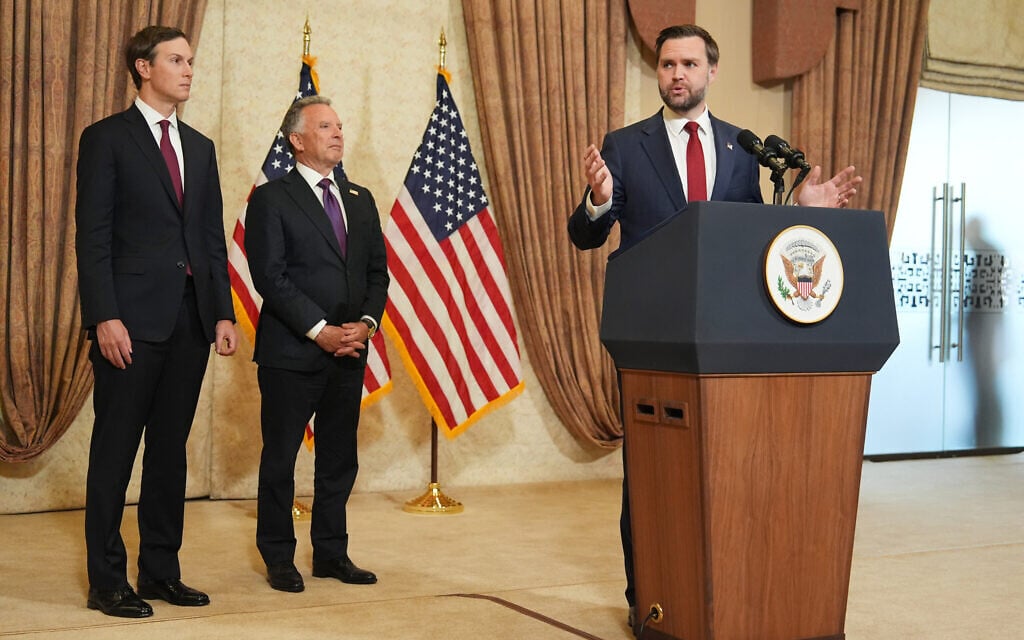
Trump declares Iran peace MOU largely negotiated
May 22, 2026
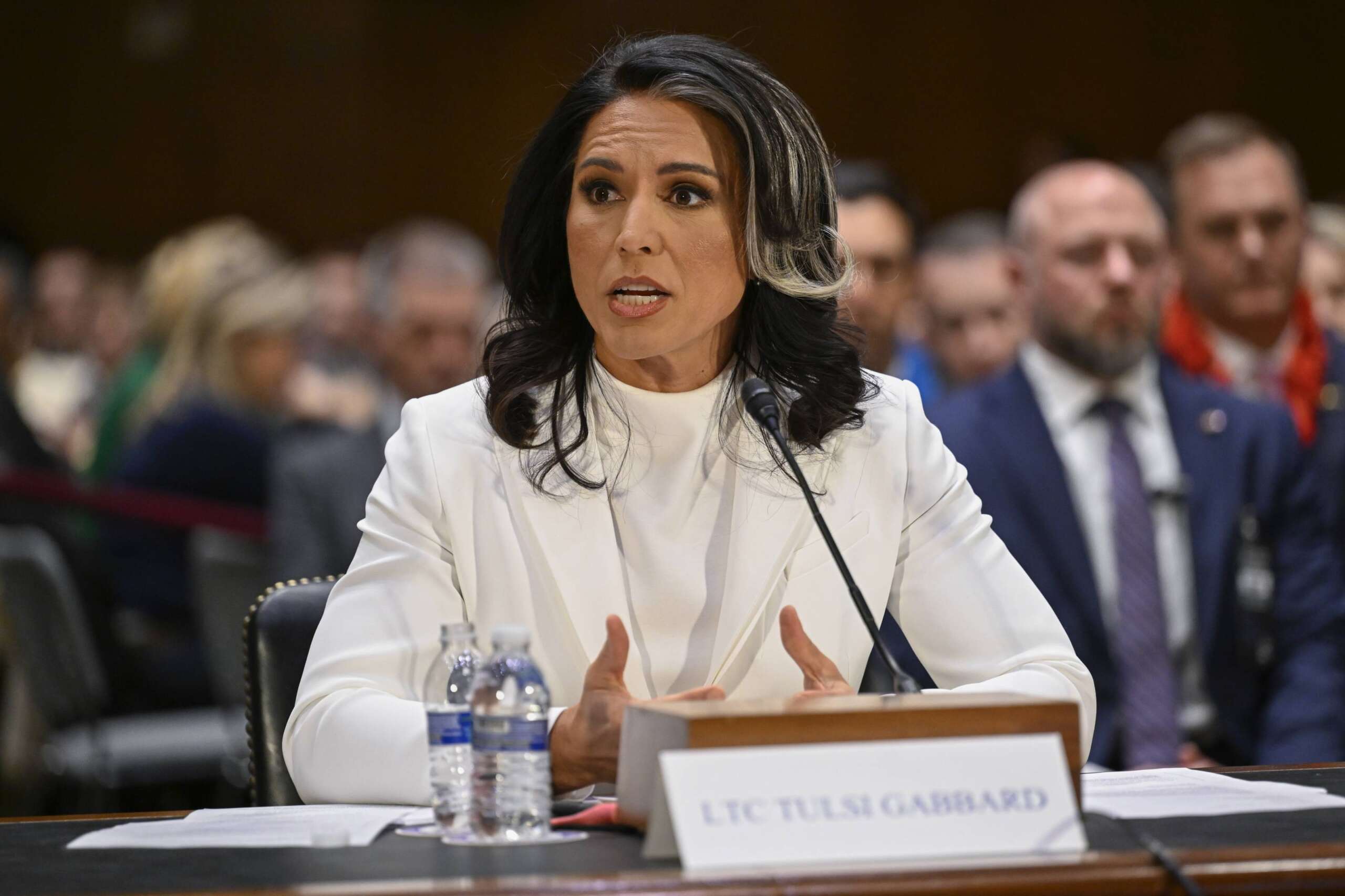
Gabbard resigns as director of national intelligence
May 21, 2026
House GOP cancels Iran war powers vote, shielding Trump from rebuke
May 21, 2026
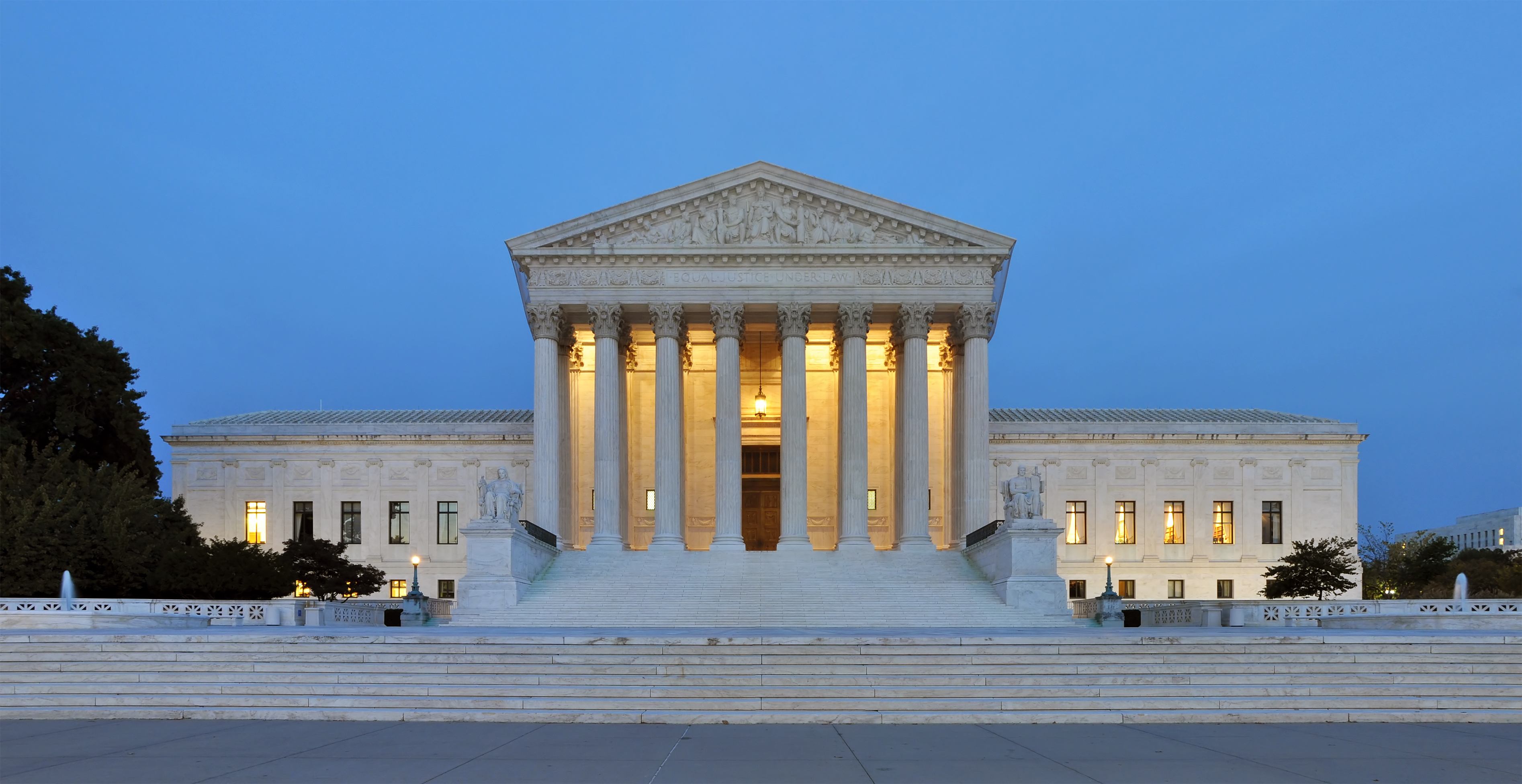
Supreme Court rules cruise lines liable for Cuba's confiscated docks

May 20, 2026
DOJ indicts Raul Castro over 1996 Brothers to the Rescue shootdown
View All Foreign Policy Topics
322 topics
30 questions
Start the review