Constitutional Law · Civil Rights·May 18, 2026
First Circuit blocks VA from ending union contract for 320,000 workers
First Circuit unanimously blocked the VA from voiding 320,000 workers'' union contract.

Photo: Copyright 2025, G. Edward Johnson. CC-By Attributionsource ↗
On May 18, 2026, a unanimous three-judge panel at the U.S. Court of Appeals for the First Circuit denied the Department of Veterans Affairs an emergency stay, keeping a collective bargaining agreement in place for approximately 320,000 VA employees represented by the American Federation of Government Employees (AFGE) National VA Council.
The ruling upholds U.S. District Judge Melissa DuBose's March 13, 2026, preliminary injunction ordering the VA to restore its master collective bargaining agreement with AFGE. Judge DuBose, sitting in Providence, Rhode Island, found that VA Secretary 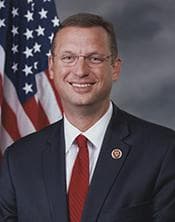 Doug Collins likely violated the First Amendment and the Administrative Procedure Act when he terminated the union contract in August 2025 -- acting on President
 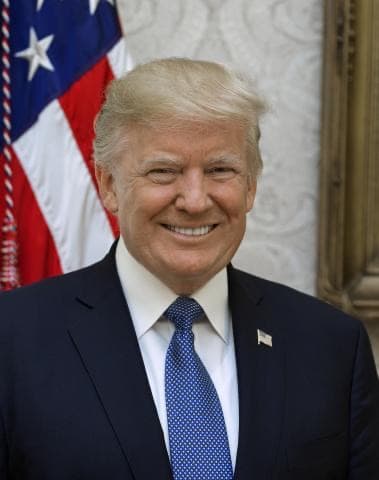 Trump's Executive Order 14251, signed March 27, 2025.
EO 14251 invoked a narrow provision of the 1978 Civil Service Reform Act that lets a president exclude agencies from collective bargaining requirements if they have a "primary function of intelligence, counterintelligence, investigative or national security work." The original order covered more than 40 agencies; a second EO in August 2025 added more. Together, the orders stripped bargaining rights from over 950,000 federal employees.
AFGE sued the VA in federal court in Rhode Island, arguing that VA Secretary Collins selectively exempted unions that had not sued the administration -- proof, AFGE argued, that the termination was First Amendment retaliation. Judge DuBose agreed the argument was likely to succeed on the merits and issued the injunction. The VA appealed and asked the First Circuit for an emergency stay pending appeal. The three-judge panel denied that stay, applying the four-factor framework from Nken v. Holder (2009): likelihood of success on the merits, irreparable harm, balance of equities, and where the public interest lies.
Key facts
On May 18, 2026, a unanimous three-judge panel at the U.S. Court of Appeals for the First Circuit denied the VA an emergency stay, keeping collective bargaining protections in place for 320,000 employees while litigation continues (). The panel applied the four-factor framework from Nken v. Holder (2009): likelihood of success on the merits, irreparable harm, balance of equities, and public interest. AFGE National President  Everett Kelley said the ruling showed the First Circuit upheld workers' rights while the legal process plays out.
VA Secretary Doug Collins terminated the AFGE National VA Council's master collective bargaining agreement on August 6, 2025, acting on President Trump's Executive Order 14251, signed March 27, 2025 (). EO 14251 invoked 5 U.S.C. 7103(b), which lets a president exclude agencies from collective bargaining if their primary function involves national security. The order initially covered 40 agencies and stripped bargaining rights from over 950,000 federal workers; a second EO in August 2025 expanded coverage further.
AFGE filed suit in the U.S. District Court for the District of Rhode Island, arguing that Collins violated the First Amendment by selectively exempting eight smaller unions that had not sued the administration (). The union argued the selective treatment proved the contract termination was viewpoint-based retaliation, not a genuine national security determination. Judge DuBose found the argument had a strong likelihood of success on the merits.
U.S. District Judge Melissa DuBose issued a preliminary injunction on March 13, 2026, ordering the VA to restore its master collective bargaining agreement (). The VA initially defied the order by re-terminating the contract, prompting DuBose to warn of contempt proceedings. She called the re-termination blatant disrespect for not just this court's order, but for the rule of law. The VA eventually complied in April 2026.
The 1978 Civil Service Reform Act's Federal Service Labor-Management Relations Statute gave federal employees the statutory right to collective bargaining, with 5 U.S.C. 7103(b) creating a narrow national security exception (). Before EO 14251, that exception had rarely been invoked. Critics argued the VA, which provides healthcare and benefits to veterans, has no genuine national security primary function — making the invocation legally suspect.
The First Circuit's stay denial keeps the collective bargaining agreement in force for 320,000 VA workers including nurses, social workers, claims processors, and administrative staff (). The agreement covers wages, work hours, grievance procedures, and disciplinary protections. AFGE National VA Council President MJ Burke said the ruling made clear that the courts will hold the VA accountable and that no one is above the law.
The broader federal collective bargaining dispute extends across 40+ agencies. EO 14251 and its August 2025 follow-on stripped bargaining rights from over 950,000 federal workers, drawing separate legal challenges from NTEU, AFSA, and the AFL-CIO (). On December 11, 2025, the House passed the Protect America's Workforce Act 231-195 — sponsored by Reps.  Jared Golden (ME-02) and
  Brian Fitzpatrick (PA-01) — the first House vote to nullify a Trump executive order that term. The Senate had not acted as of May 2026.
The separation-of-powers question at the center of this case is whether a president can use a narrow national security exception in a statute to eliminate bargaining rights Congress expressly granted federal workers (). If courts ultimately rule for AFGE, presidents cannot effectively repeal congressional labor protections via executive order. If courts rule for the VA, they would endorse broad presidential discretion to invoke national security — a determination courts have historically been reluctant to second-guess — to alter statutory labor relationships.
Related
Categories that may be relevant to you
5 topics available

May 23, 2026
DOJ scrubs hundreds of Jan. 6 prosecution records from website
🔍
May 22, 2026
FTC fines Cox Media Group $930K for fake AI listening ad service
May 22, 2026
Colorado closes legal gap for defendants found unfit to stand trial
May 22, 2026
Gabbard resigns as director of national intelligence
🏫
May 22, 2026
Tennessee governor signs Memphis schools state takeover into law
View All Government Topics
769 topics
25 questions
Start the review