Constitutional Law · Government · Civil Rights · Media Literacy·May 6, 2026
FTC settles after court finds it retaliated against news nonprofit
FTC retreats after court blocks retaliatory probe of news watchdog
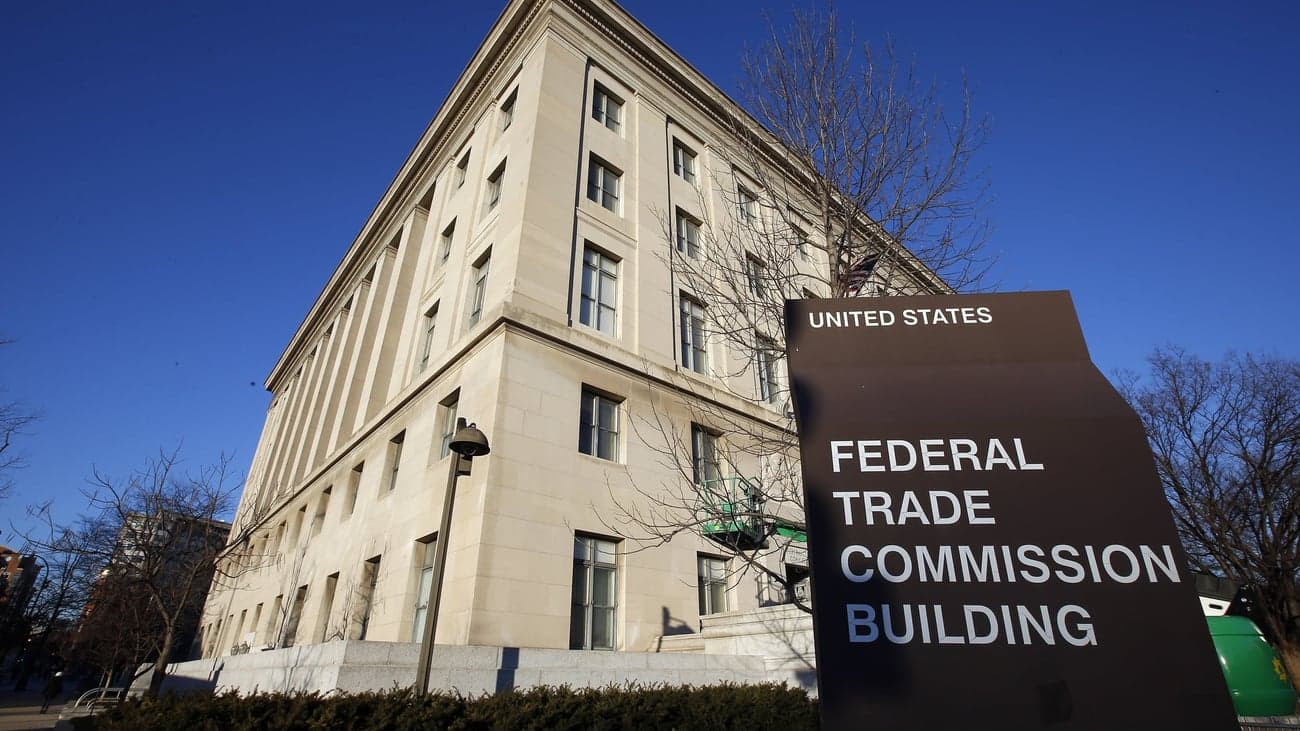
In May 2026, the Federal Trade Commission settled a lawsuit brought by Media Matters for America after U.S. District Judge Sparkle L. Sooknanan found the agency had violated the First Amendment. The FTC, under Chair Andrew Ferguson — appointed by President Trump in January 2025 — sent a civil investigative demand to Media Matters in May 2025 demanding internal financial records, editorial communications, and confidential source materials. Judge Sooknanan ruled the CID was a retaliatory weapon, not a legitimate investigation. As part of the settlement, the FTC withdrew the CID and agreed in writing never to issue a substantially similar one again. The case produced a legal road map for news organizations and nonprofits facing government intimidation through the investigative process.
Key facts
In November 2023, Media Matters investigative reporter Eric Hananoki published a report documenting that major brand advertisements from Apple, IBM, Oracle, and Bravo were appearing next to pro-Nazi posts on Elon Musk's X, formerly Twitter. The report triggered an immediate advertiser exodus. Disney, Apple, IBM, and dozens of other companies paused their ad spending on the platform within days of publication.
Musk responded with fury. He sued Media Matters in a federal court in Fort Worth, Texas, accusing the nonprofit of manipulating X's algorithms to manufacture the juxtapositions. The case was filed in a district where Musk's legal team believed it could secure favorable treatment; the presiding judge, Reed O'Connor, holds Tesla stock. Legal observers widely described the venue selection as .
Within hours of the November 2023 report's publication, Trump ally  Stephen Miller tweeted calling on Republican state attorneys general to investigate Media Matters. Texas Attorney General
 Ken Paxton and Missouri Attorney General Andrew Bailey both opened investigations and sent their own civil investigative demands to the nonprofit within months.
Federal judges blocked both state investigations on First Amendment grounds. In April 2024, a D.C. district court found that Paxton's demand had a 'demonstrably 📖chilling effect' on Media Matters' reporting. A Missouri federal court reached the same conclusion in August 2024, writing that Missouri's consumer protection laws had to yield when a state actor against a media organization for protected speech.
Andrew Ferguson became FTC Chair on January 20, 2025, designated by President Trump on his first day back in office. Ferguson had been an FTC Commissioner since April 2024, confirmed by the Senate under President Biden. His designation as chair did not require a new Senate vote.
Four months into his tenure, Ferguson opened an investigation into Media Matters. In May 2025, the FTC sent Media Matters a civil investigative demand (the agency's primary compulsory tool for gathering evidence before filing a formal complaint). The CID demanded internal financial records, editorial communications, budget documents, and with other advocacy groups and advertisers.
A civil investigative demand is issued by FTC staff under authority delegated by the Commission itself. Unlike a grand jury subpoena, it requires no prior judicial approval. Recipients have 20 days to file a petition to quash. The FTC framed the Media Matters investigation as a probe into whether the nonprofit had illegally colluded with advertisers to organize a boycott of X, a potential Sherman Act violation.
The CID was part of a broader 17-entity investigation. The FTC also sent demands to advertising agencies WPP, Publicis, and Dentsu; news ratings firm NewsGuard; the Global Disinformation Index; and others, claiming these organizations had coordinated to conservative media platforms.
Media Matters sued the FTC in D.C. District Court in July 2025, arguing the CID was unconstitutional retaliation for protected news reporting. Judge Sparkle L. Sooknanan (appointed by President Biden in 2021 and confirmed 53-39) issued a preliminary injunction on August 15, 2025, blocking enforcement of the CID.
In her 48-page ruling, Sooknanan wrote that Media Matters' reporting was 'clearly conduct protected under the First Amendment' and that the CID would deter a person of 'ordinary firmness' from speaking again. She found that 'retaliatory animus was the but-for cause of the FTC's CID.' She concluded the case presents 'a straightforward First Amendment violation' and issued this warning: 'It should alarm all Americans when the Government retaliates against individuals or organizations for engaging in constitutionally protected public debate. And that alarm should ring even louder when the Government retaliates against those engaged in .'
The FTC appealed Sooknanan's preliminary injunction in August 2025. The U.S. Court of Appeals for the D.C. Circuit upheld the injunction on October 23, 2025, keeping the CID blocked. The case was argued before a three-judge appellate panel on April 13, 2026. Judges  Patricia A. Millett, Robert L. Wilkins, and Gregory G. Katsas heard arguments. Attorneys from Yale Law School's clinic and the ACLU of D.C. filed friend-of-the-court briefs urging the court to permanently prohibit the FTC's investigation.
A coalition of 17 media organizations (including The New York Times Company and the Associated Press) filed their own brief warning that the represented an 'unprecedented intrusion into the editorial and reporting processes of news organizations.'
Rather than wait for the D.C. Circuit to rule, the FTC settled. On May 5, 2026, the agency entered into a legally binding settlement with Media Matters. The lawsuit was dismissed on May 6, 2026, with each side bearing its own costs.
Under the settlement terms, the FTC withdrew the CID and agreed in writing never to 'reissue or issue a substantially similar' civil investigative demand to Media Matters. The FTC also stated in writing that Media Matters is not the target of any investigation. Any future litigation between the parties must be filed in D.C.
Media Matters President Angelo Carusone called it 'a complete and total victory' and said the FTC 'agreed to this historic settlement agreement after it became clear the FTC had misled the courts.' He emphasized that the case's lesson was : 'The process is the punishment, and that paves the way for them to do it to more people.'
The Media Matters case sits within a pattern of FTC Chair Ferguson using the agency's investigative apparatus to pressure media and advocacy organizations critical of allies in the Trump administration. The FTC also sent a 21-specification CID to news ratings service NewsGuard in May 2025, demanding every record the company had produced since its 2018 founding. The FTC withdrew that CID in April 2026 as well, after on First Amendment grounds.
The FTC's simultaneous probes of news organizations for reporting that harmed X and of ad agencies for having brand safety standards created what critics described as a coordinated campaign to by drying up advertising revenue.
The case drew on two key constitutional precedents. In NRA v. Vullo (2024), the Supreme Court ruled unanimously that New York's financial regulator had violated the First Amendment by pressuring banks and insurers to cut ties with the NRA. Justice Sonia Sotomayor authored the unanimous opinion, holding that government officials can't use their regulatory power to punish protected speech, even indirectly through third-party pressure. In Mt. Healthy City School Board of Education v. Doyle (1977), the Court established that is just as unconstitutional as passing a law against it.
Judge Sooknanan applied this framework directly: the government's stated reason for the CID (investigating an advertising boycott) didn't matter if the actual motivation was punishing Media Matters for its reporting.
The settlement gives future defendants a concrete legal template. Three separate federal courts blocked three separate government investigations (Texas AG, Missouri AG, and FTC) on 📖First Amendment retaliation grounds within 18 months. Each court applied the same basic test: did the government take adverse action because of constitutionally protected speech?
The ACLU of D.C., which represented Media Matters in the FTC case, said the settlement 'offers a road map for other newsgathering and nonprofit organizations facing, or at risk of, government retaliation.' The Cato Institute, writing from a libertarian-conservative perspective, called the FTC's conduct 'a blatant assault on ' and said the settlement vindicated the First Amendment regardless of one's view of Media Matters' politics.
Related
Categories that may be relevant to you
5 topics available
May 23, 2026
Trump declares Iran peace MOU largely negotiated
May 22, 2026
Gabbard resigns as director of national intelligence
May 21, 2026
House GOP cancels Iran war powers vote, shielding Trump from rebuke
May 21, 2026
Supreme Court rules cruise lines liable for Cuba's confiscated docks
May 20, 2026
DOJ indicts Raul Castro over 1996 Brothers to the Rescue shootdown
View All Foreign Policy Topics
322 topics
25 questions
Start the review