March 3, 2026
Iran war sends gas prices to biggest single-day spike since Hurricane Katrina


Futures markets priced in war within hours before a single tanker was actually stopped
💰Economy⚡Energy📈Trade
March 3, 2026
Futures markets priced in war within hours before a single tanker was actually stopped
"On March 1, 2026, Iran announced it was treating the Strait of Hormuz as a conflict zone and would attack any vessel attempting to transit without explicit permission from Iranian naval command. The Strait of Hormuz is 21 miles wide at its narrowest point, bounded by Iran to the north and Oman and the UAE to the south. Roughly 20 percent of all globally traded petroleum and 20 percent of global LNG flows through it every day. The Energy Information Administration calls it the world most important oil transit chokepoint. There is no alternative sea route for Gulf oil exports — the Cape of Good Hope route around Africa can handle some cargo but adds up to three weeks and enormous cost."
"Commercial shipping stopped within 24 hours of the Iranian announcement. Oil tankers, LNG carriers, and container ships that had been transiting the Strait reversed course, anchored in safe waters, or began the long reroute around southern Africa. Dozens of vessels were stranded in the Gulf unable to leave. The International Maritime Organization issued emergency navigation advisories for the Strait and the entire Persian Gulf region. Lloyd of London suspended its standard war risk coverage for the Strait, making it legally and financially impossible for most commercial vessels to transit even if they were willing to risk the physical danger."
"QatarEnergy halted operations at its North Field LNG production facilities on March 2 after Iranian forces struck port infrastructure at Ras Laffan industrial city. Qatar produces roughly 77 million tons of LNG annually — about 4 percent of global supply and a critical source for European countries that had reduced Russian gas imports after the 2022 Ukraine invasion. The halt immediately pushed European natural gas futures sharply higher. Germany and France, which had specifically built LNG import terminals to replace Russian supply, were the most exposed."
"U.S. fuel prices posted their largest single-day spike since Hurricane Katrina in 2005 on March 3 — the fourth day of the war. The spike came before any actual supply shortage had materialized at American refineries. It reflected oil futures markets pricing in anticipated future scarcity: traders bought contracts for future oil delivery at higher prices because they expected supply to be disrupted. Those futures prices flowed through to what refineries pay for crude, which flowed to retail gasoline prices within 48 to 72 hours. The mechanism meant the economic cost of the war arrived at U.S. gas stations before any Iranian barrel of oil had actually been stopped from reaching an American port."
"The Strategic Petroleum Reserve — the U.S. government emergency oil stockpile stored in underground salt caverns in Texas and Louisiana — held roughly 350 million barrels as of early 2026. That was down from its statutory peak of 727 million barrels, reduced by 180 million barrels in emergency releases during the Russia-Ukraine war price spike in 2022 under the Biden administration. At U.S. consumption of approximately 20 million barrels per day, the SPR represented roughly 17 days of total national supply. The Trump administration had not announced an SPR release by March 3, and the Department of Energy said the situation was being monitored."
"Airlines began issuing disruption notices within hours of the Strait closure announcement. Delta, United, and American Airlines all suspended or sharply reduced service to the Middle East. The aviation fuel spike compounded their fuel costs on every route, not just Middle East flights. Shipping companies doing the cost-benefit calculation between Cape of Good Hope rerouting and Strait transit risk almost universally chose the longer route — which increased shipping timelines and costs for goods including electronics, clothing, and consumer products manufactured in Asia and moving through Gulf ports."
"Iran had threatened to close the Strait in 2012 during nuclear sanctions pressure, in 2019 after the U.S. killed IRGC commander Qasem Soleimani, and during the 2020 maximum pressure campaign. Each time, Iran backed down after U.S. naval shows of force. March 2026 was the first time Iran followed through on the threat and stopped commercial traffic at scale. The U.S. Fifth Fleet, headquartered at Naval Support Activity Bahrain, exists specifically to keep the Strait open. Its ability to perform that mission while simultaneously conducting offensive strikes on Iran — and while its home base in Bahrain was under Iranian drone fire — was immediately questioned by naval strategists."
"The cost asymmetry of the Strait defense problem compounded the interceptor missile shortage elsewhere. Iran was using small, inexpensive fast attack boats alongside its drones to enforce the Strait closure — craft that cost thousands rather than millions of dollars. Each U.S. response, whether naval or aerial, consumed expensive munitions and fuel. The broader drone-interceptor cost ratio of 200-to-1 applied to the Strait enforcement problem as well: sustaining the Strait closure cost Iran far less than the U.S. military response cost to contest it."
"Economists and energy analysts warned that a sustained Strait disruption lasting weeks or months would produce fundamentally different economic consequences than the initial price spike. The futures-market shock in the first four days was an anticipatory price signal. A genuine prolonged supply disruption — if no oil moved for 30 to 60 days — would mean actual shortage reaching consumers, not just traders repricing risk. The 1973 Arab oil embargo, which reduced global oil supply by about 7 percent for several months, produced a U.S. recession and created political conditions for the next decade of energy policy."
" Chris Wright, Trump Secretary of Energy, held a press conference on March 3 saying the U.S. would monitor the situation and that American domestic production capacity — which had reached record levels under Trump energy dominance agenda — would provide some buffer. Wright did not announce an SPR release. Energy economists noted that domestic production helps insulate U.S. refineries from supply disruption but does not prevent the global price spike: because oil is a globally traded commodity, the world price sets the U.S. price regardless of domestic production levels."
Iranian Revolutionary Guard Corps Navy
CEO, QatarEnergy
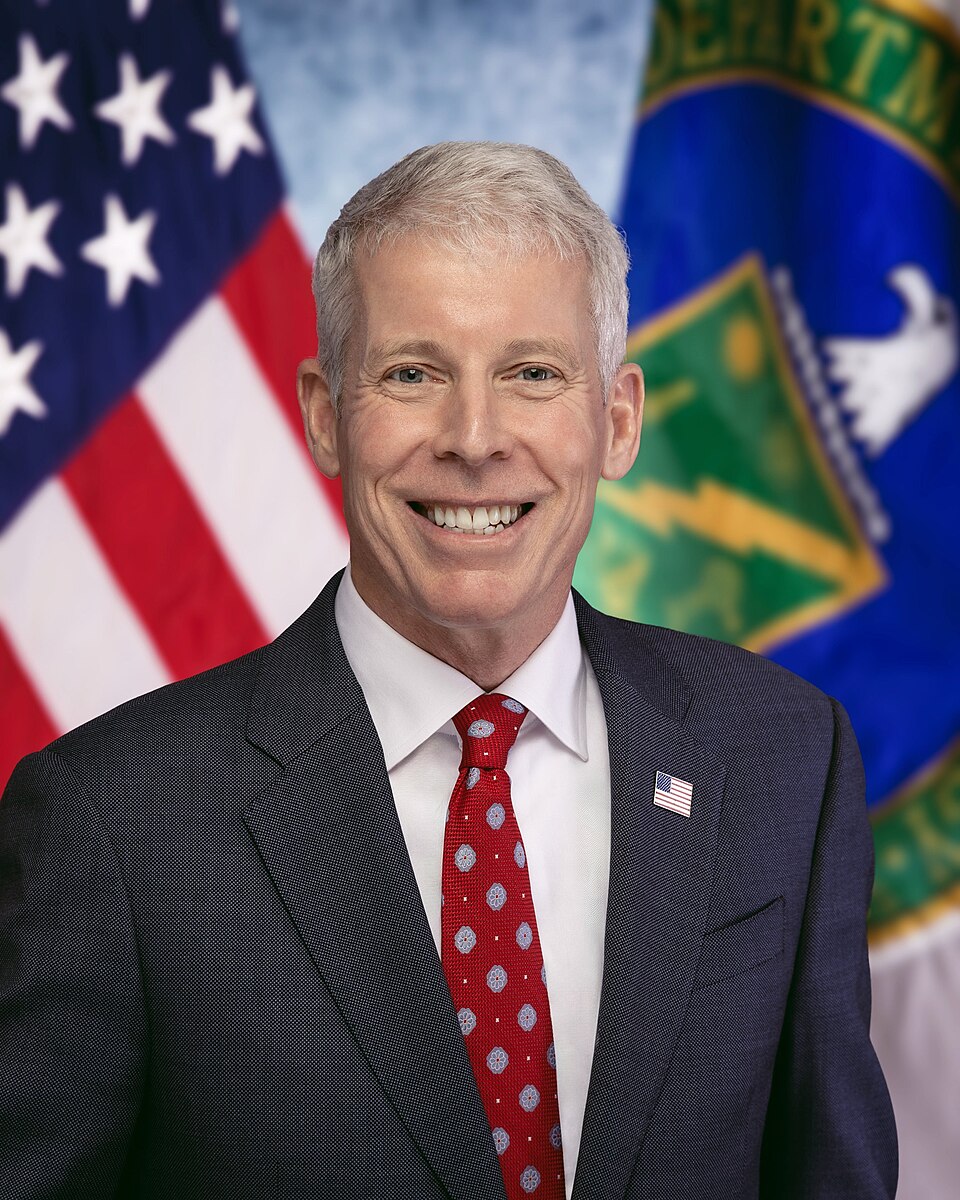
Secretary of Energy

Secretary of the Interior
Senior U.S. naval commander
U.S. Senator (D-WA), Senate Energy and Natural Resources Committee Ranking Member
Former Secretary of Energy (Biden administration)
Secretary of the Treasury

Chair, Federal Reserve