Pentagon puts Iran war cost at $25B as Hegseth battles Congress
First public cost accounting revealed as sixty-day War Powers deadline nears
First public cost accounting revealed as sixty-day War Powers deadline nears
Acting Pentagon Comptroller Jules Hurst III delivered the first official public cost estimate for Operation Epic Fury during the April 29 House Armed Services Committee hearing: approximately $25 billion. Hurst told the committee the cost primarily reflected the enormous volume of munitions expended against Iran, along with operational costs, maintenance, and equipment replacement. He testified that the Pentagon is working on a supplemental funding request and will present it to Congress once a full assessment of conflict costs is complete.
Senate Armed Services Committee member Chris Coons (D-DE) disputed the figure, saying he was 'frankly certain' the $25 billion estimate was too low. Coons argued the estimate appeared to cover only munitions dropped rather than the full cost of deploying and holding forces in theater for two months, transportation, medical care for wounded service members, and long-term equipment depreciation. The official estimate was the first number the Trump administration had made publicly available for the war's financial cost.

Secretary of Defense
Testified before the House Armed Services Committee on April 29, 2026, for the first time since Operation Epic Fury began. Delivered combative opening remarks calling congressional critics the biggest threat to the war effort, defended firing senior military leaders, and refused to provide a specific timeline or exit strategy for the Iran conflict.
Acting Undersecretary of Defense for Comptroller (Pentagon Comptroller)
Delivered the first official public cost estimate for Operation Epic Fury: approximately $25 billion. Testified that the cost primarily reflected munitions expended, plus operations, maintenance, and equipment replacement. Confirmed the Pentagon is working on a supplemental funding request to present to Congress after a full cost assessment.
Chairman, Joint Chiefs of Staff
Appeared alongside Hegseth at the House Armed Services Committee hearing. Committed to a non-partisan military, citing Gen. George C. Marshall as his model. Testified on budget priorities and the need for civilian control, candor, and delivering accurate facts to civilian leadership — a statement some observers read as a contrast to Hegseth's combative posture.

Ranking Member, House Armed Services Committee (D-WA)
Led Democratic questioning, pressing Hegseth on the contradiction between his claim that Iran's nuclear facilities were 'obliterated' in a 2025 attack and the administration's justification of an imminent nuclear threat for the February 2026 war. Asked specifically: 'What is the plan to actually turn all of this lethal kinetic action into an improvement in the nuclear situation?'
U.S. Representative (R-NE), House Armed Services Committee
Provided notable bipartisan criticism, telling Hegseth directly that firing Gen. Randy George may have been within his constitutional authority but 'it doesn't make it right or wise.' Represented a faction of Republican defense hawks skeptical of Hegseth's leadership changes at the Pentagon.
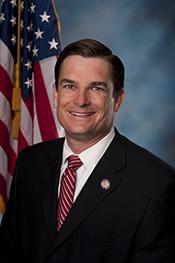
U.S. Representative (R-GA), House Armed Services Committee
Expressed disagreement with the firing of Army Chief of Staff Gen. Randy George, adding to the bipartisan criticism of Hegseth's military leadership decisions. His dissent was notable as a Republican member on a committee that was formally convened to support a Republican administration's budget request.
U.S. Representative (R-VA), House Armed Services Committee
Raised questions during the hearing about the firing of former Navy Secretary John Phelan, adding to the pattern of Republican committee members pressing Hegseth on personnel decisions that had removed experienced civilian and military leadership.

U.S. Representative (D-CA), House Armed Services Committee
Accused Hegseth of lying about the war's progress and shifting rationales. Cited the domestic economic impact of the Iran war — gas prices up 40%, soaring inflation — and called the conflict 'a quagmire.' Hegseth responded that calling the war a quagmire after two months 'stains the troops' and provides propaganda to U.S. enemies.
U.S. Senator (D-DE), Senate Armed Services Committee
Challenged the $25 billion cost estimate as too low, saying he was 'frankly certain' it did not include the full costs of deploying forces, medical care for wounded personnel, and long-term equipment depreciation. His pushback highlighted the gap between the first public accounting and a full economic cost of war.

U.S. Senator (D-IL)
Led a Senate resolution requiring congressional approval for continued U.S. military operations in Iran, which was blocked 52-47 on April 15, 2026 — the fourth failed Senate attempt. Her sustained effort to use the War Powers Resolution to force congressional authorization of the Iran war provided the constitutional backdrop for the Hegseth hearing.
True
The Iran war has cost $25 billion as of late April 2026
Jules Hurst III, the acting Pentagon Comptroller, testified to this figure under oath before the House Armed Services Committee. However, Sen. Coons publicly stated the figure is likely too low because it primarily covers munitions and may not include full theater deployment costs. The $25 billion represents the official government estimate as of April 29, 2026. [1][2]
True
The FY2027 defense budget request is $1.5 trillion, the largest in Pentagon history
Multiple sources, including the official Department of Defense release and New York Times coverage, confirm the FY2027 request is approximately $1.45-1.5 trillion, which would be the largest in Pentagon history and represents a significant increase from the prior year's approximately $1 trillion allocation. [1][2]
True
The War Powers Resolution 60-day deadline expired around May 1 without congressional authorization
Trump notified Congress of military operations on March 2, 2026, starting the 60-day War Powers Resolution clock. The deadline fell on approximately May 1. Congress had not declared war or passed an AUMF by April 29, and the Senate had blocked a resolution requiring authorization 52-47 on April 15. [1][2]
True
At least 13 U.S. service members were killed in Operation Epic Fury
Pentagon casualty data released in early April 2026 indicated 13 U.S. service members killed and over 380 wounded in action as of that point. The ABC News hearing report referenced 14 American lives, suggesting the number may have risen slightly by April 29. Both Military Times and Military.com confirmed the 13 killed figure as of April 8. [1][2]
True
The U.S. used roughly half of certain critical missile stockpiles in under two months of fighting
ABC News cited Center for Strategic and International Studies analysis indicating the U.S. used roughly half of certain missiles and munitions in under two months of Operation Epic Fury, creating what analysts described as a four-year vulnerability window. This was referenced in the hearing context as a driver for increased munitions production funding in the FY2027 request. [1]
True
Hegseth fired Gen. Randy George and former Navy Secretary John Phelan
ABC News reporting confirmed Hegseth fired Army Chief of Staff Gen. Randy George and that Republican Reps. Bacon and Scott raised objections to that firing at the hearing. The firing of former Navy Secretary John Phelan was raised by Rep. Kiggans. Hegseth confirmed the firings and said he anticipated additional officer removals. [1]
True
Trump said the Iran war would last about four to six weeks
Alabama Public Radio's coverage of the April 29 hearing reported that Trump had said at the war's outset it would last approximately four to six weeks. By the hearing date, the war had entered its ninth week, with no end date provided by Hegseth in his testimony. [1]
True
The Pentagon is seeking $200 billion in supplemental funding for the Iran war
Politico confirmed in March 2026 that the Pentagon submitted a supplemental proposal of over $200 billion to the White House, and Hegseth himself confirmed the administration was considering the figure at a Pentagon press conference. Hurst told the committee a supplemental will be formally submitted once a full cost assessment is complete. [1]
Contact your member of Congress about authorizing or reviewing the Iran war under the War Powers Resolution
civic action
The 60-day War Powers Resolution deadline passed on approximately May 1, 2026. Congress can formally authorize continued operations, force a withdrawal vote, or remain silent — each choice has constitutional and military consequences. Constituents can urge their member to take a clear position.
Request your senators hold public hearings on the $200 billion Iran war supplemental request
civic action
The Pentagon's reported $200 billion supplemental funding request for the Iran war would be the largest single supplemental appropriation in modern U.S. history. Senate Armed Services and Appropriations Committees have jurisdiction. Constituents can demand detailed public hearings and full cost accounting before any supplemental vote.
Track the Pentagon's munitions production ramp-up through official reporting
civic monitoring
Hegseth identified 14 critical munitions systems needing accelerated production. Citizens, defense researchers, and journalists can monitor procurement contract announcements through federal contracting databases to track whether production is actually increasing.
Read the official Pentagon budget request and compare it to previous years
civic monitoring
The FY2027 defense budget request of approximately $1.45 trillion is publicly available from the Pentagon. Citizens can directly compare it to prior-year budgets and identify which programs and capabilities received the largest increases.