National Security · Foreign Policy · Government·March 15, 2026
Defense Secretary Pete Hegseth says forces will show no quarter in Iran
Pentagon's own Law of War Manual calls such orders a war crime

Photo: AP Photo/Mark Schiefelbeinsource ↗
Defense Secretary  Pete Hegseth told reporters on March 13, 2026 that U.S. forces conducting strikes in Iran would show "no quarter, no mercy for our enemies" — language that international law experts and former senior military commanders immediately said could constitute a war crime. Under the 1907 Hague Regulations and the 1977 Additional Protocol I to the Geneva Conventions, declaring that no quarter will be given — meaning no prisoners will be taken and no surrenders accepted — is explicitly prohibited as a war crime even when no actual killings occur, because the announcement itself is the offense. The Pentagon's own Law of War Manual states unequivocally that orders denying quarter to combatants are war crimes. Hegseth's remark drew sustained coverage through the March 15 news cycle, with former White House Chief of Staff John Kelly and Human Rights Watch both saying the statement alarmed them. Legal advisers publicly recommended that Hegseth retract and clarify the statement to avoid creating legal liability for U.S. military commanders. No formal retraction had been issued as of March 15.
Key facts
"Defense Secretary Pete Hegseth that U.S. forces attacking Iran would show 'no quarter, no mercy for our enemies.' The remark was made during a press briefing on Operation Epic Fury, the name the Pentagon had assigned to U.S.-Israeli strikes against Iran that began February 28. Hegseth used the phrase while describing the pace and intensity of the air campaign against Iranian military targets.\n\nUnder 📖international humanitarian law, the phrase 'no quarter' has a specific legal meaning: it refers to orders or declarations that enemy combatants who attempt to surrender will not be accepted as prisoners but will be killed instead. Prohibitions against denying quarter date back to the 1863 Lieber Code and were codified internationally in the 1907 Hague Regulations and the 1949 Geneva Conventions. The mere announcement of such a policy — even without any confirmed killings of surrendering combatants — constitutes the offense under the 📖laws of armed conflict."
"The and the 1977 Additional Protocol I to the Geneva Conventions both explicitly prohibit declaring that no quarter will be given. Article 23(d) of the Hague Regulations makes it unlawful 'to declare that no quarter will be given.' This is one of the oldest and most clearly established prohibitions in the 📖laws of armed conflict. Unlike some areas of 📖international humanitarian law where application to specific facts is disputed, the no-quarter prohibition is categorical.\n\nDomestic U.S. law also applies. The 1996 War Crimes Act, 18 U.S.C. § 2441, makes it a federal crime for U.S. nationals or members of the armed forces to commit a grave breach of the Geneva Conventions. The Pentagon's Law of War Manual, which governs how U.S. forces are trained and directed, states explicitly that 'it is prohibited to declare that no quarter will be given.'"
"Brian Finucane, a senior adviser at the International Crisis Group and a former State Department attorney, said and raised 'questions about whether this belligerent, lawless rhetoric is being translated into how the war is being conducted on the battlefield.' Finucane emphasized that it was not just the words that mattered but the command environment those words create — statements from senior leaders shape how troops understand the rules of engagement.\n\nHuman Rights Watch's Washington director Sarah Yager said she had been 'engaging with the U.S. military for two decades' and was 'shocked by this language.' She noted that rhetoric from senior officials has documented downstream effects on battlefield conduct. Legal scholars and military law experts who wrote for Just Security recommended that Hegseth 'say he misspoke and retract the statement,' noting that failure to do so could complicate the legal standing of every U.S. commander operating in the theater."
"Former White House Chief of Staff John Kelly, a retired Marine general, as evidence that the Iran war lacked a 'clear strategy.' Kelly, who served as Hegseth's predecessor at the Department of Homeland Security under Trump's first term before becoming White House chief of staff, is one of the most senior former officials to publicly criticize the administration's handling of the Iran conflict. Senator Mark Kelly of Arizona, a former Navy combat pilot, said the remarks showed 'the disconnect between this administration's words and military reality.'\n\nThe Nuremberg Tribunals after World War II established binding precedent that orders denying quarter are war crimes for which commanders can be held individually accountable, regardless of whether the orders are followed. Nazi officials who issued such orders were prosecuted and convicted. Legal scholars said the Hegseth statement, if treated as a command directive rather than careless rhetoric, could expose U.S. officers to similar accountability proceedings under international law."
"The Pentagon's public response to the criticism was . Spokespersons did not issue a formal clarification or retraction of Hegseth's statement. Officials told reporters off the record that Hegseth had been speaking 'loosely' and that U.S. forces were operating under standard rules of engagement that comply with the 📖laws of armed conflict. But the absence of a formal retraction left the legal question unresolved.\n\nThe failure to retract created a documented chain of command concern. Military lawyers — known as Judge Advocates General or JAGs — are embedded at every level of the U.S. command structure specifically to advise commanders on the legality of orders and operations. Multiple retired JAGs told reporters that the Hegseth statement, uncorrected, created ambiguity that could lead troops to misunderstand the rules governing prisoner handling in the theater."
"The of international legal challenges to the Iran war. Congress had not voted to authorize military force against Iran. The 📖War Powers Resolution required the president to notify Congress within 48 hours of introducing U.S. armed forces into hostilities, which the administration did, but Democrats argued the notification did not substitute for a formal authorization. Senate Democrats were simultaneously filing 📖war powers resolutions under the 📖War Powers Resolution's Section 5(c) to force votes on whether to require troop withdrawal.\n\nThe 'no quarter' statement added a second legal dimension to the debate. It was no longer only a question of whether the war had been lawfully initiated; it was also a question of whether it was being conducted in compliance with the 📖laws of armed conflict. International law scholars noted that the two questions are legally distinct and that the 'no quarter' prohibition applies regardless of whether the war itself was lawfully authorized."
"The in American military practice is long and consistent. From the Civil War's Lieber Code, which Lincoln commissioned in 1863, through the Hague Conventions, the Nuremberg Principles, and the modern Law of War Manual, U.S. military policy has consistently prohibited the denial of quarter. American officers and troops have been trained on this prohibition for more than 150 years. The prohibition is not a technicality or a disputed area of the law — it is one of the foundations of the modern laws of war.\n\nThe prohibition also reflects a practical military doctrine. Armies that take prisoners gain intelligence, create opportunities for negotiated exchanges, and signal to enemy combatants that surrender is possible, which can reduce the length and intensity of battles. Armies that announce they will not take prisoners face combatants who have no incentive to give up and are more likely to fight to the death. Military historians have documented that no-quarter policies typically extend rather than shorten conflicts."
"Hegseth's statement was the latest in a pattern of from the Pentagon's civilian leadership during the Iran war. Earlier in the conflict, administration officials had made public statements about targeting Iranian civilian infrastructure and about conducting strikes without concern for proportionality requirements. Legal experts said each of these statements, taken together, painted a picture of an administration whose senior civilian officials were either unaware of, or indifferent to, the legal constraints that govern the conduct of armed conflict.\n\nCongressional Democrats demanded a formal legal opinion from the Department of Defense on whether U.S. forces were operating under rules of engagement consistent with the 📖laws of armed conflict. The Pentagon did not release any such opinion publicly. The American Civil Liberties Union sent a formal letter to the Department of Defense demanding clarification on the rules of engagement in force during Operation Epic Fury."
Related Topics
6🔄
They all promised no regime change in Iran. The record says otherwise
For a decade, Donald Trump built his political identity on opposing the kind of foreign wars that cost the United States trillions of dollars and thousands of lives. He said it at the 2016 Republican National Convention, in countless rallies, and in campaign ads that ran through the 2024 election. Vice President JD Vance wrote op-eds about it. Defense Secretary Pete Hegseth pledged it just two months before Operation Epic Fury launched. Secretary of State Marco Rubio said it explicitly on Fox News after the June 2025 nuclear strikes: "We're not into the regime change business here." Then, at 3 a.m. on February 28, 2026, Trump announced "massive and ongoing" combat operations in Iran, and called on Iranians to topple their own government. The fracture that followed split not just Democrats and Republicans but the MAGA movement itself. Former Rep. Marjorie Taylor Greene published a 694-word denunciation calling it "the worst betrayal." Tucker Carlson, who had visited the White House the week before trying to stop the war, called it "absolutely disgusting and evil." Former Vice President Kamala Harris said Trump was "dragging the United States into a war the American people do not want." Sen. Bernie Sanders called it "an illegal, premeditated and unconstitutional war." And Rand Paul quoted the Founders. The politicians who spent years telling voters they stood against regime change now had to answer for the one they launched.
111% match
44 questions
☢️
US and Iran resume nuclear talks as two carrier strike groups mass in Persian Gulf
On Feb. 26, 2026, the United States and Iran held a third round of indirect nuclear negotiations in Geneva, mediated by Oman, as Trump gave Iran a 10-to-15-day deadline to reach a deal or face military action. Trump's special envoy Steve Witkoff and Jared Kushner led the U.S. delegation in talks with Iranian Deputy Foreign Minister Abbas Araghchi. Simultaneously, the U.S. repositioned more than 150 aircraft to European and Middle Eastern bases, deployed 12 F-22 stealth fighters to Israel's Ovda Airbase — the first-ever F-22 deployment to Israel — and sent the USS Gerald R. Ford carrier strike group to waters off the Israeli coast, creating a two-carrier deployment alongside the USS Harry S. Truman. VP Vance told Fox News that Iran should take U.S. military threats "seriously" and that Trump had the "right" to use military force. Iran's spokesperson accused Trump of "big lies" and called the military buildup a provocation. Pentagon officials told reporters they expected the full U.S. force to be in place by mid-March.
108% match
17 questions
🔍
Pentagon told Congress Iran attack was not imminent as Trump claimed threat
On March 1, 2026, Pentagon officials told congressional staff in private briefings that U.S. intelligence did not suggest Iran was preparing a preemptive strike on American forces. Three people familiar with the briefings told the Associated Press. This directly undercut Trump's public justification for Operation Epic Fury, noting that the war was necessary to eliminate "imminent threats from the Iranian regime." The intelligence gap ran deeper than the question of intent. A May 2025 Defense Intelligence Agency assessment had already found that Iran could develop a militarily viable intercontinental ballistic missile by 2035 "should Tehran decide to pursue the capability" — not "soon," as Trump claimed. After the June 2025 nuclear strikes, a classified DIA report found those strikes set Iran's nuclear program back only months, not years — contradicting the White House claim that Iran's nuclear ambitions had been "obliterated." Marco Rubio, just days before the February 28 war, told reporters he wouldn't speculate on how far away Iran was from missiles that could reach the U.S. The pattern was consistent: Trump publicly escalated threat claims, his own intelligence agencies quietly contradicted them.
108% match
25 questions
🌍
State Dept. tells Americans stranded in Middle East it can't evacuate them
On March 3, 2026, the State Department issued urgent departure advisories for 16 Middle Eastern countries as the U.S.-Israeli war against Iran entered its fourth day. Americans who called the State Department's emergency hotline heard an automated message stating: "Please do not rely on the U.S. government for assisted departure or evacuation. At this time, there are currently no United States evacuation points." Airspace was closed across Iraq, Iran, Israel, Kuwait, Qatar, and Bahrain. Ben-Gurion Airport in Tel Aviv was shut down, leaving Americans in Israel with Ambassador Mike Huckabee telling them there were "VERY LIMITED options" and suggesting they take buses to Egypt's Sinai Peninsula. The U.S. Embassy compound in Saudi Arabia was struck by two Iranian drones on March 3, causing limited damage. Non-emergency staff and their families were pulled from six countries total. Sen. Andy Kim's office reported receiving panicked calls from Americans stuck across the region who reached the State Department and got nothing. The State Department confirmed it had been in contact with nearly 3,000 Americans in the region but initially offered no evacuation points.
108% match
20 questions
🌍
Gulf states targeted by Iran retaliation despite refusing US base access for strikes
Saudi Arabia, Qatar, the UAE, Kuwait, Turkey, and Oman all told the White House before Feb. 28, 2026, that they wouldn't allow American forces to use their territory or airspace to strike Iran. Their reasons were strategic: Gulf states didn't want to be dragged into a wider conflict, and Saudi Arabia and the UAE were protecting trillion-dollar economic transformation projects from regional war. Privately, the picture was more complex. The Washington Post reported Feb. 28 that MBS made multiple private calls to Trump urging a US strike on Iran, even as he publicly backed diplomacy and assured Iran its airspace was safe. The US worked around the refusals by deploying 14 air-refueling tankers to Israel's Ben Gurion Airport and positioning USS Gerald R. Ford off the Israeli coast. When Iran retaliated on Feb. 28, it struck US military bases in Qatar, Kuwait, the UAE, and Bahrain, countries that host American troops. Iran's National Security Council chief Ali Larijani said Tehran viewed those bases as American targets, not the territory of the host nations.
107% match
48 questions
🎖️
Six U.S. service members killed in Iran war as interceptor missile stocks run low
By March 3, 2026, the Pentagon confirmed six U.S. service members had been killed in Operation Epic Fury since the war began on Feb. 28. The first three deaths were confirmed Sunday, March 1, with three more confirmed by Monday. Joint Chiefs Chairman Gen. Dan Caine told reporters the military expected to take additional casualties and described the campaign as "difficult and gritty work." Iran had been launching inexpensive one-way attack drones at U.S. military bases across the Gulf region, with approximately 10 percent slipping past air defense systems. Each Iranian attack drone cost roughly $20,000. Each U.S. interceptor missile used to shoot them down cost roughly $4 million. The Pentagon warned that U.S. interceptor missile stockpiles, particularly SM-2 and SM-6 surface-to-air missiles deployed on Navy destroyers, which could be depleted in a matter of weeks at current engagement rates. Defense analysts noted the U.S. had been warned about this cost asymmetry in classified and unclassified assessments since 2019, when Iran attacked Saudi Aramco facilities and demonstrated the scale at which it could deploy cheap drones. Congress had not fully funded the missile production acceleration requests the Navy submitted in 2024.
107% match
21 questions
Related
Categories that may be relevant to you
5 topics available

May 23, 2026
DOJ scrubs hundreds of Jan. 6 prosecution records from website
May 23, 2026
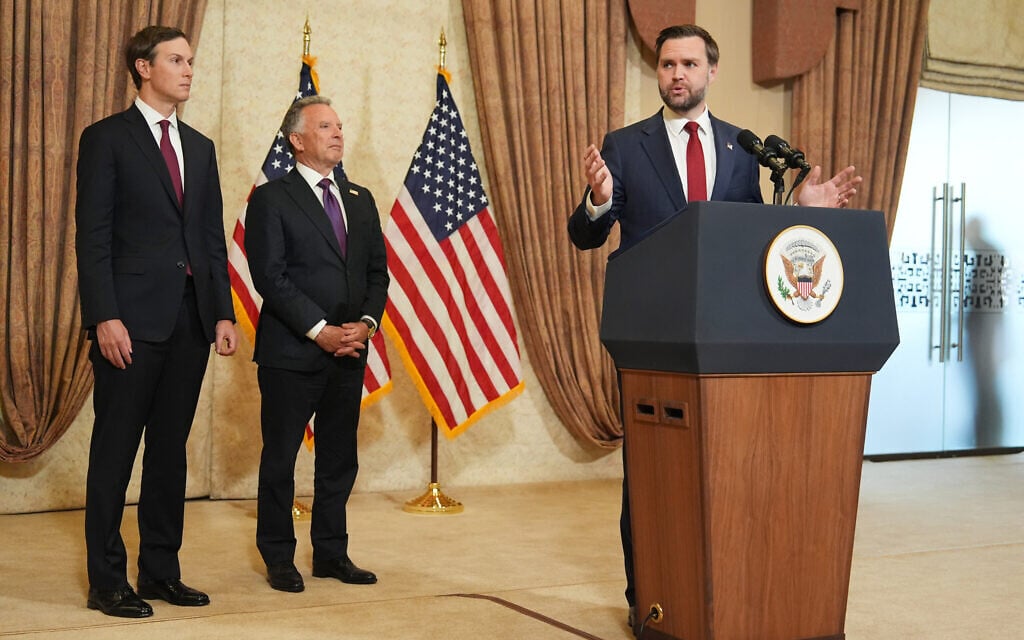
Trump declares Iran peace MOU largely negotiated
May 23, 2026
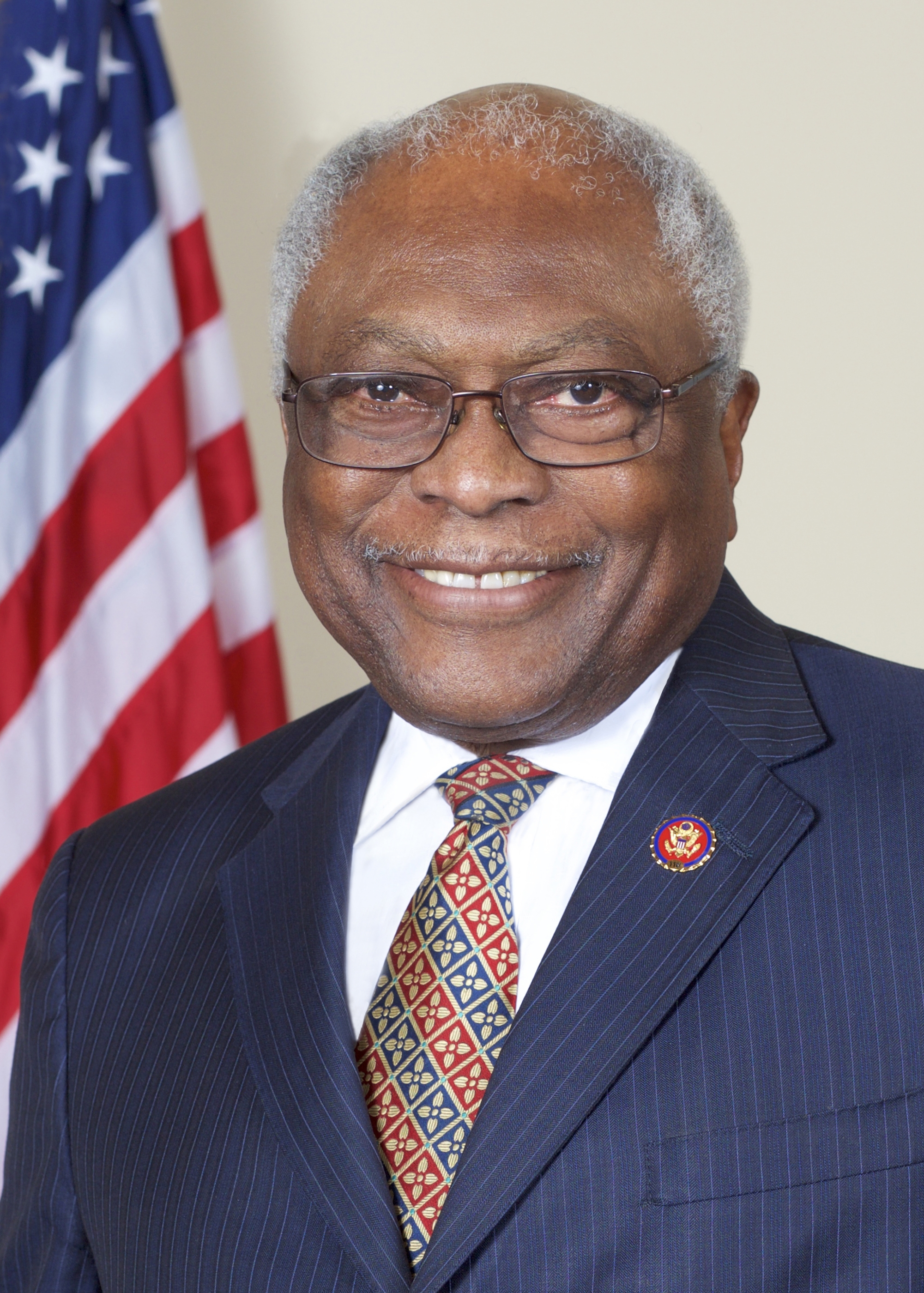
SC Senate cloture vote advances map to end Clyburn's Black district
May 22, 2026
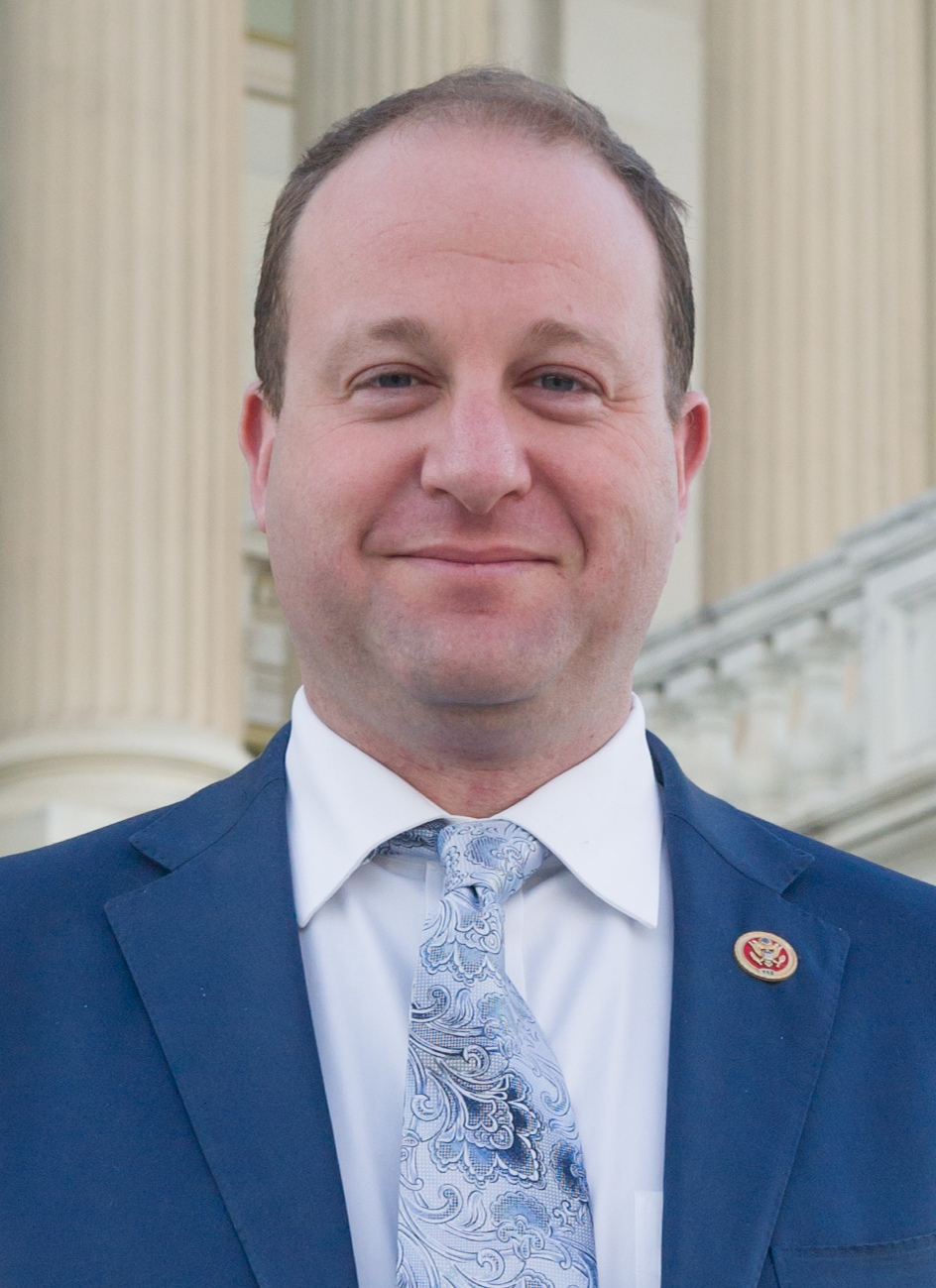
Colorado closes legal gap for defendants found unfit to stand trial

May 21, 2026
SEC ends 54-year gag rule on settling defendants
View All Constitutional Law Topics
545 topics
12 questions
Start the review