House delays farm bill after E15 and pesticide revolt
GOP rebels forced a two-hour procedural standoff before leadership retreat
GOP rebels forced a two-hour procedural standoff before leadership retreat
The Farm, Food and National Security Act of 2026 is a five-year omnibus agriculture bill that governs farm subsidies, commodity programs, crop insurance, the Supplemental Nutrition Assistance Program (SNAP), rural development grants, conservation programs, and dozens of other policies. The House Agriculture Committee advanced the bill 34-17 on March 5 after a two-day markup lasting roughly 25 hours. The bill was scheduled for a House floor vote the week of April 28, but the delay means any House floor action would happen no earlier than mid-May.
The current farm bill framework has operated under extensions since the previous five-year farm bill expired. Years of delay have created uncertainty for farmers making multi-year planting and investment decisions, for food banks that rely on SNAP appropriations, and for rural water, broadband, and housing programs that depend on authorized funding levels. The absence of a current farm bill also affects trade policy tools and market stability mechanisms that require authorizing legislation.

Speaker of the House (R-LA)
Johnson engineered the procedural packaging of the farm bill, FISA, and DHS funding into a single rule vote, then held that vote open for more than two hours while negotiating individual deals with holdouts. He ultimately reached agreements to delay the farm bill while preserving the FISA and DHS funding votes. After the vote, he told reporters there remained 'some negotiation, deliberation, and consternation' surrounding the farm bill and E15.
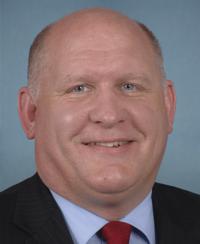
Chairman, House Agriculture Committee (R-PA)
Thompson led the House Agriculture Committee markup that advanced the farm bill 34-17 after a roughly 25-hour session in March. On April 29 he told farm broadcasters he expected the full House to pass the bill by Thursday noon. He said E15 didn't fall under Agriculture Committee jurisdiction and would be handled as a separate bill, reflecting the Rules Committee's strategy to decouple the ethanol fight from the core farm legislation.
U.S. Representative (R-TX)
Roy issued the first public warning that the procedural rule was at risk, describing the E15 provision as 'E15 crap' and calling it a problem for conservative hardliners. He represents a faction of the Republican conference that views ethanol mandates as government market interference. His opposition signaled to leadership that the rule lacked the votes to pass and forced the two-hour standoff.
U.S. Representative (R-CO)
Boebert announced she would vote against the rule after the Rules Committee rejected her amendments for rural constituents in her southeastern Colorado district. She switched to a yes vote after leadership committed to including provisions for the Arkansas Valley Conduit water project and reclassifying millet as a specialty crop. She confirmed the deal included a delay of the farm bill vote for approximately two weeks.

U.S. Representative (R-FL)
Luna initially opposed the rule and sponsored an amendment to remove pesticide liability protection provisions she said protected large manufacturers at the expense of accountability. She agreed to vote yes after leadership committed to allowing her pesticide amendment to receive a vote when the farm bill returned. She said she had 'the votes to remove the pesticide liability protection' clause and that the bill was pulled partly because of 'issues with E15.'
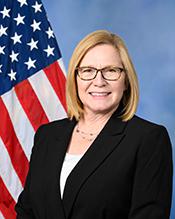
U.S. Representative (R-MN)
Fischbach led the bipartisan effort to include year-round E15 sales in the farm bill, filing the amendment with more than 20 co-sponsors including Reps. Randy Feenstra and Stephanie Bice. She chairs the House E15 Rural Domestic Energy Council, which Republican leadership created in January to give farm-state members a vehicle for advancing year-round E15 legislation. The E15 provision was ultimately separated from the farm bill as a standalone vote.

U.S. Representative (R-KY)
Massie posted on social media that the farm bill was 'likely delayed for two weeks now due to the fight over E15,' one of the first public confirmations of the delay's scope and cause. He represents the libertarian-leaning wing of the Republican conference that opposes government mandates and ethanol blending requirements as market distortions.

U.S. Representative (D-MN)
Craig, a Democrat from Minnesota's agricultural heartland, told reporters she would vote for the standalone E15 bill despite it not being 'her favorite bill,' illustrating the bipartisan support that E15 could attract when separated from the broader farm bill controversies. Her position was significant because the E15 vote would need some Democratic support to offset Republican defections.
True
The House procedural rule vote was held open for more than two hours
Multiple sources confirm the rule vote was held open for more than two hours as Johnson negotiated with holdouts. The final rule vote was 216-210. [1][2]
True
Senate Republicans are writing their own farm bill and rejecting the House E15 approach
Politico reported that Senate Republicans and aides privately confirmed they planned to write their own farm bill and had not agreed to the E15 language, describing it as a provision that won't clear the Senate. [1][2]
True
Lauren Boebert voted no on the rule and then switched to yes
Multiple sources confirm Boebert initially opposed the rule but switched to yes after leadership committed to her water project and millet specialty crop amendments. She confirmed the deal included a delay of the farm bill vote. [1][2]
True
The House Agriculture Committee passed the farm bill 34-17 in March 2026
Multiple sources confirm the Agriculture Committee advanced the bill 34-17 following a two-day markup that lasted approximately 25 hours. [1][2]
True
Chip Roy called the E15 provision 'E15 crap'
Politico directly reported that Roy used this language to describe the E15 provision in his opposition to the procedural rule. Chip Roy separately called the state of the House a 'crap show.' [1][2]
Misleading
E15 is currently banned year-round in most states
E15 is not banned outright but is restricted during summer months in most states by EPA regulations governing gasoline Reid Vapor Pressure limits. The amendment would apply the same volatility standards to E15 that currently apply to standard E10 gasoline, effectively allowing year-round sales by removing the special summer restriction. [1][2]
Contact your representative about the farm bill's SNAP provisions
civic action
SNAP benefits approximately 42 million Americans and its authorization is governed by the farm bill. The farm bill delay creates uncertainty about benefit levels and program eligibility rules. Contacting your representative about the importance of SNAP authorization and the farm bill's impact on food security can influence the final legislative package.
Submit comments on the E15 rulemaking to the EPA
civic action
EPA regulations restrict summer E15 sales, and any permanent change to year-round E15 authorization would require either a legislative change (the farm bill approach) or EPA rulemaking. Submitting comments on EPA's fuel volatility rules helps the agency understand the public's views on E15 access and environmental tradeoffs.
Contact your senators about the Senate farm bill timeline
civic action
Senate Republicans signaled they plan to write their own farm bill rather than accept the House version, which means both chambers must ultimately negotiate a final bill. Constituents can contact senators about their priorities for the Senate version, including SNAP, conservation funding, crop insurance, and rural development.