House hearing examines First Amendment on college campuses
Witnesses split on who poses the greater campus free speech risk
Witnesses split on who poses the greater campus free speech risk
Subcommittee Chairman Burgess Owens (R-UT) opened the April 29 hearing by arguing that censorship on college campuses is creating conformity and violence, and that public colleges and universities have a legal obligation to uphold the First Amendment that enforcement is often inconsistent or biased against. Owens has chaired the Higher Education Subcommittee for three terms and made campus free speech — including antisemitism, alleged liberal bias in scholarship programs, and student group rights — a central focus of his tenure. He announced in March 2026 that he will not run for re-election, making the April 29 hearing one of his final major actions as subcommittee chair.
The hearing framing reflected a conservative critique that universities systematically suppress religious, conservative, and socially traditional speech through speech codes, unequal recognition of student groups, differential funding of student activities, viewpoint-based security fees, and administrative culture that discourages ideological diversity. Owens and Republican colleagues used the hearing to reinforce arguments for federal oversight conditions tied to First Amendment compliance as a condition of federal financial aid eligibility.
Chair, Subcommittee on Higher Education and Workforce Development (R-UT)
Chaired the April 29 hearing and opened with framing that censorship on campuses is creating conformity and violence. Announced in March 2026 he is not running for re-election. Has made campus free speech — including antisemitism, bias in scholarship programs, and student group rights — a central focus of his three-term tenure as subcommittee chair.
Senior Counsel and Director, Center for Academic Freedom, Alliance Defending Freedom
Testified on viewpoint-based student group recognition and funding practices at public universities, citing specific cases of pro-life students denied funding while comparable groups received large sums. Has litigated over 400 campus free speech cases in 12 years. Argued universities use speech zones, security fees, and student activity fund allocation as mechanisms to suppress conservative and religious speech.
President and CEO, North American Interfraternity Conference
Testified on the recognition and funding rights of single-sex fraternal organizations. Raised concerns about university policies restricting freshman participation in fraternities, denying recognition to groups without faculty sponsors, and treating male-only social organizations differently from other student groups. Argued these restrictions violate members' First Amendment associational rights.
Senior Staff Attorney, American Civil Liberties Union
Represented the ACLU's perspective that the First Amendment protects broad speech rights including for student activists and protesters, not just speakers at formally invited events. Has argued that the First Amendment is the activists' best friend and that government cannot restrict speech based on viewpoint. His presence provided a civil-liberties check on the hearing's predominantly conservative framing.
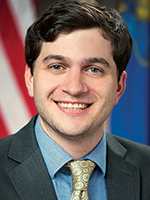
Paul and Karen Levy Fellow in Campus Freedom, American Council of Trustees and Alumni
Testified on whether universities are honoring their stated free speech commitments. ACTA monitors institutional speech policies and publishes ratings of university speech environments. His testimony connected the hearing to legislative proposals that would make specific First Amendment policy compliance a condition of federal financial aid eligibility.
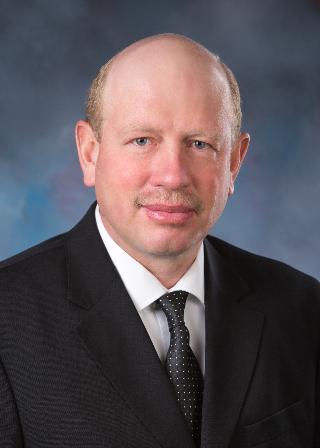
U.S. Representative (R-NC), House Education and Workforce Committee
Discussed with Langhofer the legal framework for viewpoint-neutral student group recognition at public universities, specifically the constitutional requirement that public colleges treat student groups equally regardless of their viewpoint when making recognition and funding decisions.
Chairman, House Committee on Financial Services (R-AR)
While primarily relevant to the China Exchange Rate Accountability Act topic, Hill's committee leadership provides context for broader Republican committee strategy in the 119th Congress. Referenced here as chair of a committee with overlapping jurisdiction on some higher education funding mechanisms.
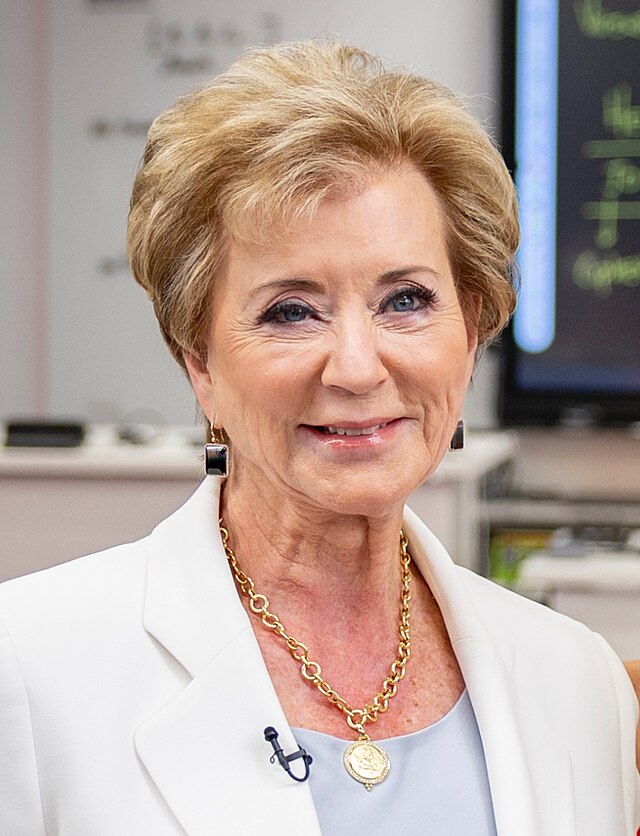
Secretary of Education
As Secretary of Education, McMahon's department administers the federal financial aid programs that create the funding leverage the committee has used to press universities on free speech compliance. Her confirmation hearing raised questions about how the Department would use funding conditions to enforce free speech policies. The April 29 hearing provides congressional context for that enforcement strategy.
True
Public colleges and universities have a legal obligation to uphold the First Amendment
The House committee recap explicitly stated that public colleges and universities have a legal obligation to uphold the First Amendment. As state actors, public universities are directly bound by the First Amendment, which prohibits government — including public universities — from restricting speech based on content or viewpoint. Private universities are not directly bound. [1][2]
True
ADF has more than 400 campus free speech victories in 12 years
Langhofer stated in a recorded interview that ADF has had over 400 victories in the last 12 years on college campuses. This claim represents ADF's own self-reported litigation record and has not been independently verified by a court or academic source, but Langhofer made this claim in a public forum as a factual statement about ADF's history. [1]
True
The Supreme Court prohibits a 'heckler's veto' — restricting speech because an audience objects
The heckler's veto doctrine — the principle that a speaker's rights cannot be curtailed merely because others object to their speech — is established First Amendment case law. The Supreme Court has repeatedly held that the government cannot restrict speech in response to hostile audience reaction. Both Langhofer and Sykes affirmed this doctrine from different ideological perspectives. [1][2]
True
Burgess Owens is not running for re-election
Inside Higher Ed reported in March 2026 that Burgess Owens, the Utah Republican who chairs the House higher ed subcommittee, is retiring. He has served three terms in the House. [1]
False
Private universities are directly bound by the First Amendment
The First Amendment restricts government action, not private institutions. Private universities are not directly bound by the First Amendment as state actors. They are, however, governed by their own stated free speech commitments and, as federal financial aid recipients, by the conditions attached to those funds. Many private universities have voluntarily adopted First Amendment-style speech protections, but they are not constitutionally required to do so. [1]
False
The Respecting the First Amendment on Campus Act passed the House
The American Council on Education's reporting confirms H.R. 7683 passed the House Education Committee in March 2024, but it did not pass the full House of Representatives. The bill remained a committee-level action and was not enacted into law. [1]
Review your college or university's written free speech policies and report concerns to campus governance
civic monitoring
Every college and university that accepts federal financial aid has free speech policies that govern what speech is permitted, where, and under what conditions. Students, faculty, and staff can review these policies and file concerns through faculty governance, student government, or campus ombudsperson offices.
Contact your U.S. representative about legislation requiring federal aid-receiving universities to adopt First Amendment policies
civic action
The Respecting the First Amendment on Campus Act (H.R. 7683) passed the House Education Committee in 2024 but did not pass the full House. Similar legislation could be proposed in the current Congress. Constituents can urge their representative to support or oppose specific provisions based on whether they believe federal funding conditions are an appropriate mechanism for speech protection.
File a complaint about campus speech restrictions through your institution's Title IV compliance channel or the Department of Education
civic action
Students at institutions that accept federal financial aid can file complaints about speech restrictions that they believe violate federal law or their institution's stated free speech commitments. The Department of Education's Office for Civil Rights investigates complaints related to harassment and discrimination that intersect with speech.
Engage in civic discourse about campus speech as a participant, not just an observer
community engagement
Free speech on campus is protected and encouraged — but it requires active participation to be meaningful. Students can organize speaking events, challenge speech codes through campus governance, write for campus newspapers, and engage with student government to advocate for viewpoint-neutral policies.