House passes 3-year FISA 702 renewal 235-191, Senate next
Bipartisan vote includes warrant safeguards but no backdoor search protection
Bipartisan vote includes warrant safeguards but no backdoor search protection
Section 702 of FISA was enacted in 2008 to expand the government's ability to surveil foreign nationals abroad without obtaining individualized court orders. The NSA uses it to collect electronic communications of approximately 350,000 foreign targets per year. Because Americans communicate with people abroad, their calls, texts, and emails are 'incidentally' swept up in this collection and stored in a searchable government database accessible to the FBI, CIA, NSA, and National Counterterrorism Center.
The FBI alone has conducted millions of warrantless 'backdoor searches' of this database looking for Americans' communications. In a December 2024 district court ruling, a federal judge found these warrantless backdoor searches unconstitutional because the Fourth Amendment requires a warrant. The FBI searched the Section 702 database for information about Black Lives Matter protesters, members of Congress, journalists, and 19,000 donors to a single congressional campaign without obtaining warrants, according to a Brennan Center analysis.

Speaker of the House (R-LA)
Johnson led the effort to pass the FISA reauthorization, holding the floor vote open for more than two hours to persuade Republican holdouts. He packaged the FISA bill with the farm bill and DHS funding framework in a single procedural rule, requiring only one floor vote to advance all three. He previously sought five-year and 18-month extensions before settling on a three-year bill.
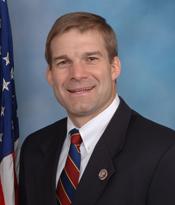
Chairman, House Judiciary Committee (R-OH)
Jordan reversed his 2024 position and supported the 2026 three-year reauthorization without a warrant requirement. In 2024 he had voted for a warrant amendment and against RISAA. In 2026 he said the 56 RISAA reforms had changed the landscape and that the current political context — with Trump administration oversight — made a warrant requirement less urgent.
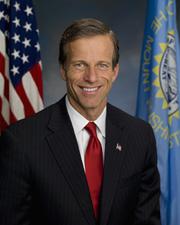
Senate Majority Leader (R-SD)
Thune signaled the Senate would not simply accept the House FISA bill and would pursue its own path, including potentially adding warrant requirements or other amendments. He flatly told reporters that linking FISA to other House priorities was 'not happening,' setting up a potential House-Senate standoff that could result in amendments and a second House vote.

U.S. Representative (R-AZ)
Biggs offered a House Rules Committee amendment that would have prohibited warrantless queries of Americans' communications collected under Section 702. The amendment was rejected by the Rules Committee and did not receive a floor vote. He was part of the Freedom Caucus contingent that opposed a clean three-year reauthorization without stronger privacy safeguards.

U.S. Representative (R-TX)
Cloud offered a dual amendment that would bar intelligence agencies from warrantlessly searching Americans' communications under Section 702 and also prohibit creation of a central bank digital currency, which he described as the 'ultimate surveillance tool.' The warrant portion of his amendment addressed the same Fourth Amendment concerns raised by civil liberties advocates on both sides of the aisle.
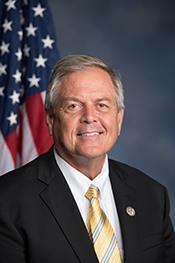
U.S. Representative (R-SC)
Norman issued a public statement arguing that if a local police officer needs a warrant to search a home, the federal government should need one before searching Americans' data. He voted against the reauthorization and called FISA's warrantless backdoor searches a violation of Fourth Amendment rights that the 2026 bill failed to correct.

U.S. Representative (R-NC)
Harris offered an amendment in the Rules Committee that would have limited the FISA reauthorization to three months rather than three years, which he argued would give Congress more time to negotiate stronger privacy reforms. The short-term extension approach was favored by members who wanted leverage to force a warrant requirement without risking a complete lapse.

U.S. Senator (D-OR), Senate Intelligence Committee
Wyden has been a leading opponent of Section 702 renewal without a warrant requirement for querying Americans' communications. He co-introduced the Fourth Amendment Is Not For Sale Act to require warrants before federal agencies can access data purchased from data brokers, and has held up key national security nominations to force accountability on surveillance practices. He argued the three-year renewal passed without the reforms needed to prevent FBI backdoor searches of Americans' communications.
U.S. Representative (R-AR); Chairman, House Permanent Select Committee on Intelligence
Crawford chaired the House Intelligence Committee and managed the Section 702 three-year reauthorization through his committee. Privacy reform advocates described him as open to balanced debate despite not being a known surveillance reformer. His committee's version of the renewal rejected the warrant requirement amendment favored by civil liberties groups on both sides of the aisle, and the House passed the bill largely as the Intelligence Committee drafted it.
True
The House passed FISA Section 702 renewal 235-191
Multiple sources including ABC News and Punchbowl News confirm the 235-191 vote on April 29, 2026, with 22 Republicans voting no and 42 Democrats voting yes. [1][2]
True
The FBI conducted warrantless searches of Section 702 data for Black Lives Matter protesters, members of Congress, and journalists
The Brennan Center, citing declassified FISA Court opinions and government reports, confirmed that the FBI conducted warrantless backdoor searches for information about Black Lives Matter protesters, U.S. government officials, journalists, political commentators, and 19,000 donors to a single congressional campaign. These searches occurred under prior Section 702 authorizations. [1]
True
A FISA Court opinion in March 2026 found continued surveillance violations by intelligence agencies
The Brennan Center and New York Times both reported that a classified March 2026 FISA Court opinion found that querying violations extended 'across the intelligence community' beyond the FBI, and that while one FBI tool had been discontinued, the bureau was using another tool with the same functionality. [1][2]
True
Section 702 sweeps up Americans' communications without targeting them
Section 702 targets foreign nationals abroad, but because Americans communicate with those targets, their messages are 'incidentally' collected and stored in the same database. The government acknowledges this incidental collection and makes the database searchable by multiple intelligence agencies. [1][2]
False
If Congress doesn't reauthorize Section 702, all surveillance ends immediately
Section 702 surveillance operates under annual FISA Court certifications that remain valid through their expiration regardless of statutory lapse. The March 2026 certifications would keep the program authorized until approximately March 2027 even if the statute expires. The practical risk of a lapse is mainly legal uncertainty for companies receiving surveillance directives, not an immediate surveillance halt. [1][2]
False
The 2026 FISA bill requires a warrant before searching Americans' communications
The 2026 House bill does not include a warrant requirement for backdoor searches of Americans' communications. It adds criminal penalties for misuse, requires written supervisory approval before certain searches, and mandates logging of queries, but explicitly omits the court-order requirement that privacy advocates sought. [1][2]
Contact your senator to urge warrant protections in the FISA Senate bill
civic action
The House bill now moves to the Senate, where amendments including a warrant requirement for backdoor searches of Americans' communications may still be added. Calling your senator before the Senate vote can influence whether stronger privacy protections are included.
Request your representative's position on warrant requirements for FISA backdoor searches
civic action
Constituents who want to understand how their House member voted and what position they take on warrant requirements can contact their representative's office directly. Members who voted yes on the House bill without warrant protections represent a potential point of accountability.
Submit a comment to the Privacy and Civil Liberties Oversight Board
civic action
The PCLOB is an independent, bipartisan federal oversight board that reviews the government's surveillance programs and their compliance with civil liberties. It accepts public input and publishes reports that influence Congress and intelligence agency practices.