March 10, 2026
NYT and Bellingcat find US Tomahawk evidence in Minab school strike
The investigation shows how independent verification can contradict official government narratives
🛡️National Security📰Media Literacy🌍Foreign Policy
March 10, 2026
The investigation shows how independent verification can contradict official government narratives
The Shajareh Tayyebeh girls' elementary school in Minab, Hormozgan province, was struck on Feb. 28, 2026, the first day of Operation Epic Fury. The school sits in southern Iran near the Strait of Hormuz. Witnesses said the school was hit three separate times during the school day. After the first strike, the principal moved surviving students to a prayer room and called parents to come pick up their children. The prayer room was then hit by a second strike, killing most of those who had sheltered there. A parent told reporters he had received a call from the school after the first strike saying his daughter had survived, but she was killed before he could arrive.
At least 168 people were killed, most of them children. Iranian state media reported estimates as high as 180. It was the deadliest single strike on civilians in the war's first ten days. The Guardian found no indication the school compound served any military purpose and identified the buildings adjacent to it as a medical clinic and a pharmacy.
The school had been physically separated from the neighboring Islamic Revolutionary Guard Corps naval compound years before the strike. Satellite imagery reviewed by Human Rights Watch and TIME showed the school building was walled off from the IRGC compound by September 2016. By August 2017, a soccer pitch was clearly visible in the school's courtyard. The Guardian and Al Jazeera both reported that the site had been a clearly defined civilian institution for more than ten years before the war began.
Minab's mayor and the Iranian Ministry of Education confirmed the school was the only active facility on a site that had once been an IRGC base. The military had relocated all personnel approximately 15 years before the strike. According to satellite imagery and reporting by NPR, at least seven buildings across the school compound and adjacent areas were hit in what appeared to be a precision airstrike.
The video connecting the strike to American munitions was published by Iran's semiofficial Mehr News Agency on March 8, 2026, ten days after the strike. Bellingcat was the first organization to geolocate it, identifying the footage as showing a cruise missile striking the IRGC naval base immediately adjacent to the school. Bellingcat analyst Trevor Ball confirmed the missile was consistent with an American Tomahawk. Bellingcat stated the footage "directly contradicts" Trump's claim that Iran was responsible.
BBC Verify independently geolocated the same footage and reached the same conclusion. Jeffrey Lewis, a professor of global security at Middlebury College and one of the country's most cited weapons analysts, told NPR that the missile in the footage "did not match any known weapons possessed by Iran." N.R. Jenzen-Jones, director of arms intelligence firm Armament Research Services, said in an email to NBC News: "This would indicate a U.S. strike." Eight additional munitions experts consulted by the Washington Post confirmed the missile was a Tomahawk.
Photographs of missile fragments laid out on a table near the school ruins were shared on Telegram by Iran's state broadcaster, the Islamic Republic of Iran Broadcasting network, with a caption describing them as remnants of the American missile that struck the school. CNN reviewed the fragments and confirmed they appeared consistent with a Tomahawk cruise missile. A CNN analysis of the Mehr News video separately confirmed that a Tomahawk was used in at least one strike on the IRGC base next to the school.
The fragments could not be independently confirmed as coming from the school strike specifically, as opposed to the adjacent IRGC base strike. But the fragment photos, the Mehr News video, and the geolocation work collectively established three independent evidentiary threads pointing to the same conclusion: a U.S. Tomahawk struck the compound on Feb. 28.
The Pentagon's own public record made the U.S. connection difficult to dispute. Gen. Dan Caine, Chairman of the Joint Chiefs of Staff, told reporters at a Pentagon briefing: "The first shooters at sea were Tomahawks unleashed by the United States Navy." He confirmed U.S. forces were operating in southern Iran, the exact region where Minab is located. A Defense Department map released publicly during the first 100 hours of the operation showed a strike on the area of Minab. The United States and Israel divided their strike responsibilities geographically, with the U.S. taking southern Iran. Israel does not use Tomahawk missiles.
Two American military personnel involved in the Pentagon's internal investigation told Reuters on March 5 that they believed the strike was likely carried out by the United States, though the investigation had not reached a final conclusion. A New York Times report on March 11, citing officials familiar with the preliminary findings, said investigators believed U.S. Central Command relied on outdated Defense Intelligence Agency targeting data that still classified the school building as part of a military compound, even though it had been converted into a school more than a decade earlier.
Trump denied U.S. responsibility and offered shifting explanations. Speaking to reporters on Air Force One, he said the strike was, in his opinion, carried out by Iran and that Iranian munitions were "very inaccurate." When pressed further, he claimed Iran "also has some Tomahawks" and called the missile "very generic" and "sold to other countries." He then added: "I just don't know enough about it."
Every major weapons analyst who commented publicly said Trump's claim was false. Tomahawk cruise missiles are manufactured exclusively by Raytheon in the United States. The only foreign militaries that possess them are the United Kingdom and Australia, which received them through formal government-to-government arms transfer agreements. Iran is under comprehensive U.S. and European Union arms embargoes that have been in place since 1979. Even absent the embargo, Iran lacks the software, targeting infrastructure, and compatible launch systems required to operate a Tomahawk. Iran's own cruise missiles, the Soumar and Ya Ali, are visually and structurally distinct from the Tomahawk.
The United Nations described the bombing as "a grave assault on children, on education, and on the future of an entire community." The United Nations Children's Fund expressed alarm over child casualties. The United Nations Educational, Scientific and Cultural Organization said attacks on educational facilities may constitute grave violations of international humanitarian law. Kenneth Roth, former executive director of Human Rights Watch, said it was "increasingly clear that the U.S. military was responsible" and called it "hit by a precision weapon, not an errant attack," adding that it raised "urgent questions regarding why U.S. intelligence was so shoddy that it treated the school as no different from the adjacent military facility."
Defense Secretary  Pete Hegseth said the Pentagon was investigating while simultaneously repeating Trump's claim that the only side targeting civilians was Iran. At a March 2 press conference, Hegseth called Operation Epic Fury "the most lethal and precise air power campaign in history." He announced at roughly the same time as the Bellingcat report that the Pentagon was shifting away from precision munitions like Tomahawks toward cheaper laser-guided bombs, citing the war's daily cost of roughly $1 billion. Weapons analysts noted that laser-guided bombs require aircraft to fly closer to targets and maintain line-of-sight guidance to impact, increasing both crew risk and the likelihood of civilian casualties.
Former U.S. Army EOD specialist; Bellingcat contributor
Chairman of the Joint Chiefs of Staff
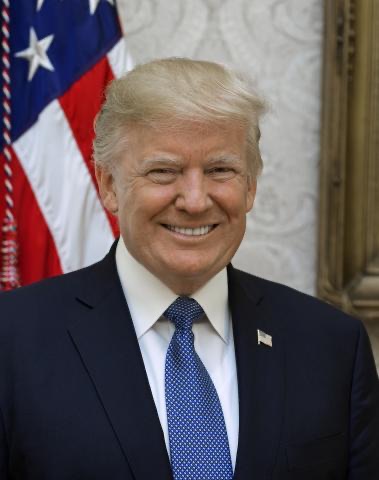
President

Secretary of Defense
Professor of Global Security, Middlebury Institute; nuclear and weapons analyst
Lead forensic visual investigator, New York Times Visual Investigations unit
Senior visual investigations producer, New York Times Visual Investigations unit
Weapons and military reporter, New York Times
Representative, Cooperative Council of Iranian Teachers Trade Associations
research
Learn Bellingcat's open-source investigation methods to evaluate military strike evidence
The New York Times and Bellingcat independently verified video evidence showing a US Tomahawk missile striking beside an Iranian elementary school on February 28, 2026, killing 175 people, mostly children. The evidence includes a 2014 Pentagon contract number and Globe Motors components specific to Tomahawk missiles. Eight independent munitions experts confirmed the identification. President Trump claimed without evidence that Iran was responsible, but forensic analysis contradicts this assertion. This case demonstrates how open-source intelligence can verify or debunk official claims.
Go to bellingcat.com and read their how-to guides on geolocation, munitions identification, and social media verification. Then apply those skills to the Minab case: examine the fragment photos, Mehr News video, and NYT analysis. Ask yourself: what does this evidence establish, and what does it not establish? This teaches informed civic literacy versus accepting claims uncritically. Key facts: 175 killed at Shajareh Tayyebeh school, Tomahawk missile identified by contract number, Trump claimed Iran responsible without evidence.
research
Track civilian casualty accountability at Airwars
Airwars independently tracks civilian casualties from airstrikes worldwide, including the Iran war. Their methodology is transparent and their data is used in congressional oversight hearings and federal court proceedings.
Go to airwars.org and search for their Iran war coverage. Read their methodology for how they verify casualty claims from multiple sides of a conflict. Look specifically at how they handle cases where the responsible party is disputed. Compare their counts with the official U.S. and Iranian figures — the gap tells you something important about accountability.
civic action
Contact your representative about civilian casualty investigations
Congress has the authority to demand the Pentagon release its civilian casualty assessments. Demand your representative call for a public accounting of U.S. responsibility for the Minab school strike and all civilian casualties in the Iran war.
Hello, I am [NAME], a constituent from [CITY/STATE]. I am calling about civilian casualties in the Iran war, specifically the Minab girls' school strike.
Key concerns:
Questions to ask:
Specific request: I am asking Representative [NAME] to formally request the Pentagon's Minab civilian casualty assessment and to support House Armed Services Committee oversight hearings on civilian protection rules in Operation Epic Fury.
Question: What is Representative [NAME]'s position on public accountability for civilian casualties caused by U.S. military operations?
Thank you for your time.