National Security · Foreign Policy · Government · Media Literacy · Historical Precedent · Legislative Process·March 2, 2026
They all promised no regime change in Iran. The record says otherwise
Trump, Vance, Hegseth, Rubio said it. Greene and Carlson documented the betrayal

For a decade, 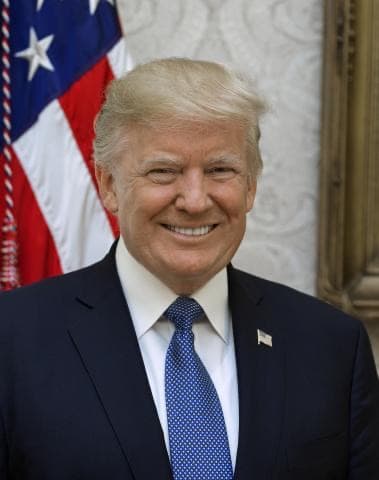 Donald Trump built his political identity on opposing the kind of foreign wars that cost the United States trillions of dollars and thousands of lives. He said it at the 2016 Republican National Convention, in countless rallies, and in campaign ads that ran through the 2024 election. Vice President
  JD Vance wrote op-eds about it. Defense Secretary
  Pete Hegseth pledged it just two months before Operation Epic Fury launched. Secretary of State
  Marco Rubio said it explicitly on Fox News after the June 2025 nuclear strikes: "We're not into the regime change business here." Then, at 3 a.m. on February 28, 2026, Trump announced "massive and ongoing" combat operations in Iran, and called on Iranians to topple their own government. The fracture that followed split not just Democrats and Republicans but the MAGA movement itself. Former Rep. Marjorie Taylor Greene published a 694-word denunciation calling it "the worst betrayal."
  Tucker Carlson, who had visited the White House the week before trying to stop the war, called it "absolutely disgusting and evil." Former Vice President
  Kamala Harris said Trump was "dragging the United States into a war the American people do not want." Sen. Bernie Sanders called it "an illegal, premeditated and unconstitutional war." And
  Rand Paul quoted the Founders. The politicians who spent years telling voters they stood against regime change now had to answer for the one they launched.
Key facts
"At the 2016 Republican National Convention, Trump declared he would "break the cycle of regime change" and called it "reckless." In 2019, he posted in all caps: "GOING INTO THE MIDDLE EAST IS THE WORST DECISION EVER MADE." That same year, he said U.S. policy of "never-ending war, regime change, and nation-building is being replaced by the clear-eyed pursuit of American interests." In 2013, he accused President Obama of wanting to start a war with Iran for political reasons and urged him to "stay out of Syria." This was not fringe commentary — it was the central foreign policy identity Trump sold to voters across three election cycles. "
"JD Vance built his political brand on the same argument. In a January 2023 Wall Street Journal op-ed, he wrote that Trump's best foreign policy record was "not starting any wars." He argued at the Quincy Institute that the United States had to get past the "tired old slogans" of military intervention. On Thursday, February 26, 2026 — two days before Operation Epic Fury launched — Vance told the Washington Post there was "no chance" the U.S. would be involved in a drawn-out Middle East war. The next morning, on NBC, he said explicitly: "Our view has been very clear that we don't want a regime change. We do not want to protract this or build this out any more than it's already been built out." "
"In December 2025, Pete Hegseth used his Senate confirmation hearings for Secretary of Defense to pledge the end of what he called "regime change wars" and "undefined wars." He framed it as a core principle of the incoming administration. Seven weeks later, on the morning of June 22, 2025, after the first round of U.S. strikes on Iranian nuclear facilities, he stood at a Pentagon podium and said: "This mission was not and has not been about regime change. The President authorized a precision operation to neutralize the threats to our national interests posed by the Iranian nuclear program." He called the operation "bold and brilliant" and said Iran's nuclear ambitions had been "obliterated." "
"Marco Rubio made the most direct denial. On Fox News the Sunday after the June 2025 nuclear strikes, he said: "I don't like the regime, but we're not into the regime change business here. We're into the safety and security of the United States business." He insisted it was "not a war against Iran" and that "not a shot was fired against us." Rubio urged Iran to negotiate, warning: "This is a President that tells you what he's going to do, and then he does it." Eight months later, he coordinated a war whose stated goal was removing the Iranian government. Trump's own Truth Social post made the pivot explicit: "MIGA: Make Iran Great Again. If the current Iranian Regime is unable to MAKE IRAN GREAT AGAIN, why wouldn't there be a Regime change???" "
"The 2024 Republican National Committee distributed campaign materials that read "KAMALA WILL SEND YOUR SONS TO WAR." Trump called himself the "President of PEACE" throughout the campaign. His website described him as the candidate who would start "no new wars." On February 28, 2026, announcing Operation Epic Fury at 3 a.m., he said: "The lives of courageous American heroes may be lost, and we may have casualties. That often happens in war. But we're doing this not for now. We're doing this for the future. And it is a noble mission." Three American service members were dead by Sunday morning. Five more were seriously wounded. "
"Sen. Lindsey Graham of South Carolina — one of the most consistent hawks in the Senate — celebrated the reversal openly. He posted that Trump's announcement "will go down in history as the catalyst for the most historic change in the Middle East in a thousand years" and declared "the murderous ayatollah's regime in Iran will soon be no more." He called on Iranian military and security forces to lay down their arms. Sen. Katie Britt of Alabama called the operation "a defining moment of generational leadership." Speaker Mike Johnson, who was briefed before the strikes, praised Trump and said Iran was "facing the severe consequences of its evil actions." Senate Majority Leader John Thune said Iran had "refused the diplomatic off-ramps." "
"Rep. Mark Alford of Missouri said publicly that he had been saying for weeks "the Ayatollah needs to go — through either the easy way or the hard way." Rep. Ann Wagner, an Intelligence Committee member also from Missouri, said the U.S. would "no longer allow this regime to wreak havoc at will." Rep. Nancy Mace of South Carolina said "history will record this night" and declared that "peace is not found in appeasement — it is won." Rep. Rick Crawford of Arkansas, Chair of the House Intelligence Committee and one of the few lawmakers briefed before the strikes, said Iran "absolutely cannot be allowed to maintain a nuclear weapon" and defended the operation as justified. "
"The fracture inside the Republican Party was loud and immediate. Rep. Thomas Massie of Kentucky posted: "I am opposed to this War. This is not America First." He and Rep. Ro Khanna of California announced they would force a congressional vote under the 📖War Powers Resolution. Sen. Rand Paul quoted John Quincy Adams — "Wherever the standard of freedom and Independence has been unfurled, there will her heart, her benedictions and her prayers be" — and wrote: "My oath of office is to the Constitution, so with studied care, I must oppose another Presidential war." Paul called it "another preemptive war" begun without congressional authorization. "
"Marjorie Taylor Greene, the former Georgia Republican who had been a close Trump ally until their break over the Epstein files, published a 694-word denunciation on February 28 that became one of the most-read social media posts of the day. "We said 'No More Foreign Wars, No More Regime Change!' We said it on rally stage after rally stage, speech after speech," she wrote. "Trump, Vance, basically the entire admin campaigned on it and promised to put America FIRST and Make America Great Again." She called the deaths of U.S. service members "absolutely unnecessary" and wrote that it "feels like the worst betrayal this time because it comes from the very man and the admin who we all believed was different and said no more." In a follow-up post she called the administration "a bunch of sick f***ing liars." "
"Tucker Carlson had visited the White House the week before the strikes specifically to urge Trump not to authorize the operation. When Jonathan Karl of ABC News reached him on the morning of February 28, Carlson called the decision "absolutely disgusting and evil" and said it would "shuffle the deck in a profound way" for the MAGA movement. He had warned on his podcast before the war that Iran's population of 93 million far exceeded Iraq's and that the conflict could spiral beyond Washington's control. He had accused conservative media outlets including the Wall Street Journal of pushing regime change "on behalf of Israel." His condemnation placed him alongside Greene in the anti-war MAGA faction — and directly against former allies like Mark Levin and Sean Hannity, who celebrated the strikes on Fox News. "
"Former Vice President Kamala Harris was on a book tour in Detroit when the strikes launched. She issued a statement calling the war "a dangerous and unnecessary gamble with American lives." She said: "Let me be clear: I am opposed to a regime-change war in Iran, and our troops are being put in harm's way for the sake of Trump's war of choice." She accused Trump of lying to voters — "he promised to end wars rather than start them" — and said "what we are witnessing is not strength. It is recklessness dressed up as resolve." She called on Congress to "use all available power to prevent him from further committing us to this conflict." The next day, speaking at the Orpheum Theater in Madison, Wisconsin, she told the crowd that in the last 48 hours "Donald Trump has dragged America into a war that we don't want," and noted that three American service members had died in what she called "an unauthorized war." "
"Sen. Bernie Sanders of Vermont called it "an illegal, premeditated and unconstitutional war." He said Trump, "along with his right-wing extremist Israeli ally Benjamin Netanyahu, has begun" a war that "tragically gambles with American lives and treasure to fulfill Netanyahu's decades-long ambition of dragging the United States into armed conflict with Iran." He invoked Vietnam and Iraq: "We've lived through the lies of Vietnam and Iraq. No more endless wars." Sen. Chris Van Hollen of Maryland called it "an illegal, regime-change war against Iran" and demanded the Senate immediately vote on the 📖War Powers Resolution. Sen. Elizabeth Warren said it was "a betrayal of the American people." Sen. Tim Kaine of Virginia called it "a colossal mistake" and demanded a Senate vote to block further hostilities. "
"The Democratic opposition faced its own complications. A YouGov poll conducted on February 28 found that 33% of U.S. adults approved of the Iran strikes while 45% disapproved — but among Republicans approval was far higher. Several potential 2028 Democratic presidential candidates aligned against the war: Kamala Harris, California Gov. Gavin Newsom, Pennsylvania Gov. Josh Shapiro, and Sen. Ruben Gallego of Arizona all publicly opposed the strikes. Gallego, a combat veteran who served in Iraq, wrote: "Young working-class kids should not pay the ultimate price for regime change and a war that hasn't been explained or justified to the American people." Pete Buttigieg had been campaigning in early primary states ahead of the 2026 midterms; he also opposed the operation. "
"The Venezuela parallel was cited immediately by critics. The Trump administration in 2025 had supported the removal of Nicolás Maduro — a move that CNN noted meant Trump had "resurrected the US policy of deposing Latin American leaders." In both Venezuela and Iran, the pattern was identical: frame the target government as a threat and a sponsor of terrorism, pursue leadership removal while officials publicly deny regime change is the goal, and then embrace the outcome when it occurs. Former U.S. Ambassador to Russia Michael McFaul wrote: "Trump is now the 'neocon' that he has ridiculed for all of his public life. He is using the American armed forces to facilitate regime change in Iran. This is a complete reversal of what he has been promising his supporters for decades." "
"The historical comparison to Lyndon Johnson's 1964 campaign was drawn by multiple analysts. Johnson ran as the anti-war candidate against Barry Goldwater, warning that Goldwater would escalate in Vietnam — then massively escalated U.S. involvement in Vietnam after winning. What distinguishes the 2024-2026 case is the speed and directness of the reversal: Vance denied regime change was the goal hours before the war aimed at exactly that began. Conservative influencers Keith and Kevin Hodge, who had supported Trump, wrote: "President Trump has completely LIED to his voters, backstabbed our country and has disgraced his legacy beyond repair." The Hodge twins were not alone. The coalition Trump built on anti-interventionism had fractured before the first week of the war was over. "
Related Topics
6🔍
Pentagon told Congress Iran attack was not imminent as Trump claimed threat
On March 1, 2026, Pentagon officials told congressional staff in private briefings that U.S. intelligence did not suggest Iran was preparing a preemptive strike on American forces. Three people familiar with the briefings told the Associated Press. This directly undercut Trump's public justification for Operation Epic Fury, noting that the war was necessary to eliminate "imminent threats from the Iranian regime." The intelligence gap ran deeper than the question of intent. A May 2025 Defense Intelligence Agency assessment had already found that Iran could develop a militarily viable intercontinental ballistic missile by 2035 "should Tehran decide to pursue the capability" — not "soon," as Trump claimed. After the June 2025 nuclear strikes, a classified DIA report found those strikes set Iran's nuclear program back only months, not years — contradicting the White House claim that Iran's nuclear ambitions had been "obliterated." Marco Rubio, just days before the February 28 war, told reporters he wouldn't speculate on how far away Iran was from missiles that could reach the U.S. The pattern was consistent: Trump publicly escalated threat claims, his own intelligence agencies quietly contradicted them.
117% match
25 questions
📜
Congress scrambles to vote on war powers after Iran strikes begin
On February 28, 2026, hours after Trump announced "major combat operations" in Iran without asking Congress, lawmakers rushed to force a vote on H.Con.Res.38, the Khanna-Massie Iran War Powers Resolution. The bipartisan measure, introduced by Rep. Thomas Massie (R-KY) and Rep. Ro Khanna (D-CA), would direct the president to pull U.S. forces out of Iran unless Congress explicitly authorizes war. The Constitution grants Congress, not the president, the sole power to declare war, but presidents have routinely conducted military operations without a formal war declaration since World War II. Trump did not notify Congress before launching strikes, briefing only a small group of senior leaders through the "Gang of Eight" process. Senate Democrats Tim Kaine (D-VA) and Rand Paul (R-KY) have a parallel Senate resolution, and Kaine immediately called for the Senate to return to session. Under the 1973 War Powers Resolution, Trump faces a 60-day clock: he must receive congressional authorization or withdraw forces by late April 2026.
114% match
17 questions
🛡️
Trump gives four different reasons for the Iran war in four days
On March 3, 2026, the fourth day of Operation Epic Fury, the Trump administration had offered at least four distinct and contradictory justifications for going to war with Iran. Trump initially said the goal was to "defend the American people by eliminating imminent threats from the Iranian regime." By Monday, March 2, he expanded the list to include destroying Iran's conventional missile capabilities, sinking its navy, preventing a nuclear weapon, and cutting off funding to proxy terrorist groups. Defense Secretary Pete Hegseth told reporters Monday that the war "is not a so-called regime change war" — the same day Trump's Saturday video explicitly called on Iranians to "take over your institutions" and topple their government. Secretary of State Marco Rubio then offered a fifth explanation: that the U.S. struck preemptively because "we knew that there was going to be an Israeli action" and American forces would face Iranian retaliation. On Tuesday, Trump contradicted Rubio directly, saying "No, I might've forced their hand" — suggesting the U.S. led rather than followed Israel. Trump never gave a televised address to the nation before or after launching the war, a departure from every prior modern president who took the country into armed conflict.
113% match
20 questions
⚔️
Three U.S. servicemen killed in Iran as Operation Epic Fury begins
By March 1, 2026, three U.S. servicemen had been killed in action, the first American casualties since Operation Epic Fury began on Feb. 28, 2026, when the U.S. and Israel launched a joint military assault targeting Iran's nuclear program and senior leadership. Trump announced from Mar-a-Lago that Iran's Supreme Leader Ali Khamenei had been killed. U.S. forces struck more than 1,000 targets over two days in what the Pentagon described as a campaign to eliminate Iran's nuclear, ballistic missile, and terrorism-support capabilities. Iran launched retaliatory strikes across Israel and Gulf states. The U.S. Embassy in Qatar issued a shelter-in-place order for American personnel. Congress had not been consulted before the strikes began, and a war powers vote was expected midweek in both chambers, with Reps. Thomas Massie (R-KY), Rand Paul (R-KY), and Warren Davidson (R-OH) among the few Republicans publicly opposing the operation as unauthorized.
113% match
26 questions
☢️
US and Iran resume nuclear talks as two carrier strike groups mass in Persian Gulf
On Feb. 26, 2026, the United States and Iran held a third round of indirect nuclear negotiations in Geneva, mediated by Oman, as Trump gave Iran a 10-to-15-day deadline to reach a deal or face military action. Trump's special envoy Steve Witkoff and Jared Kushner led the U.S. delegation in talks with Iranian Deputy Foreign Minister Abbas Araghchi. Simultaneously, the U.S. repositioned more than 150 aircraft to European and Middle Eastern bases, deployed 12 F-22 stealth fighters to Israel's Ovda Airbase — the first-ever F-22 deployment to Israel — and sent the USS Gerald R. Ford carrier strike group to waters off the Israeli coast, creating a two-carrier deployment alongside the USS Harry S. Truman. VP Vance told Fox News that Iran should take U.S. military threats "seriously" and that Trump had the "right" to use military force. Iran's spokesperson accused Trump of "big lies" and called the military buildup a provocation. Pentagon officials told reporters they expected the full U.S. force to be in place by mid-March.
113% match
17 questions
⚖️
Trump starts Iran war without Congress triggering constitutional crisis
When U.S. and Israeli forces struck Iran on February 28, 2026, President Trump made no attempt to get congressional authorization, not even after the fact. The Constitution gives Congress alone the power to declare war, a protection built in specifically to prevent a single person from dragging the country into conflict. Trump''s decision to launch what he called "major combat operations" and "war" without a congressional vote triggered an immediate constitutional showdown. House Minority Leader Hakeem Jeffries called for a War Powers resolution vote "immediately." Senate Minority Leader Chuck Schumer said the Senate must "reassert its constitutional duty." Republican Rep. Thomas Massie, one of the lead sponsors of a pre-existing War Powers bill targeting Iran action, called the strikes "acts of war unauthorized by Congress." The War Powers Resolution of 1973 requires the president to notify Congress within 48 hours of committing forces to hostilities and limits unapproved military action to 60 days. Congress was notified, but not briefed on the full scope: Secretary of State Marco Rubio contacted members of the Gang of 8 before the strikes, but notifications referenced ballistic missiles without explaining how expansive the operation would be. Legal scholars noted Trump can cite precedents set by Clinton, Obama, and Biden, all of whom launched military action without congressional declarations, but the scale and stated goal of regime change in Iran test the limits of those precedents in ways no prior president has.
112% match
29 questions
Related
Categories that may be relevant to you
5 topics available

May 23, 2026
DOJ scrubs hundreds of Jan. 6 prosecution records from website
May 23, 2026
SC Senate cloture vote advances map to end Clyburn's Black district
May 23, 2026
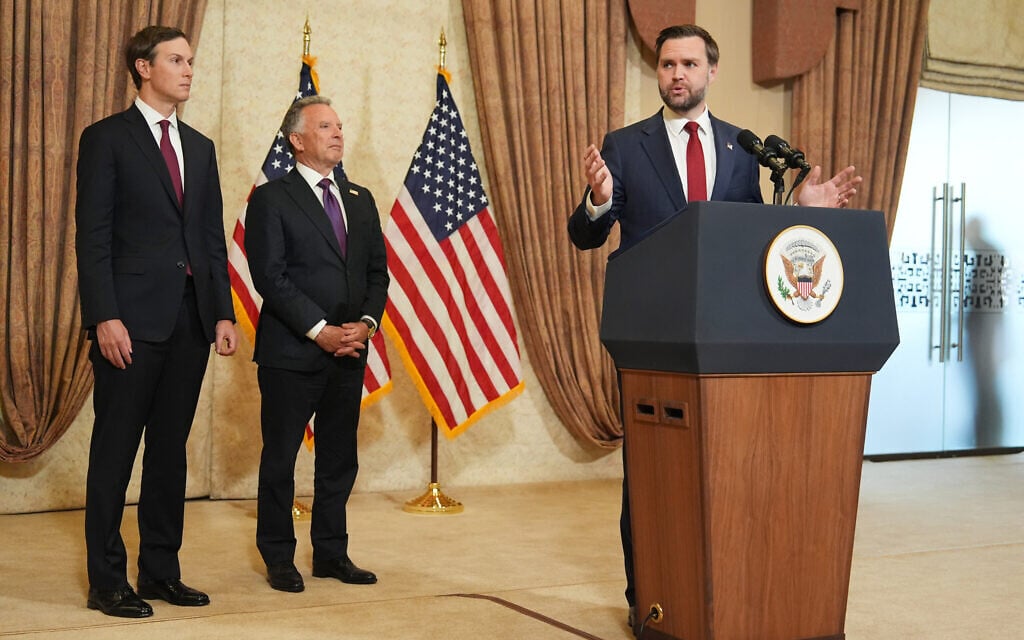
Trump declares Iran peace MOU largely negotiated
May 22, 2026
Colorado closes legal gap for defendants found unfit to stand trial

May 21, 2026
Trump DOJ goes 0-8 as Maine and Wisconsin dismiss voter roll suits
View All Constitutional Law Topics
545 topics
44 questions
Start the review