March 7, 2026
Judge voids Kari Lake's VOA job cuts as unlawful

VOA journalists and 420 million weekly listeners lost coverage in 45 languages
📰Media Literacy👨⚖️Judicial Review📜Constitutional Law🏛️Government
March 7, 2026
VOA journalists and 420 million weekly listeners lost coverage in 45 languages
Voice of America was founded in 1942 to broadcast news into Nazi-controlled Europe. By 2025 it reached 420 million people each week in 49 languages across more than 100 countries. Congress funds it through USAGM at roughly $800 million a year. Federal law bars VOA from broadcasting inside the United States, and it operates under a firewall policy to keep its reporting independent from White House direction.
The Trump administration put USAGM staff on administrative leave within days of the Jan. 20, 2025 inauguration. CEO Amanda Bennett resigned. Instead of nominating a replacement and seeking Senate confirmation, the White House put Kari Lake into the acting CEO role that summer. Lake was a senior adviser with no USAGM employment history, a detail that became the legal basis for the entire lawsuit.
Kari Lake is a former Arizona TV news anchor who lost the 2022 governor's race and the 2024 Senate race by narrow margins. Trump appointed her to USAGM as a senior adviser in early 2025. By July 31, 2025, the agency's press release called her acting CEO, though her eligibility was disputed from the start.
She was not a USAGM employee when Bennett quit, and she had not been confirmed by the Senate for any federal position, both requirements under the Federal Vacancies Reform Act. The administration tried a secondary argument: that Lake's authority derived from a delegation by Victor Morales, the previous acting CEO. Lamberth rejected that argument too, finding no valid chain of authority that could transfer CEO power to someone who didn't qualify under the statute.
U.S. District Judge Royce Lamberth issued summary judgment on March 7-8, 2026, ruling that Lake's appointment violated the Federal Vacancies Reform Act and the Constitution's Appointments Clause. Every action Lake took between July 31 and November 19, 2025 is legally void, including the layoffs, the language cuts, and any contracts signed during that window.
Lamberth has served on the U.S. District Court for the District of Columbia since 1987, appointed by President Ronald Reagan. March 8 was at least the third time he had ruled against the Trump administration in cases involving VOA. Earlier rulings in April and September 2025 had temporarily halted workforce cuts, though the April ruling was later overturned by an appeals court. Lake called the March ruling 'bogus' and accused him of 'a pattern of activist rulings.' She said she would appeal to the D.C. Circuit.
The lawsuit was brought by VOA journalists including White House bureau chief Patsy Widakuswara and colleagues Kate Neeper and Jessica Jerreat, along with their union, the American Federation of Government Employees Local 1812. They argued that Lake had no legal authority to issue the orders that ended their employment.
The case turns on a narrow but consequential legal question: who can legally fill a vacancy at the top of a federal agency without Senate confirmation? The Federal Vacancies Reform Act of 1998 answered that question precisely. The law allows three categories of people to serve as acting heads: a current senior agency employee, a Senate-confirmed officer from another agency, or someone nominated by the president for that role. Lake fit none of those categories when she assumed control. The Appointments Clause of Article II reinforces this, requiring Senate consent for all principal officers.
What happens next depends on the D.C. Circuit. If Lamberth's ruling holds, the administration must nominate a permanent USAGM director and seek Senate confirmation, or find someone who legally qualifies for an acting role. For now, the layoffs and language cuts remain in effect. USAGM has continued operating with a skeleton staff.
Reporters Without Borders executive director Clayton Weimers said after the March 8 ruling: 'This case is proof that fighting for press freedom matters.' China's state media celebrated the VOA cuts in January 2025, calling them proof that America's support for free information is rhetorical. The juxtaposition landed in diplomatic briefings across Europe and Southeast Asia.
VOA's service reductions hit audiences directly. The agency shuttered bureaus in Beijing, Moscow, and Pyongyang, places where VOA was often the only independent news source available. Journalists from at least nine countries filed suit against Lake, claiming they were unlawfully terminated, including Mandarin, Russian, and Korean service staff whose work reached tens of millions in authoritarian-controlled regions. The 49-language network was reduced to English, Spanish, French, and Portuguese by February 2025, eliminating broadcasts to the Middle East, East Asia, and Eastern Europe.
Lake's first order as acting CEO was to dismantle the International Broadcasting Act firewall explicitly. The 1994 law created a statutory obligation that VOA operate with 'strict editorial independence' from White House direction. Lake removed all content review by the VOA editorial board and established a new 'strategic messaging' office reporting directly to her. She issued written directives that VOA news anchors coordinate with the Trump administration on framing before airing certain stories. Those orders became exhibits in the lawsuit against her.
Internal documents discovered in the lawsuit revealed the administration's framework. A memo from the Office of Management and Budget described VOA's new role as 'amplifying U.S. government policy globally' rather than providing independent journalism. Officials discussed rebranding it as the 'U.S. Global Communications Agency' with a mission tied to Trump's foreign policy priorities. This directly contradicted VOA's founding mandate to serve as a trusted news source for audiences in countries without a free press.
The pattern of using acting officials to bypass Senate confirmation extended beyond USAGM in 2025. Trump deployed acting leaders at the CFPB, directing them to withdraw regulations without seeking Senate approval. At DHS, he installed an acting director who exceeded statutory authority in immigration enforcement. At USAGM, the playbook was the same: avoid the Senate, install a political appointee, issue orders, then fight in court. Courts ruled against this tactic three times in the first three months of 2026.
Reinstatement would require either a Senate-confirmed replacement or a legal finding that the layoffs must be reversed. The D.C. Circuit timeline runs six to 18 months for briefing and oral arguments. Congress could pass a law restoring USAGM's funding and mandating rehiring, a narrow legislative path available only if the Senate chooses to act. No Republican senator had publicly supported such a bill as of March 2026.
Under the Federal Vacancies Reform Act, acting officials cannot transfer authority to someone who doesn't independently qualify to hold the role. The administration argued that Morales, as a prior acting CEO, could delegate CEO-level authority to Lake. Lamberth found no legal basis for that argument. The ruling means that workaround chains of delegation cannot save appointments that don't meet the statute's threshold requirements, a significant limit on how future administrations can structure interim leadership at confirmed-position agencies.
U.S. District Judge, District of Columbia
Former USAGM Acting CEO (declared unlawful)
Former USAGM CEO (resigned January 2025)
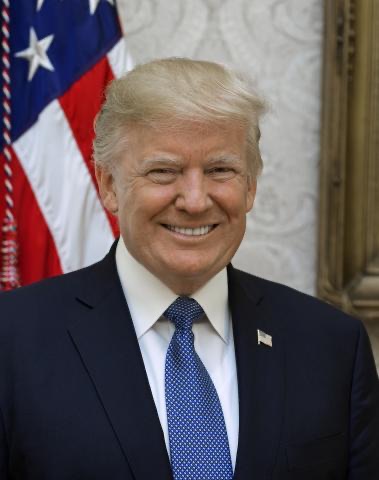
President of the United States
President, American Federation of Government Employees
White House Press Secretary
White House bureau chief, Voice of America; lead plaintiff
civic action
Contact your senators about USAGM leadership confirmation
The Senate has confirmation power over principal USAGM officers under Article II. Constituent calls matter most when a vacancy is pending — this ruling creates pressure for the White House to nominate someone, giving senators leverage.
Hi, my name is [name] and I'm a constituent from [city]. I'm calling about the federal court ruling that voided Kari Lake's actions at Voice of America. The court found the Trump administration bypassed Senate confirmation laws. I'd like to know whether Senator [name] will insist on a formally nominated and confirmed USAGM director before the Senate considers any other executive branch nominees. Can you tell me the Senator's position on Senate confirmation requirements for agency heads?
civic engagement
Support VOA journalist unions challenging unlawful firings
The AFGE Local 1812 won this ruling by going to court. Contributing to their legal defense fund or amplifying their case helps sustain accountability litigation when agencies circumvent civil service law.
I want to support federal employees whose jobs were illegally eliminated at Voice of America. Can you tell me how I can support Local 1812's legal and advocacy efforts, and whether there are actions I can take to support reinstatement of VOA staff?