Israel kills Ali Larijani as Iran retaliates across the Gulf
Day 18-19: Larijani killed, Iran retaliates across the Gulf, allies reject Hormuz mission

Photo: Majid Saeedi, Getty Imagessource ↗
Israeli airstrikes killed Ali Larijani, head of Iran's Supreme National Security Council, along with his son, office chief, and several guards overnight on March 17, 2026. The same wave of strikes killed Basij militia commander Gholamreza Soleimani. Israel said the strikes also killed Iranian Intelligence Minister Esmaeil Khatib. Iran's IRGC responded on March 18 by launching strikes it said hit more than 100 military and security targets in Israel and against U.S. assets across the Middle East. Retaliatory attacks were reported in Israel and in Gulf states including Bahrain, Kuwait, Qatar, Saudi Arabia, and the United Arab Emirates. Two civilians were killed in Ramat Gan. In a major escalation on March 18, Israel struck Iran's South Pars natural gas field. 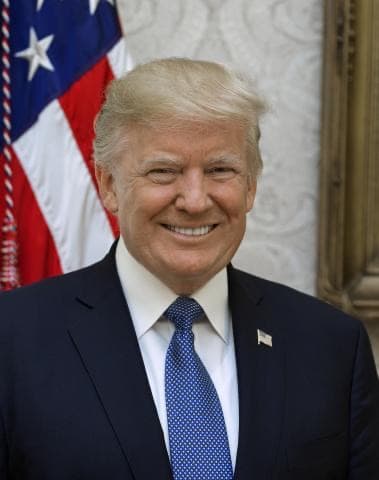 Trump later said the United States and Qatar were not involved. The escalation came as European allies publicly rejected President Trump's demand that they assist in a naval mission to keep the Strait of Hormuz open.
Key facts
"Israeli airstrikes on the night of March 16–17, 2026 — Day 18 of the Iran war — killed multiple senior Iranian leaders in a single operation. Those confirmed killed included:\n\n- — head of Iran's Supreme National Security Council and de facto leader of Iran since Khamenei's assassination\n- — Larijani's son, killed in the same strike\n- — Larijani's chief of staff, killed in the same strike\n- — commander of the Basij militia, Iran's internal paramilitary and social control force\n- — Iran's intelligence minister, per Israeli claims\n\nThe targeted killings represented one of the most significant blows to Iranian institutional leadership since Khamenei's assassination on February 28, the first day of the war.\n\nLarijani was among the most consequential political figures in the Islamic Republic. He served as parliament speaker from 2008 to 2020 and had been a close adviser to the late Khamenei. He had managed Iran's security architecture and nuclear file negotiations through multiple crises and was widely seen as one of the few remaining senior officials capable of organizing a coherent Iranian strategic response to the war. His death eliminated a key node in Iran's civil-military command structure."
"Iran's Islamic Revolutionary Guard Corps launched a large-scale retaliatory strike campaign on March 18, 2026, which it said hit more than 100 military and security targets in Israel and across U.S. military and diplomatic assets in the Middle East. Retaliatory attacks were reported in Israel and in Gulf states including Bahrain, Kuwait, Qatar, Saudi Arabia, and the United Arab Emirates. In Israel, Iranian missiles killed two civilians in the city of Ramat Gan.\n\nThe scale of the retaliation widened the war's geographic footprint beyond Iran, Israel, and the United States. Gulf states that had not taken formal positions in the conflict still found U.S.-linked facilities on their territory drawn into the exchange, heightening pressure on those governments to either align more openly with Washington or distance themselves from the war. Kuwait and Bahrain host major U.S. military installations that Iran has long treated as legitimate targets in a regional conflict."
"Israel struck the South Pars natural gas field in the Persian Gulf and nearby refineries on March 18. South Pars is the world's largest natural gas field and is shared with Qatar, which operates its side as the North Field. The Iranian side produces a large share of Iran's natural gas, making it strategically important to both state revenue and domestic energy supply. Qatar expressed alarm at the strike's proximity to shared infrastructure.\n\nThe attack also produced competing narratives about coordination and prior knowledge. Trump said the United States and Qatar were not involved, while Israeli and U.S. accounts cast doubt on who knew about the strike in advance and how closely partners had been informed. The South Pars strike coincided with a public split between the United States and European allies over the Strait of Hormuz. President Trump had called on European NATO members to contribute naval forces to a U.S.-led mission to keep the Strait open. European governments publicly declined."
"The cumulative toll of the Iran war through March 18, 2026, included more than 3,100 confirmed deaths in Iran according to independent human rights monitors, including over 1,300 civilians. Thirteen American service members had been killed and more than 200 wounded across seven countries. U.S. Central Command had struck thousands of targets in Iran since February 28, including nuclear sites, missile storage facilities, Revolutionary Guard command centers, and energy infrastructure.\n\nThe U.S. intelligence community's 2026 Annual Threat Assessment, presented to the Senate Intelligence Committee by Director of National Intelligence  Tulsi Gabbard on March 18, omitted the status of Iran's nuclear enrichment program. IAEA Director General Rafael Grossi said on March 18 that the war could not entirely eliminate Iran's nuclear program and that enriched nuclear material remained in locations that had not been struck. Those warnings, along with rising U.S. casualties and allied rejection of Hormuz support, underscored how the conflict was expanding even as its core stated objective remained unresolved."
" Benjamin Netanyahu defended the killings of Ali Larijani and Gholamreza Soleimani as part of Israel's effort to break Iran's command structure. Netanyahu said the strikes were intended to weaken the Iranian government and leave it less able to coordinate retaliation. On March 18, less than 24 hours later, Iran launched a coordinated retaliatory campaign it said hit more than 100 military and security targets in Israel and against U.S. assets across the Middle East.\n\nIsrael removed senior decision-makers from Iran's civilian and military leadership. The IRGC still launched missiles and drones across Israel and Gulf states within hours. The immediate consequence was not degraded Iranian capacity but expanded geographic scope of the war."
"Donald Trump publicly distanced Washington from the strike on South Pars on March 19. Trump stated that the United States and Qatar knew nothing about the attack and warned Israel not to repeat it. On the same day, Israeli officials told Reuters that the operation had been coordinated with the United States. The contradiction was direct and immediate.\n\nQatar hosts Al Udeid Air Base and shares the South Pars gas field with Iran. The competing accounts meant either Washington approved a strike on infrastructure linked directly to a U.S. ally and then denied it, or Israel escalated a major military operation without clear U.S. knowledge or control. Neither scenario aligns with public statements about coordinated strategy in the war."
" Keir Starmer, Boris Pistorius, and Kaja Kallas each stated that Europe would not contribute military forces to open the Strait of Hormuz. Starmer said Britain would not be drawn into the wider war. Pistorius said the conflict was not Germany's war. Kallas, the European Union's foreign policy chief, said member states had no appetite to expand maritime operations into Hormuz. Their public statements came as the war was widening into Gulf energy infrastructure with the South Pars strike.\n\nEuropean NATO governments drew a distinction between supporting 📖freedom of navigation and joining a U.S.-Israeli military operation against Iran. Trump had called on European members to contribute naval forces. European governments declined."
"Two civilians were killed in Ramat Gan by shrapnel from an intercepted Iranian missile, according to Israeli emergency officials cited by Reuters. At the same time, Iranian attacks or threats reached Bahrain, Kuwait, Qatar, Saudi Arabia, and the United Arab Emirates, places that host major U.S. military facilities and energy infrastructure. The strikes turned countries that had not formally entered the war into places where civilians, soldiers, and oil facilities were suddenly at risk.\n\nFor governments across the Gulf, the expansion changed the calculation of hosting U.S. military bases. Bahrain hosts Naval Support Activity Bahrain, the headquarters of the U.S. Fifth Fleet. Kuwait hosts Camp Arifjan. Both came under direct Iranian attack. That expansion transformed hosting U.S. bases from a background security relationship into direct exposure to military operations."
Related Topics
6💥
US and Israel launch Operation Epic Fury seeking regime change in Iran
On February 28, 2026, the United States and Israel launched coordinated military strikes on Iran, a joint operation the Pentagon named "Operation Epic Fury" and Israel called "Operation Roaring Lion." The strikes hit over 30 sites including areas near Tehran, Isfahan, Qom, Karaj, and Kermanshah, targeting Iran's missile infrastructure, military headquarters, and senior IRGC commanders. President Trump announced the attacks in an eight-minute video on Truth Social, calling them "major combat operations" and urging Iranians to "take over your government." Iran retaliated within hours, firing ballistic missiles and drones at Israel and U.S. military bases in Bahrain, Kuwait, Qatar, and Saudi Arabia. The strikes followed the collapse of the latest round of nuclear negotiations: just one day earlier, Oman's foreign minister had declared peace was "within reach" after Iran agreed to degrade its enriched uranium stockpiles. This is the second time the Trump administration launched military action against Iran in eight months, following the 12-day war in June 2025 that significantly weakened Iran's air defenses and nuclear infrastructure. At least 57 people were killed when an Israeli strike hit an elementary school in southern Iran, according to Iran's state-run IRNA news agency.
102% match
24 questions
🌍
Gulf states targeted by Iran retaliation despite refusing US base access for strikes
Saudi Arabia, Qatar, the UAE, Kuwait, Turkey, and Oman all told the White House before Feb. 28, 2026, that they wouldn't allow American forces to use their territory or airspace to strike Iran. Their reasons were strategic: Gulf states didn't want to be dragged into a wider conflict, and Saudi Arabia and the UAE were protecting trillion-dollar economic transformation projects from regional war. Privately, the picture was more complex. The Washington Post reported Feb. 28 that MBS made multiple private calls to Trump urging a US strike on Iran, even as he publicly backed diplomacy and assured Iran its airspace was safe. The US worked around the refusals by deploying 14 air-refueling tankers to Israel's Ben Gurion Airport and positioning USS Gerald R. Ford off the Israeli coast. When Iran retaliated on Feb. 28, it struck US military bases in Qatar, Kuwait, the UAE, and Bahrain, countries that host American troops. Iran's National Security Council chief Ali Larijani said Tehran viewed those bases as American targets, not the territory of the host nations.
101% match
48 questions
⚔️
US bombs Kharg Island military targets as Iran war hits day 14
On the night of March 13, 2026, U.S. forces struck more than 90 military targets on Kharg Island, Iran's primary oil export hub, in what President Trump called "one of the most powerful bombing raids in the history of the Middle East." The strikes destroyed naval mine storage facilities, missile bunkers, a short airstrip, air defense positions, docks linked to the IRGC's Joushan naval base, a control tower, and helicopter hangars — but deliberately left the sprawling oil terminals untouched. Trump posted that "for reasons of decency" he chose not to wipe out the oil infrastructure, while openly warning he'd reconsider if Iran interfered with Strait of Hormuz shipping. Kharg Island, a 13-square-mile coral outcrop 25 miles off Iran's southern coast, handles roughly 90% of Iran's crude exports. The strikes came on day 14 of Operation Epic Fury, the joint U.S.-Israel campaign that began February 28. Defense Secretary Pete Hegseth declared the operation had now hit more than 15,000 Iranian military targets and had injured the country's newly installed Supreme Leader, Mojtaba Khamenei. Also on March 13, U.S. Central Command confirmed that all six crew members of a KC-135 refueling aircraft that crashed in western Iraq on March 12 were dead, bringing the confirmed U.S. military death toll in the war to at least 13. CENTCOM said the crash was not due to hostile fire, though the Islamic Resistance in Iraq claimed it shot the plane down. The escalation deepened an already acute global energy crisis, with Iran threatening to strike Gulf oil infrastructure and the Strait of Hormuz effectively closed to commercial shipping.
99% match
19 questions
🛡️
Trump gives four different reasons for the Iran war in four days
On March 3, 2026, the fourth day of Operation Epic Fury, the Trump administration had offered at least four distinct and contradictory justifications for going to war with Iran. Trump initially said the goal was to "defend the American people by eliminating imminent threats from the Iranian regime." By Monday, March 2, he expanded the list to include destroying Iran's conventional missile capabilities, sinking its navy, preventing a nuclear weapon, and cutting off funding to proxy terrorist groups. Defense Secretary Pete Hegseth told reporters Monday that the war "is not a so-called regime change war" — the same day Trump's Saturday video explicitly called on Iranians to "take over your institutions" and topple their government. Secretary of State Marco Rubio then offered a fifth explanation: that the U.S. struck preemptively because "we knew that there was going to be an Israeli action" and American forces would face Iranian retaliation. On Tuesday, Trump contradicted Rubio directly, saying "No, I might've forced their hand" — suggesting the U.S. led rather than followed Israel. Trump never gave a televised address to the nation before or after launching the war, a departure from every prior modern president who took the country into armed conflict.
98% match
20 questions
⚔️
Three U.S. servicemen killed in Iran as Operation Epic Fury begins
By March 1, 2026, three U.S. servicemen had been killed in action, the first American casualties since Operation Epic Fury began on Feb. 28, 2026, when the U.S. and Israel launched a joint military assault targeting Iran's nuclear program and senior leadership. Trump announced from Mar-a-Lago that Iran's Supreme Leader Ali Khamenei had been killed. U.S. forces struck more than 1,000 targets over two days in what the Pentagon described as a campaign to eliminate Iran's nuclear, ballistic missile, and terrorism-support capabilities. Iran launched retaliatory strikes across Israel and Gulf states. The U.S. Embassy in Qatar issued a shelter-in-place order for American personnel. Congress had not been consulted before the strikes began, and a war powers vote was expected midweek in both chambers, with Reps. Thomas Massie (R-KY), Rand Paul (R-KY), and Warren Davidson (R-OH) among the few Republicans publicly opposing the operation as unauthorized.
98% match
26 questions
☢️
US and Iran resume nuclear talks as two carrier strike groups mass in Persian Gulf
On Feb. 26, 2026, the United States and Iran held a third round of indirect nuclear negotiations in Geneva, mediated by Oman, as Trump gave Iran a 10-to-15-day deadline to reach a deal or face military action. Trump's special envoy Steve Witkoff and Jared Kushner led the U.S. delegation in talks with Iranian Deputy Foreign Minister Abbas Araghchi. Simultaneously, the U.S. repositioned more than 150 aircraft to European and Middle Eastern bases, deployed 12 F-22 stealth fighters to Israel's Ovda Airbase — the first-ever F-22 deployment to Israel — and sent the USS Gerald R. Ford carrier strike group to waters off the Israeli coast, creating a two-carrier deployment alongside the USS Harry S. Truman. VP Vance told Fox News that Iran should take U.S. military threats "seriously" and that Trump had the "right" to use military force. Iran's spokesperson accused Trump of "big lies" and called the military buildup a provocation. Pentagon officials told reporters they expected the full U.S. force to be in place by mid-March.
97% match
17 questions
23 questions
Start the review