GovernmentEconomy
January 22, 2026Commerce Secretary promises 6% growth as workers' share plummets to 53.8%, lowest since 1947
Economic inequality widens as workers get 53.8% of GDP growth

Every Jan., the world's most powerful people gather at a ski resort in the Swiss Alps
The World Economic Forum at Davos 2026 drew 64 heads of state, 830 CEOs—including Jensen Huang of Nvidia, Jamie Dimon of JPMorgan, and Satya Nadella of Microsoft—and six of the G7's leaders
Danish officials boycotted over Trump's Greenland annexation threats Trump sent the largest American delegation in the forum's history.
Commerce Secretary Howard Lutnick appeared on Fox Business from Davos on Jan. 22, 2026, predicting U.S
GDP would exceed 5% in Q1 and hit 6% by year's end
He credited Trump's tariffs, corporate tax cuts, and deregulation for driving factory construction and business investment He also announced a $1 trillion semiconductor plan with a 10% federal equity stake in Intel.
Lutnick made his fortune on Wall Street
He joined Cantor Fitzgerald in 1983 and became CEO at 29
On Sep. 11, 2001, terrorists destroyed the firm's headquarters in the World Trade Center, killing 658 of his 960 New York employees—including his brother Gary Lutnick rebuilt the company and became a billionaire, now worth an estimated $2-4 billion He donated over $14 million to Trump's 2024 campaign, co-chaired the transition team, and pushed the administration toward its maximalist tariff policy.
Wall Street economists project far lower growth
Goldman Sachs predicts 2.5%
Bank of America: 2.4% The Wall Street Journal survey of economists: 2.17% The Federal Reserve's Dec. 2025 projections: 2% The IMF: 2.4% The Philadelphia Fed survey of 33 forecasters: 1.8% Treasury Secretary Scott Bessent, at the same forum, predicted 3-4% Truist's chief market strategist called 6% growth 'a really tough hill to climb.'
The U.S. hasn't sustained 6% annual growth since the 1980s. Since 1947, GDP has averaged 3.1% per year. The Peterson Institute for International Economics estimates Trump's tariffs could reduce GDP by 0.4-0.5%—tariffs raise prices for consumers and businesses, trading partners retaliate (which could more than double the losses), and employment falls hardest in manufacturing, mining, and agriculture.
GDP measures total economic output, but not how it's distributed
The share going to workers held steady at around 63% from the 1940s through 2000
Three-fourths of the post-1947 decline in labor share happened between 2000 and 2016, driven by automation, globalization, the rise of China, and the loss of middle-skill jobs By Q3 2025, workers received 53.8 cents of every dollar produced—the lowest since tracking began in 1947.
That same quarter, productivity surged 4.9%—the fastest in two years
Workers produced more output while their share of it fell
Economists link part of the productivity surge to AI adoption Goldman Sachs analysts estimate AI could eventually displace 25% of all work hours and 6-7% of jobs.
Fortune 500 companies posted record profits of $1.87 trillion in 2024
S&P 500 companies returned $1.6 trillion to shareholders that year—$942.5 billion in stock buybacks, the rest in dividends
Over the past 15 years, 94% of corporate profits have gone to shareholders rather than workers Employers added 584,000 jobs in 2025, down from 2 million the year before.
Related Topics
6
Lutnick's sons ran Cantor Fitzgerald as it explored buying tariff refund rights while he shaped tariff policy
A Cantor salesman claimed the firm put through a $10 million tariff-refund trade, Senators Wyden and Warren launched a formal probe
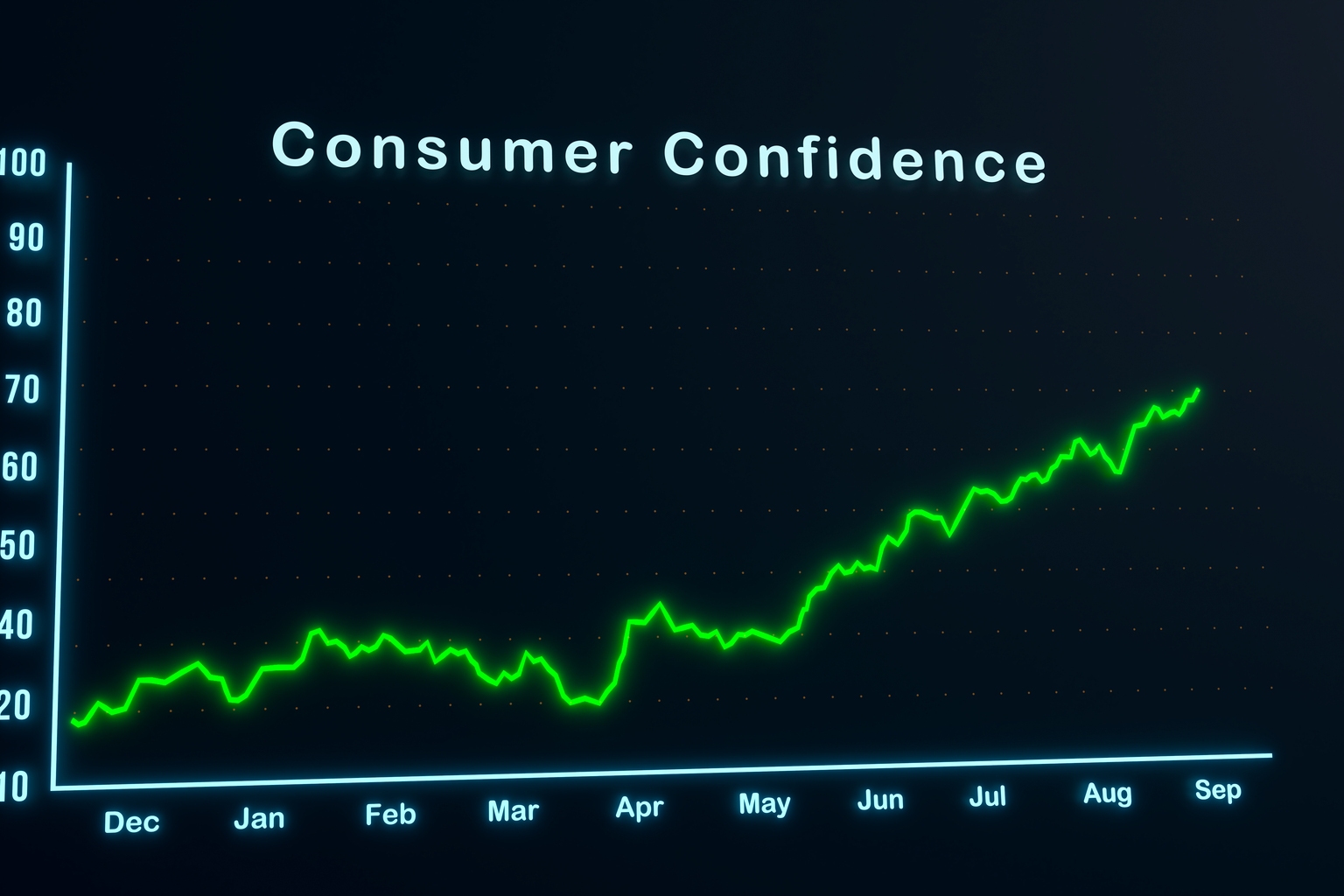
Consumer confidence rises but expectations below 80 for 13 months signals recession risk
Expectations Index below 80 for 13 straight months — the longest streak since early 2008

U.S. loses 92,000 jobs in February as Iran war pushes oil past $90 and markets tumble
Goldman Sachs warns $100 oil possible as Dow drops 453 points on jobs day

Trump's 15% Section 122 global tariff takes effect after IEEPA defeat
$130B in refunds unresolved, Congress has 150 days to override

Trump ends duty-free treatment for all small packages shipped to the U.S
A 10% tariff now applies to every package under $800 from any country until July 2026

December inflation holds at 2.7% as DOJ probes Fed chair
Inflation data unchanged as political pressure on Fed Chair intensifies
21 questions
Start the review