Judge strikes down Pentagon press policy as unconstitutional
Federal judge orders Pentagon to restore NYT journalists' Pentagon access
📜Constitutional Law👨⚖️Judicial Review📰Media Literacy🏛️Government
Federal judge orders Pentagon to restore NYT journalists' Pentagon access
"In September 2025, Defense Secretary  Pete Hegseth distributed a 21-page Pentagon press credentialing policy requiring all journalists with building access to sign a pledge agreeing not to gather or report any information, including unclassified material, without formal Defense Department authorization. The policy went further than any previous Pentagon press rule in U.S. history, extending government approval requirements beyond classified secrets to cover routine, everyday coverage of the military.\n\nSeth Stern, director of advocacy at the Freedom of the Press Foundation, called the policy a prior restraint on publication, which legal experts consider the most serious category of First Amendment violation because it suppresses speech before it ever reaches the public."
"More than 30 major news organizations refused to sign the agreement. In October 2025, approximately 40 to 50 Pentagon correspondents surrendered their press badges rather than comply. The organizations that walked out included the Associated Press, Reuters, Bloomberg, the New York Times, the Washington Post, the Wall Street Journal, CNN, Fox News, CBS News, NBC News, ABC News, NPR, and Politico. For the first time since the Eisenhower administration, no major U.S. television network retained a permanent presence inside the Pentagon.\n\nOnly conservative outlets that agreed to the policy's terms remained in the official press corps, a shift that restructured which news organizations could cover the Defense Department on a daily basis."
"The New York Times filed a federal lawsuit on December 4, 2025, challenging the policy as unconstitutional. Seven Times national security reporters had lost their Pentagon access after refusing to sign the pledge, cutting them off from briefings, hallway conversations, and access to Defense Department officials. The case was assigned to U.S. District Judge Paul L. Friedman in the District of Columbia."
"Judge Paul L. Friedman, a senior federal district judge appointed by President Bill Clinton in 1994, issued his ruling on March 20, 2026. He found the Pentagon credentialing policy violated both the First and Fifth Amendments to the Constitution and issued a preliminary injunction blocking enforcement of the key provisions."
"On the First Amendment question, Friedman found the policy constituted illegal viewpoint discrimination. He cited statements by Hegseth and other Pentagon officials showing the department was openly hostile to news organizations whose coverage it viewed as unfavorable, while actively welcoming outlets that had expressed support for the Trump administration. The judge found undisputed evidence the policy was designed to weed out journalists whose reporting the Pentagon disliked and replace them with reporters willing to work on the government's terms."
"The court identified a concrete example of unequal treatment that backed up the viewpoint discrimination finding. Right-wing commentator Laura Loomer's news tip line received Pentagon approval without objection. The Washington Post submitted an identical request for a tip line and was denied. Friedman concluded that difference in treatment confirmed the Pentagon was applying its credentialing rules based on who the journalist was, not any neutral standard."
"Friedman also ruled the policy violated the Fifth Amendment's due process guarantee. He found the credentialing rules failed to give journalists fair notice of what routine journalistic practices would trigger credential denial or revocation. Without a clear standard, reporters could not know whether a story idea, a source conversation, or a public records request might cost them their building access."
"The legal concept at the center of the case, prior restraint, has a deep history in American press law. Prior restraint means the government blocks speech before publication rather than responding to it afterward. The Supreme Court ruled against prior restraint in the 1971 Pentagon Papers case, when it blocked the Nixon administration from stopping the New York Times and Washington Post from publishing classified Vietnam War documents. Friedman's ruling placed the Hegseth press policy squarely in that same constitutional tradition."
"Judge Friedman ordered the Pentagon to immediately restore press credentials to the seven Times reporters who had lost access. In his ruling, he wrote that openness and transparency allow members of the public to know what their government is doing, and that the nation's security requires a free press and an informed people."
"Pentagon spokesperson Sean Parnell announced the Defense Department disagreed with the decision and would immediately appeal to the U.S. Court of Appeals for the D.C. Circuit. The Pentagon defended the original policy as necessary to protect national security during ongoing military operations, including U.S. military involvement in Iran and Venezuela. The D.C. Circuit appeal means the policy's constitutionality remains unsettled while the legal fight continues."
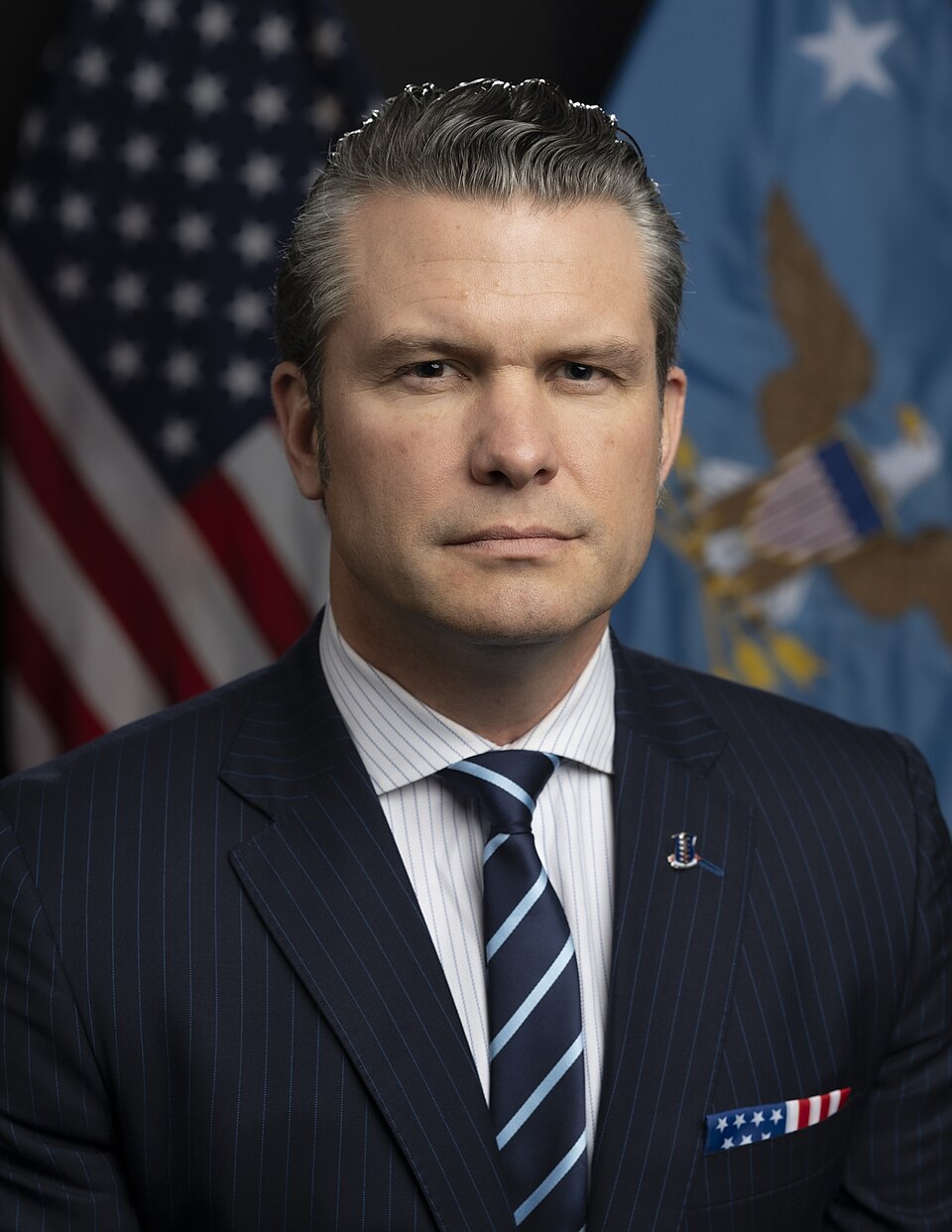
U.S. Secretary of Defense, 2025
Senior U.S. District Judge, District of Columbia (appointed by President Clinton, 1994)
National security reporter, New York Times
Pentagon Press Secretary, 2025