May 3, 2026
Rubio bypasses Congress to approve $8.6B in emergency arms sales
Israel, Qatar, Kuwait, UAE receive $8.6B in weapons without congressional vote
🌍Foreign Policy🛡️National Security🏛️Government🏢Legislative Process
May 3, 2026
Israel, Qatar, Kuwait, UAE receive $8.6B in weapons without congressional vote
Secretary of State  Marco Rubio invoked emergency powers on May 3, 2026 to approve more than $8.6 billion in military sales to Israel, Qatar, Kuwait, and the United Arab Emirates without congressional review. Rubio certified under the Arms Export Control Act that an emergency existed requiring the immediate sale of advanced weapons systems, waiving Congress's standard 30-day review period.
The specific packages included Patriot air and missile defense replenishment services to Qatar at $4.01 billion, Advanced Precision Kill Weapon Systems (APKWS) to Qatar at $992.4 million, an integrated battle command system to Kuwait at $2.5 billion, APKWS to Israel at $992.4 million, and APKWS to the UAE at $147.6 million.
The governs how the United States approves and processes foreign military sales. Under Section 36(b), proposed sales above certain dollar thresholds must be reported to Congress, which then has 30 days to pass a joint resolution of disapproval before the sale can proceed.
Congress included Section 36(c) as an exception: the president or secretary of state can waive the review period by certifying that "an emergency exists which requires the proposed sale in the national security interest of the United States." A notes this provision was designed for genuine crisis situations. The administration notified Congress of the May 3 emergency certifications in the , consistent with the statutory notification requirement.
This was the third time the Trump administration invoked the AECA emergency waiver during its confrontation with Iran. The first two certifications came in March 2026, when Rubio approved approximately $23 billion in arms sales to the UAE, Kuwait, and Jordan — also without the standard 30-day congressional review. The tracks emergency AECA certifications; the Trump administration's three certifications in a single military campaign are among the most concentrated uses of the provision in the law's history.
Members of Congress have criticized the repeated use of the emergency provision as a routine bypass rather than a genuine crisis response. The pattern of three emergency certifications during one conflict drew particular scrutiny because the administration also declared the Iran conflict "terminated" after a ceasefire in late April or early May 2026 — creating tension between the "ongoing emergency" legal rationale and the public claim that the war was over. Congress passed bipartisan resolutions of disapproval on Trump's first-term emergency arms sales to Saudi Arabia in 2019. Trump vetoed those resolutions, and Congress lacked the votes to override.
Qatar is a key U.S. military partner in the Middle East. Al Udeid Air Base in Qatar hosts the largest U.S. military air base in the region and serves as the forward headquarters of U.S. Central Command. The $4.01 billion Patriot air defense replenishment and the $992.4 million APKWS sale to Qatar are designed to strengthen Qatar's ability to defend against Iranian missile and drone attacks.
Kuwait hosts Camp Arifjan, a major U.S. Army logistics hub. The $2.5 billion integrated battle command system for Kuwait provides advanced command and control capabilities for coordinating air defense and ground forces.
Advanced Precision Kill Weapon Systems convert unguided 70mm rockets into laser-guided precision weapons. They are manufactured by BAE Systems and used primarily against drones, small boats, light armor, and ground targets. APKWS are significantly cheaper than conventional guided missiles, making them effective for high-volume engagements against low-cost drone threats — a priority during the Iran confrontation, which featured extensive Houthi drone attacks on U.S. and allied forces.
Israel received $992.4 million in APKWS. The UAE received $147.6 million. Both countries have used APKWS in recent regional operations.
Congressional oversight of foreign arms sales is one of the few tools Congress has to influence executive branch foreign policy without passing legislation. The review period gives Congress an opportunity to scrutinize specific sales for human rights concerns, regional stability implications, and consistency with U.S. foreign policy goals.
When the executive uses emergency certifications to bypass that review, it removes Congress's opportunity to intervene before a sale is finalized. Critics argue this undermines the constitutional role of Congress in foreign policy. Supporters argue the executive needs flexibility to respond quickly to emerging security threats that cannot wait 30 days.
The Trump administration declared the Iran conflict "terminated" after reaching a ceasefire in late April or early May 2026. If the war is over, critics argue the emergency rationale for bypassing congressional review becomes harder to sustain. Administration officials have not publicly explained why an emergency requiring immediate arms sales exists if the ceasefire is holding.
The administration's prior two emergency waivers during the Iran confrontation totaled approximately $23 billion in arms sales to Gulf states. Combined with the May 3 package, the Trump administration has approved more than $31 billion in emergency arms sales to Middle East partners without standard congressional review.
Congress retains several tools to respond to emergency arms sales. Members can introduce a joint resolution of disapproval, which requires both chambers to pass it — though the president can veto it and overriding a veto requires two-thirds majorities in both chambers.
Individual members can also use holds on executive nominations as leverage, request GAO reviews of specific sales, hold oversight hearings, or attach conditions to defense appropriations bills. None of these tools stops an emergency sale from proceeding, but they create public record and political pressure on the administration to justify its emergency determinations.
Secretary of State, Trump administration (confirmed January 2025)
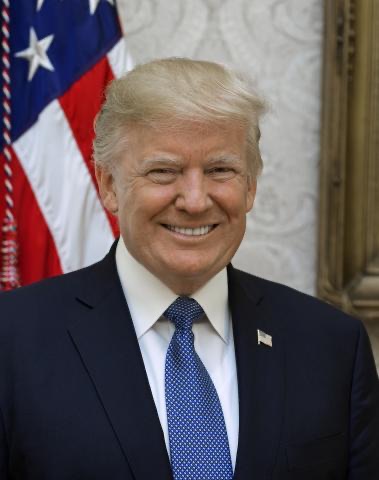
President of the United States (47th President, in office since January 2025)
U.S. Senator (R-MS), Chairman, Senate Armed Services Committee
Former U.S. Senator (D-MD), former Chairman, Senate Foreign Relations Committee (left office January 2025)
civic action
Contact your senators about restoring congressional oversight of emergency arms sales
The Arms Export Control Act gives Congress 30 days to review major arms sales, but the emergency certification provision lets the executive bypass that review entirely. Three emergency certifications in a single military campaign have normalized what Congress designed as a rare exception. Senators can introduce legislation requiring a higher threshold for emergency certifications or limiting how many times the provision can be invoked in a single conflict.
Hello, I am [NAME], a constituent from [CITY/STATE]. I am calling about Secretary Rubio's use of emergency certification to bypass congressional review on $8.6 billion in arms sales.
Key concerns:
Questions to ask:
Specific request: I am asking Senator [NAME] to co-sponsor legislation requiring additional justification before the AECA emergency provision can be used more than once during a single military engagement.
Question: What is Senator [NAME]'s position on congressional oversight of emergency arms sales?
Thank you for your time.
research
Research the full history of AECA emergency certifications
The Arms Export Control Act emergency provision has been used by multiple administrations, but the frequency of use during the Iran confrontation is unusually high. The Congressional Research Service publishes free reports on arms sales and emergency certifications. Understanding the historical pattern helps evaluate whether the current frequency is within historical norms or represents a new approach to circumventing oversight.
No call script needed. Visit crsreports.congress.gov and search for "Arms Export Control Act" or "emergency arms sales" to find CRS reports on the history and legal framework of emergency AECA certifications. The GAO at gao.gov also publishes reviews of specific arms sale packages.
legislative
Contact your representative on the House Foreign Affairs Committee
The House Foreign Affairs Committee has oversight jurisdiction over the Arms Export Control Act. Representatives on this committee can request hearings on the repeated use of emergency certifications, demand documents from the State Department justifying each emergency determination, and introduce legislation to reform the AECA emergency provision to prevent routine use as a congressional bypass.
Hello, I am [NAME], a constituent from [CITY/STATE]. I am calling about the Trump administration's repeated use of emergency certifications to bypass congressional review of arms sales.
Key concerns:
Specific request: I am asking Representative [NAME] to call for House Foreign Affairs Committee hearings on the repeated use of the AECA emergency provision and to support legislation requiring additional justification for repeat use.
Question: What is Representative [NAME]'s position on congressional oversight of emergency arms sales?
Thank you for your time.