March 6, 2026
Russia feeds Iran satellite data on U.S. troops and ships

Iran's strikes get more precise as a nuclear power joins the war
🛡️National Security🌍Foreign Policy🏛️Government
March 6, 2026
Iran's strikes get more precise as a nuclear power joins the war
Russia has been supplying Iran with real-time satellite imagery and signals intelligence identifying the precise locations of U.S. warships, aircraft, radar systems, and command-and-control posts across the Middle East since Operation Epic Fury launched on February 28, 2026. Four sources with direct knowledge of the intelligence — two each at the Washington Post and NBC News, and additional sources at CNN and RFE/RL — independently confirmed the arrangement. One official described it as a 'pretty comprehensive effort.' Iran receives this data and uses it to select targets for its missile and drone campaigns against American bases in Kuwait, Qatar, the UAE, and Bahrain.
Russia's assistance fills a gap Iran cannot close on its own. Iran operates only a handful of military-grade satellites, and several of its surveillance assets were destroyed or blinded in the opening U.S.-Israeli strikes. Russia's constellation of overhead satellites is sophisticated enough to track mobile U.S. assets — the kind of targets a ground-based radar can't reliably locate. Analysts at the Saratoga Foundation told RFE/RL that Russia's own military losses in Ukraine limit its ability to send major weapons systems to Iran, but intelligence sharing has no such constraints. Glen Howard, a longtime Russia strategist, said satellite data is currently the most practical form of support Moscow can provide.
The tactical effect of Russia's assistance appears measurable. NBC News analyst Nicole Grajewski noted that Iran's aerial attacks have become significantly more precise than they were during the June 2025 Iran-Israel 12-day war — more focused on radar sites, communication nodes, and command posts. The tactics mirror Russia's own air campaign doctrine in Ukraine: swarms of drones targeting infrastructure, followed by coordinated ballistic missile salvos. U.S. intelligence concluded Iran is 'going after command and control' for American forces — a strategic choice that requires external intelligence to execute reliably.
Russia has not been directing Iranian strikes, U.S. intelligence determined. Officials drew a careful distinction: Moscow is providing location data, not tactical guidance. But that distinction may matter less than it appears. If Russia passes Iran the coordinates of a U.S. destroyer or a radar post, the decision about whether and when to strike is Iran's. The U.S. still has no confirmed evidence that any single Iranian attack was directly enabled by Russian data, but multiple Iranian drones have hit locations where U.S. troops were recently positioned — including the drone strike that killed six Army Reserve soldiers at Port Shuaiba in Kuwait on March 1.
Iranian Foreign Minister Abbas Araghchi confirmed the broader relationship in an interview with NBC News on March 5, telling correspondent Tom Llamas that Russia and China were providing 'political and other assistance' to Iran but declining to specify what that meant. Russian President  Vladimir Putin spoke directly with Iranian President Masoud Pezeshkian on March 6 — the same day the targeting intelligence story broke — and publicly called for an 'immediate end to military action.' Kremlin spokesperson Dmitry Peskov said Russia was not at war with the United States. The Russian Embassy in Washington did not respond to multiple requests for comment on the intelligence sharing reports.
Trump's response stood in contrast to the alarm expressed by members of his own party. When a Fox News reporter asked him on March 6 about Russia's targeting assistance to Iran, Trump interrupted to call the question 'stupid' and dismissed Russia's role as 'an easy problem.' Press Secretary  Karoline Leavitt told reporters the intelligence sharing 'clearly isn't making a difference' because the U.S. military was 'completely decimating' Iran. She did not deny the reports. Defense Secretary
  Pete Hegseth appeared on CBS News' 60 Minutes and said only that 'we're tracking everything' before changing the subject.
Republican lawmakers broke sharply from the administration's dismissive tone. Rep.  Michael McCaul (R-TX), the former chair of the House Foreign Affairs Committee, told NBC News that Russia and Iran are locked in 'an unholy alliance' and that the targeting assistance was 'infuriating.' Sen.
  Don Bacon (R-NE), a retired Air Force brigadier general who flew B-52 missions and served in intelligence roles, called the administration's posture 'oblivious.' Bacon publicly called on Trump to respond by sending long-range precision weapons, air defenses, and upgraded F-16s to Ukraine — arguing that tougher Ukraine policy would impose real costs on Moscow for its Iran assistance.
The broader geopolitical architecture emerging from Operation Epic Fury marks a significant departure from the war's initial framing. When Trump launched strikes on February 28, the stated adversary was Iran. By March 6, a nuclear-armed Russia was actively improving Iran's ability to kill American service members, and U.S. intelligence also assessed that China was considering providing Iran with financial support, spare parts, and missile components. CNN reported that China's hesitation stems from self-interest — Beijing wants safe passage through the Strait of Hormuz for its own oil supply — not from alignment with the United States. The war Trump launched against Iran without congressional authorization has drawn the world's two largest nuclear rivals into an active role against American forces.
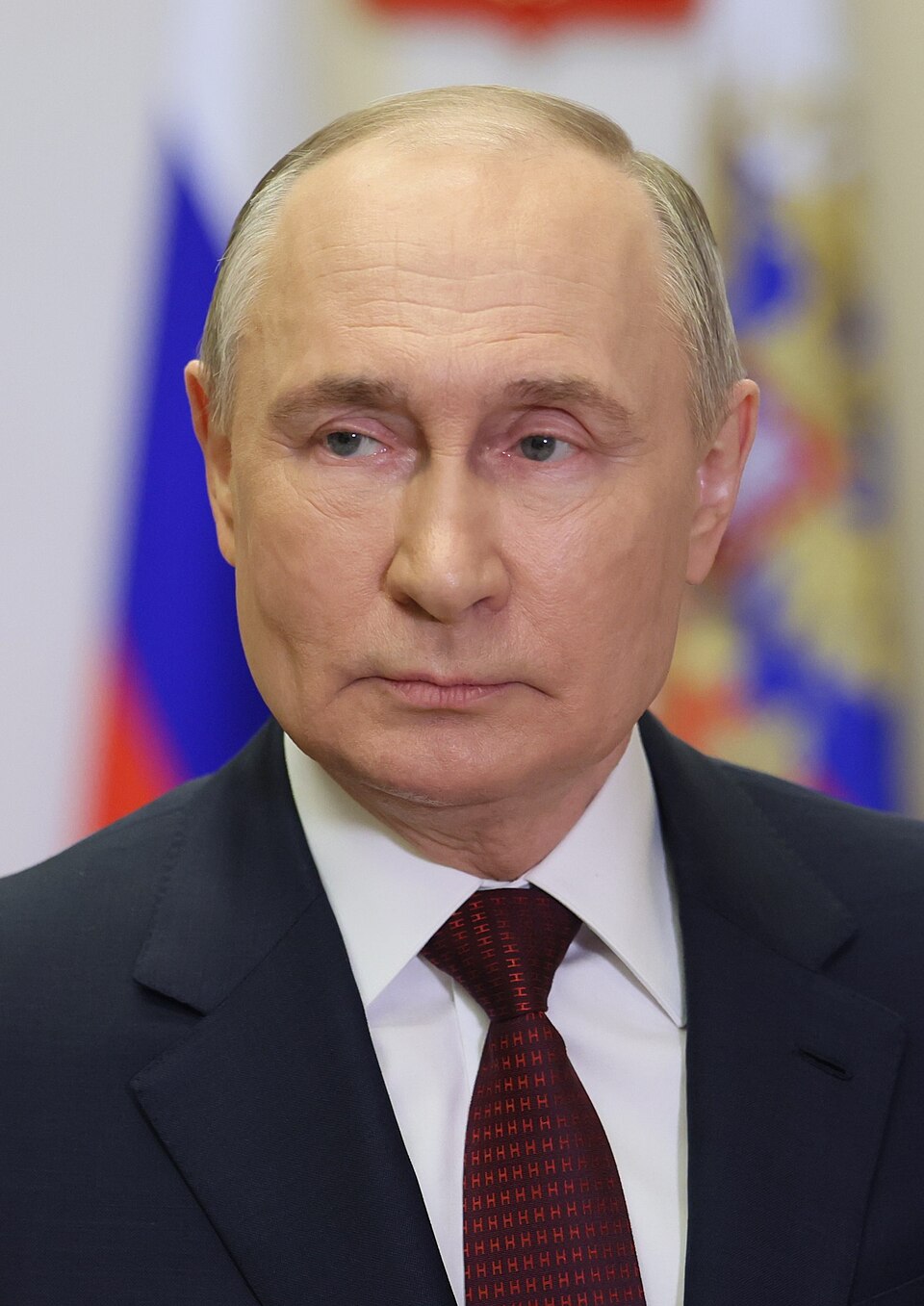
President of Russia
President of Iran
Foreign Minister of Iran

President of the United States, Commander in Chief

White House Press Secretary

Secretary of Defense

U.S. Senator (R-Nebraska), retired Air Force Brigadier General

U.S. Representative (R-Texas), former Chair of the House Foreign Affairs Committee
civic action
Demand your senator hold hearings on Russian military support for Iran
Russia is actively helping Iran target U.S. troops — and the Trump administration's response has been to call the question 'stupid.' Your senator has the authority to demand classified briefings and hold public oversight hearings on what the administration knows and what it's doing about it.
Hello, I am [NAME], a constituent from [CITY/STATE]. I am calling about reports that Russia has been providing Iran with satellite targeting intelligence to strike American service members during Operation Epic Fury.
Key concerns:
Questions to ask:
Specific request: I am asking Senator [NAME] to publicly demand a Senate Armed Services Committee briefing on Russian intelligence support to Iran and to state a position on whether this changes the risk calculus for U.S. personnel.
Question: What is Senator [NAME]'s position on Russia's targeting assistance to Iran?
Thank you for your time.
research
Read the full intelligence reporting and compare official responses
The Washington Post, NBC News, CNN, and RFE/RL each published independent confirmations of the Russian targeting intelligence story. Reading them side by side — and then comparing them to official administration statements — is a direct exercise in assessing whether your government is being straight with you.
legislative
Track the Senate Armed Services Committee response to Russia's involvement
The Senate Armed Services Committee has jurisdiction over the U.S. military and oversight authority over intelligence matters affecting troops in the field. Tracking whether it schedules hearings on Russia's targeting assistance — or stays silent — tells you something concrete about who is exercising oversight and who isn't.