Supreme Court weighs whether Cisco helped China persecute Falun Gong


Ruling could end all corporate human rights lawsuits in U.S. courts
📜Constitutional Law⚖️Justice✊Civil Rights🌍Foreign Policy👨⚖️Judicial Review
Ruling could end all corporate human rights lawsuits in U.S. courts
On April 28, 2026, the Supreme Court heard oral arguments in Cisco Systems, Inc. v. Doe I. The case was brought by 13 Falun Gong practitioners and one U.S. citizen—Charles Lee—who live in the United States. They allege that Cisco Systems and two of its executives, CEO John Chambers and Fredy Cheung (vice president for greater China), designed and sold a custom surveillance system to the Chinese government. This system, they contend, was used to identify, track, detain, and torture members of Falun Gong, a spiritual movement the Chinese Communist Party banned in 1999.
Cisco called its surveillance offering the 'Golden Shield Project.' According to internal Cisco documents reviewed by the Associated Press and entered into evidence, presentations from 2008 show that Cisco saw the Golden Shield as a sales opportunity. Company materials said Cisco products could identify over 90 percent of Falun Gong material on the web. The same presentations represented Falun Gong material as a 'threat' and described a 'national information system' to track Falun Gong believers. Plaintiffs say Cisco built custom features specifically designed to help Chinese security officials flag, locate, and monitor Falun Gong practitioners in real time.
The plaintiffs allege that Cisco's role was essential. In 2023, the Ninth Circuit Court of Appeals found that plaintiffs plausibly alleged 'that Cisco provided essential technical assistance to the douzheng [crackdown] of Falun Gong with awareness that the international law violations of torture, arbitrary detention, disappearance, and extrajudicial killing were substantially likely to take place.' All 14 plaintiffs say they were identified through Golden Shield technology, detained for months to years, and subjected to torture, forced labor, and coercion to renounce their faith.
Cisco denies wrongdoing. The company says it sold 'off-the-shelf networking equipment' that complied with U.S. export controls and was available to customers worldwide. Cisco argues that it does not customize its products to facilitate censorship or repression. The company points out that it has no ability to control how the Chinese government uses equipment after purchase. Cisco's lead counsel, Christopher George Michel of Quinn Emanuel Urquhart & Sullivan, argued at oral argument that holding companies liable for aiding and abetting violations of international law would set a dangerous precedent.
The Supreme Court is asking three distinct questions. First: does the Alien Tort Statute—enacted in 1789 and giving U.S. courts jurisdiction over torts committed in violation of international law—allow a private right of action for aiding and abetting? Second: if yes, what mental state must the defendant have? Must plaintiffs prove the defendant had 'purpose' (intent to facilitate the abuse) or is 'knowledge' (awareness the conduct would facilitate abuse) sufficient? Third: does the Torture Victim Protection Act, a 1991 statute enacted by Congress, separately allow aiding-and-abetting claims?
The knowledge versus purpose distinction shapes which companies face liability. Under a 'purpose' standard, a company must intend to help a government abuse people—an extremely high bar. Under a 'knowledge' standard, a company can be liable if it knew its products would be used for persecution even without wishing that result. The Ninth Circuit, in reversing the lower court's dismissal, said knowledge is sufficient. Cisco argues that international law requires purpose, not mere knowledge. The Supreme Court's answer will determine whether most corporate human rights defendants can be held liable.
Attorney Paul Hoffman argued for the Falun Gong plaintiffs. Hoffman emphasized that the Alien Tort Statute was enacted precisely to give U.S. courts jurisdiction over international law violations and that the statute's language doesn't distinguish between direct perpetrators and those who aid and abet. He noted that without aiding-and-abetting liability, companies that provide essential infrastructure for repression can avoid accountability. Solicitor General D. John Sauer filed a government brief that sided neither fully with plaintiffs nor with Cisco but raised skeptical questions about expansive interpretations of the statutes.
The practical stakes extend far beyond Cisco. Nearly every corporate human rights lawsuit filed under the Alien Tort Statute in U.S. courts depends on aiding-and-abetting liability. Cases against companies alleged to have roles in atrocities in Nigeria, Sudan, Myanmar, and elsewhere rely on this theory. A ruling that the ATS doesn't permit aiding-and-abetting claims would effectively end those lawsuits. The Electronic Frontier Foundation and the Center for Constitutional Rights filed amicus briefs supporting plaintiffs, arguing that technology companies are increasingly central to foreign government repression and that removing U.S. courts as a venue would deny victims any practical legal remedy. The U.S. Chamber of Commerce filed a brief supporting Cisco, arguing that imposing liability on U.S. companies for acts of foreign governments disrupts diplomacy and creates unpredictable legal exposure for American exporters.
Lead counsel for Cisco Systems, Quinn Emanuel Urquhart & Sullivan
Lead counsel for Falun Gong plaintiffs
Solicitor General of the United States
Former CEO of Cisco Systems
Vice President for Greater China, Cisco Systems (at time of alleged conduct)
Associate Justice, U.S. Supreme Court
Associate Justice, U.S. Supreme Court
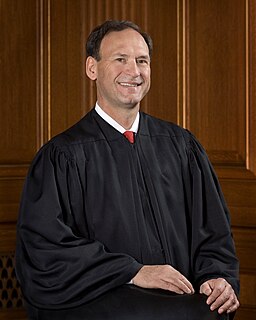
Associate Justice, U.S. Supreme Court
research
Track the Cisco v. Doe decision on SCOTUSblog
The Supreme Court will decide this case by the end of June 2026. SCOTUSblog provides plain-language summaries of all decisions the same day they're issued. Bookmark the case page to understand how the ruling affects corporate accountability for overseas human rights abuses.
Visit SCOTUSblog.com and search for 'Cisco Systems v. Doe I' to bookmark the case page. When the decision is issued (expected by June 2026), read the plain-language summary to understand the ruling's impact on whether U.S. companies can be sued in American courts for aiding foreign governments in committing human rights abuses.
civic action
Contact your senator about corporate accountability for human rights
Congress can pass legislation explicitly creating a private right of action for aiding and abetting human rights abuses, rather than leaving the question to courts. If the Supreme Court rules against plaintiffs, only Congressional action can restore a legal pathway for human rights victims to sue U.S. companies.
Hello, I'm [NAME], a constituent from [CITY, STATE]. I'm calling about corporate accountability for human rights abuses. The Supreme Court is deciding whether U.S. companies can be sued for helping foreign governments torture people. Cisco Systems allegedly built a surveillance system for China used to track and torture Falun Gong practitioners. If the Court rules against these victims, Congress could pass legislation explicitly allowing lawsuits. Does Senator [NAME] support corporate accountability for knowingly aiding foreign government torture?
legal resource
Read the Center for Constitutional Rights amicus brief
The CCR filed a brief supporting the plaintiffs and explains how the Alien Tort Statute was designed to give U.S. courts jurisdiction over international law violations. Their analysis shows why foreclosing aiding-and-abetting claims would affect human rights victims worldwide.
Visit ccrjustice.org and read the Center for Constitutional Rights' brief in the Cisco case. The brief explains how the Alien Tort Statute was enacted to address violations of international law and why removing aiding-and-abetting claims would leave torture victims without a legal remedy in U.S. courts.