Judicial ReviewConstitutional LawCivil RightsElectionsElectoral Systems
April 27, 2026Supreme Court clears Texas GOP map targeting 5 Dem seats
Five Black and Latino incumbents face hostile new district lines

Photo: Carol M. Highsmith / Library of Congress
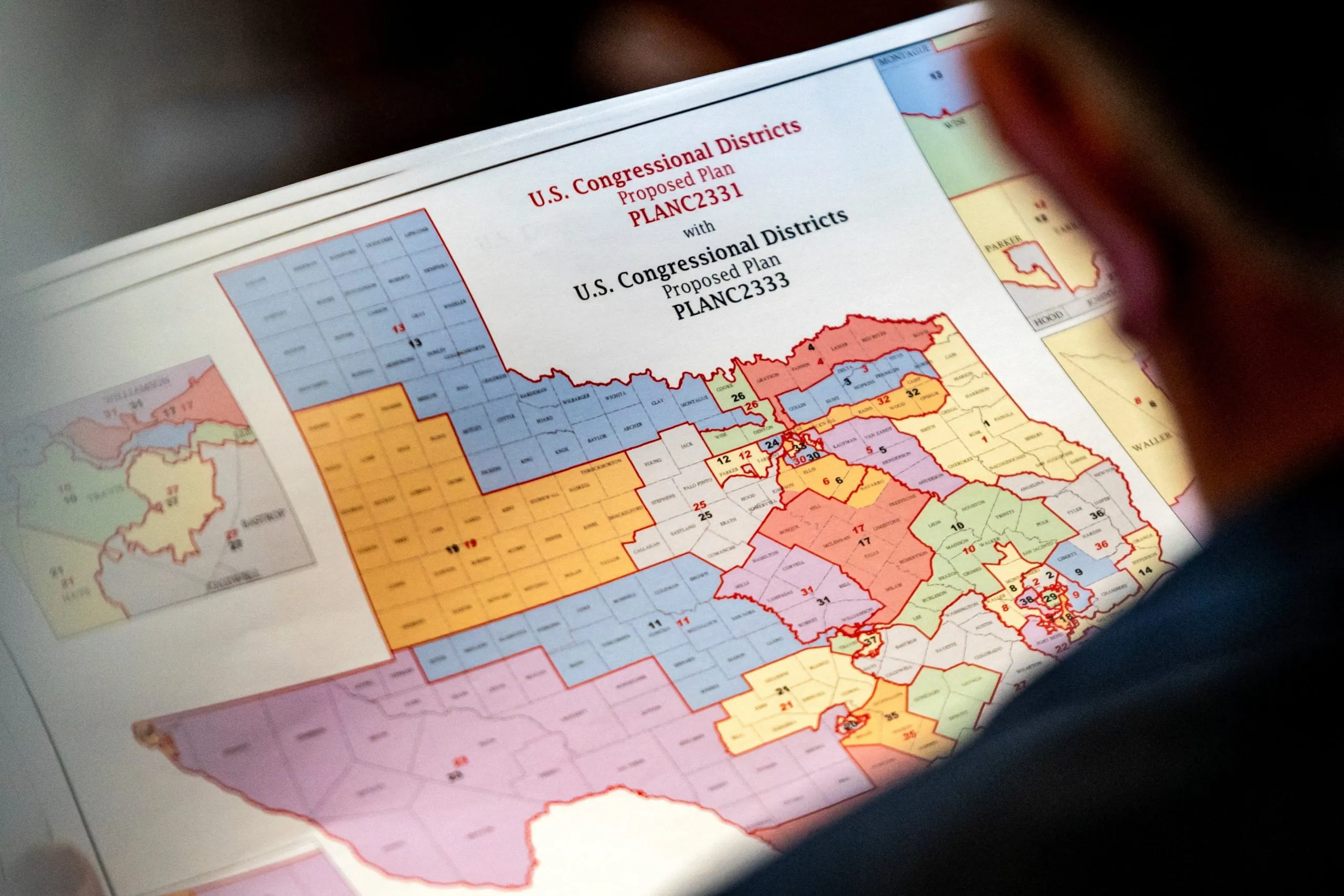
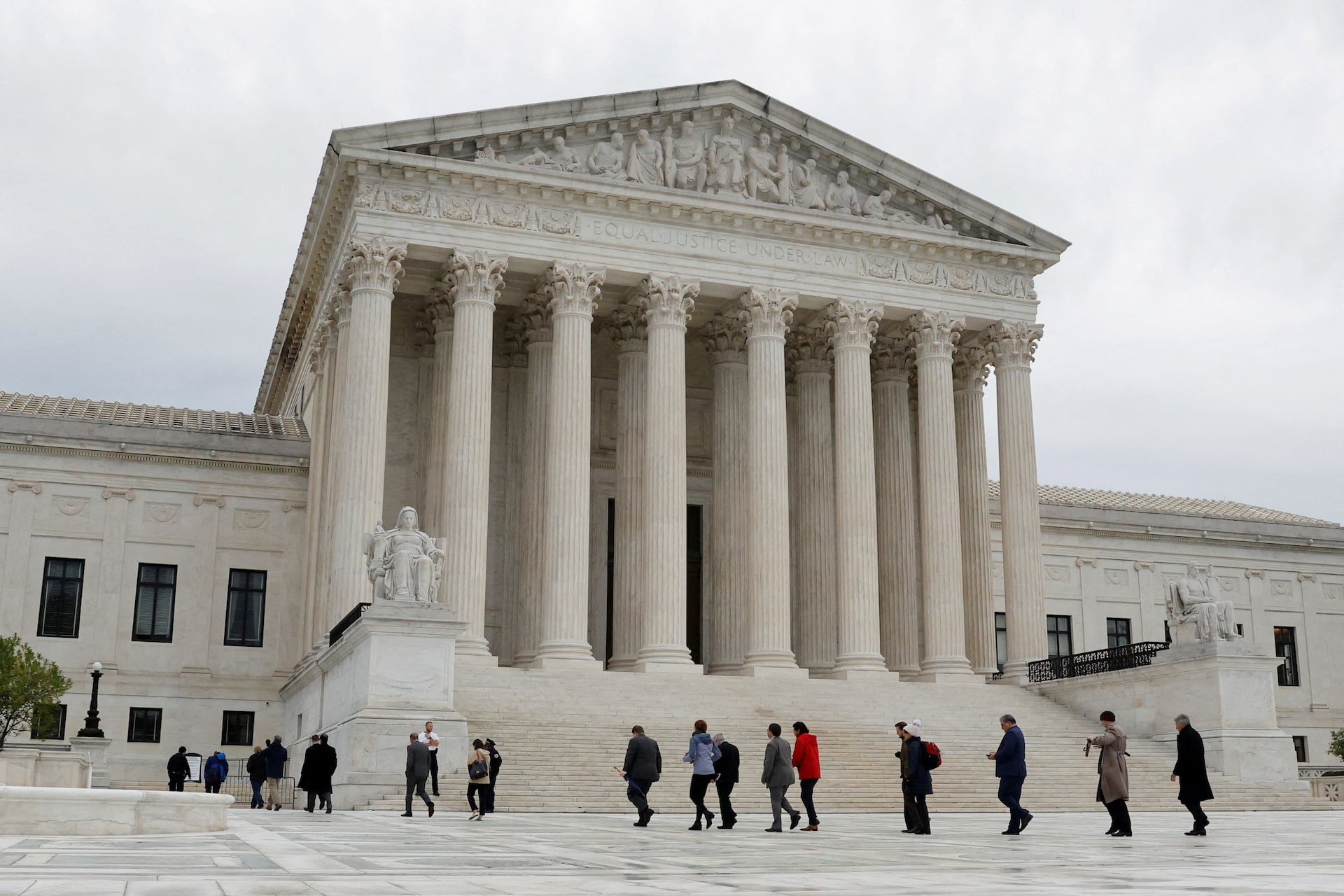
The U.S. Supreme Court issued an unsigned order on April 27, 2026 reversing a district court injunction that had blocked Texas from using Plan C2333 in the 2026 midterm elections. The order stated simply: 'We reverse the District Court's judgment.' All six conservative justices joined the majority; Justices Elena Kagan, Sonia Sotomayor, and Ketanji Brown Jackson dissented without written opinions.
The ruling means Plan C2333 will govern Texas's 38 congressional elections in 2026 and likely through 2030. The underlying case returns to Judge Jeff Brown's district court for a full trial on the merits.
Texas undertook after President Trump pushed Republican state legislators to redraw the state's congressional map in summer 2025. The Texas House passed HB4 with an 88-52 vote on August 20; the Texas Senate followed 18-11 on August 23. Gov. Greg Abbott signed the map into law on August 29, 2025, making Texas the first state since Tom DeLay's 2003 to redraw congressional lines outside the post-Census cycle.
Trump framed the as needed to protect the GOP's narrow House majority. Redistricting experts at the Brennan Center and Brookings disputed that framing, noting population shifts since the 2020 Census didn't justify wholesale redrawing of all 38 districts.
District Court Judge Jeff Brown wrote a 160-page opinion in November 2025 finding substantial evidence that Texas legislators drew Plan C2333 with race as the predominant factor. Judge David Guaderrama joined Brown's opinion. The panel ordered Texas to return to its 2021 congressional boundaries before the 2026 primaries.
The court found the map targeted five districts held by Black and Latino incumbents. Analysts at Democracy Docket and the Brennan Center documented that the number of majority-Black congressional districts would drop from four to two under Plan C2333, and that Latino-majority districts in the Rio Grande Valley were redrawn to reduce Latino voters' political influence.
Texas AG Ken Paxton appealed the injunction to the Supreme Court immediately after the district court ruling. In December 2025, the Court issued an emergency stay allowing Plan C2333 to take effect pending appeal, splitting 6-3 along the same ideological lines as the April ruling. The April 27 order makes that stay final for the 2026 cycle and returns the racial gerrymandering merits to district court.
Justice Kagan wrote in December 2025 that the temporary stay 'disrespects the work of a District Court that did everything one could ask to carry out its charge.' Her dissent argued the majority was overriding detailed factual findings without allowing trial to proceed.
The partisan vs. racial distinction is the legal linchpin of the case. In Rucho v. Common Cause (2019), the Supreme Court held 5-4 that federal courts can't review purely partisan gerrymanders because such claims are political questions outside judicial reach. Racial gerrymanders, where race is the predominant factor, remain reviewable under the Equal Protection Clause of the 14th Amendment.
By ruling Texas was likely to succeed in showing Plan C2333 is partisan rather than racial, the majority placed the map outside federal judicial review at the preliminary stage. Critics argue this creates a mechanism by which legislators can use racial data to target minority incumbents while claiming partisan motivation as a shield against federal court review.
Texas has a documented history of redistricting litigation. The of 1965 previously required Texas to get federal preclearance before changing voting maps under Section 5 — a protection ended by the Supreme Court's 2013 ruling in Shelby County v. Holder, which struck down the coverage formula. Without preclearance, plaintiffs must challenge maps after they take effect.
The result is that maps often govern one or two election cycles before courts can order remedies. Even if plaintiffs win the racial gerrymandering trial after 2026, new district lines likely won't arrive until the 2028 or 2030 cycle. The NAACP Legal Defense Fund and the Lawyers' Committee for Civil Rights Under Law submitted amicus briefs documenting this systematic litigation timeline disadvantage.
Related Topics
5
Supreme Court lets Texas use racially challenged redistricting map for 2026
Map survived Supreme Court challenge despite lower court finding racial discrimination
Federal court blocks Texas redistricting as racial gerrymandering, orders 2021 maps for 2026
Federal court strikes down mid-decade redistricting as racial discrimination, orders 2021 maps restored
NY redistricting fight heads to Supreme Court as deadlines loom
Trump DOJ backs GOP map as Feb 24 petitioning deadline blocks any redraw
DeSantis signed a new congressional map one hour after the Supreme Court weakened the Voting Rights Act
The map projects four more Republican seats; Louisiana, Alabama, and three other states announced redraws within days
SCOTUS guts VRA Section 2, opens redistricting to GOP
Ruling could cost Democrats up to 19 House seats by 2028
26 questions
Start the review