April 29, 2026
Supreme Court weighs ending TPS for 356,000 Haitians and Syrians
350,000 Haitians and 6,000 Syrians face deportation if SCOTUS sides with Trump
🛂Immigration📜Constitutional Law👨⚖️Judicial Review✊Civil Rights
April 29, 2026
350,000 Haitians and 6,000 Syrians face deportation if SCOTUS sides with Trump
Temporary Protected Status is a congressionally created protection under 8 U.S.C. § 1254a that allows nationals of designated countries to live and work legally in the United States during conditions making safe return impossible. Congress passed TPS as part of the Immigration Act of 1990 after years of ad hoc humanitarian parole arrangements for people fleeing civil wars in El Salvador and Nicaragua. DHS can designate a country for TPS when it faces ongoing armed conflict, environmental disasters, or other extraordinary conditions — and must review each designation at least every 18 months.
Haiti has held TPS designation continuously since the catastrophic 2010 earthquake that killed more than 200,000 people and displaced 1.5 million. The roughly 350,000 Haitians currently holding TPS include many who have U.S.-born children and have lived in the country for 15 or more years. Syria's 6,000 TPS holders were designated after the country's civil war began in 2011, a conflict that killed an estimated 500,000 people and produced the largest refugee crisis since World War II.
Former DHS Secretary Kristi Noem announced in early 2025 that she was terminating TPS for both Haiti and Syria, arguing that the countries' conditions no longer met the statutory criteria for designation. Noem did not conduct the formal review process that has historically preceded termination decisions, and her published justifications drew immediate legal challenges. U.S. District Judge Ana Reyes of the District of Columbia blocked the Haiti termination, concluding the challengers were likely to succeed on their claim that Noem's approach violated the APA. U.S. District Judge Katherine Polk Failla of the Southern District of New York similarly halted the Syria termination.
The cases reached the Supreme Court after the Biden administration's TPS expansions were reversed and Noem pushed terminations through on an accelerated timeline. By March 2026, Noem had left DHS, replaced by newly confirmed Secretary  Markwayne Mullin. Mullin inherited the TPS litigation as the named defendant in the Haiti case.
The Supreme Court must resolve a fundamental question about the scope of judicial review: can federal courts examine whether DHS followed the law when terminating TPS, or are those decisions entirely insulated from review? Solicitor General D. John Sauer argued for the government that TPS designation and termination are discretionary calls committed entirely to the DHS Secretary's judgment under the statute, making them unreviewable under the APA's exception for actions 'committed to agency discretion by law.' TPS holders' attorneys, including Geoff Pipoly for the Haitian plaintiffs, countered that Congress established specific criteria in the statute — criteria courts can check against the agency's actual reasoning.
The APA generally presumes judicial review of agency action is available unless Congress explicitly strips it or the decision is the kind that has 'no law to apply.' Courts have found the latter category to be narrow. If the Supreme Court sides with the government on reviewability, DHS would have unreviewable authority to terminate TPS for any of the 17 currently designated countries, affecting all 1.3 million TPS holders nationwide.
A ruling against the TPS holders would have cascading consequences beyond Haiti and Syria. Countries currently holding TPS designations include Venezuela, El Salvador, Ukraine, Afghanistan, and Cameroon. Venezuelan TPS holders number more than 600,000 — the largest single-country group. If TPS decisions become entirely unreviewable, the executive branch could terminate any country's designation without having to satisfy any legal standard reviewable by a court.
The cases also raise questions about what happens to TPS holders' U.S.-citizen children and their employers if status is suddenly terminated. The 350,000 Haitians alone represent a significant portion of the workforce in states like Florida, New York, and Massachusetts. Advocacy groups estimated the economic impact of mass TPS termination at tens of billions of dollars in disrupted employment. The court is expected to issue its ruling by late June 2026.

Secretary of Homeland Security
Former Secretary of Homeland Security
Solicitor General of the United States
Lead counsel for Haitian TPS holders, Trump v. Miot
U.S. District Judge, District of Columbia
U.S. District Judge, Southern District of New York
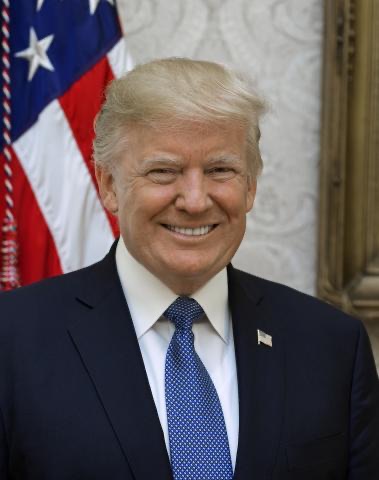
President of the United States
legislative
Contact your senators to protect TPS through legislation
Congress created TPS and can protect it. Senators can co-sponsor the American Dream and Promise Act, which would provide a path to permanent status for TPS holders, or introduce legislation explicitly requiring judicial review of TPS decisions. Your senator's position on this vote matters for 1.3 million people currently holding TPS.
Hello, my name is [NAME] and I'm a constituent from [CITY, STATE]. I'm calling about the Supreme Court cases Mullin v. Doe and Trump v. Miot, which could strip Temporary Protected Status from 350,000 Haitians and 6,000 Syrians. I'd like to know: Does Senator [NAME] support legislation to protect TPS holders from deportation regardless of how the Supreme Court rules? Will the Senator co-sponsor legislation that would codify TPS protections into law? Thank you.