Senate blocks CRA bid to restore Colorado haze cleanup plan
46-52 vote leaves coal plants open under reversed state clean air plan
46-52 vote leaves coal plants open under reversed state clean air plan
The Senate voted 46-52 on April 29, 2026, blocking a motion to proceed to S.J.Res.139, a CRA resolution introduced by Sen. Michael Bennet that targeted the EPA's January 2026 decision to fully reject Colorado's regional haze State Implementation Plan for the second planning period. The vote fell entirely along party lines, with all voting Republicans opposing the motion. No senator crossed over.
The CRA allows Congress to pass a resolution disapproving a federal agency rule by simple majority without a filibuster, but only within 60 legislative session days of the rule's publication. Bennet used the same April 29 Senate session in which Sen. Rosen forced the EAD vote, making it a paired Democratic messaging effort on environmental and immigration policy.
U.S. Senator (D-CO), S.J.Res.139 sponsor
Bennet introduced S.J.Res.139 to invoke the CRA against the EPA's January 2026 rejection of Colorado's regional haze plan. He forced the April 29 Senate floor vote as part of his gubernatorial campaign and effort to challenge the Trump EPA's environmental rollbacks in his home state.
EPA Administrator
Zeldin signed the final rule fully disapproving Colorado's regional haze SIP on January 9, 2026, and defended the decision in congressional budget testimony the same week as the CRA vote. He argued that coal plant closure dates without utility consent do not comply with the Clean Air Act's assurances requirements.

U.S. Senator (R-WV), Chair, Senate Environment and Public Works Committee
Capito chaired the EPA budget hearing on April 29 and has consistently supported Zeldin's deregulatory agenda. Her committee voted unanimously against the Colorado haze CRA resolution, and she did not publicly signal any concern about the EPA's decision to override a state-submitted pollution plan.
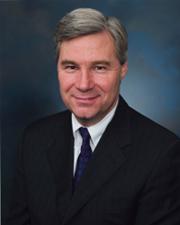
U.S. Senator (D-RI), Ranking Member, Senate Environment and Public Works Committee
Whitehouse is the leading Democratic voice on the EPW Committee and a primary opponent of the EPA budget cuts and regulatory rollbacks. He stated publicly that Zeldin has executed the fossil fuel industry's agenda, framing the Colorado haze disapproval as part of that pattern.
Colorado Attorney General
Weiser filed a petition in the Tenth Circuit challenging the EPA disapproval, arguing that it was based on policy objections to coal plant closures rather than any Clean Air Act deficiency in Colorado's plan. His challenge is proceeding alongside a separate petition from the National Parks Conservation Association and Sierra Club.
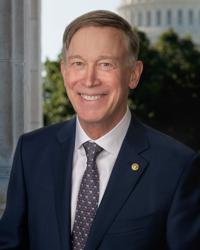
U.S. Senator (D-CO)
Hickenlooper joined Bennet in opposing the EPA's rejection of the Colorado haze plan and supported the CRA vote. As a former Colorado governor and Denver mayor, he has longstanding involvement in Colorado energy and air quality policy, particularly the Denver region's efforts to meet federal air standards.
Director, Department of Energy Office of Electricity
The DOE issued the December 2025 emergency order under section 202(c) of the Federal Power Act requiring Craig Station Unit 1 to remain open for grid reliability. This order, issued by DOE leadership, became one of the EPA's stated reasons for the full disapproval of Colorado's haze plan.
President and CEO, Colorado Springs Utilities
Colorado Springs Utilities, under Zanotti's leadership, originally voluntarily proposed the Nixon Unit 1 closure date for inclusion in Colorado's 2022 regional haze SIP revision. In March 2025, the utility rescinded that consent, citing changing grid conditions. The withdrawal of consent was the direct trigger for the EPA's legal concern about the takings clause.
True
The Senate voted 46-52 against the motion to proceed to S.J.Res.139 on April 29, 2026
Bloomberg Law reported the 46-52 vote and the Senate Democrats' session wrap-up confirmed both the EAD and Colorado haze CRA votes on April 29, 2026. The vote was along party lines.
True
The EPA fully rejected Colorado's regional haze plan in January 2026
The EPA published its full disapproval of Colorado's 2022 regional haze SIP revision in the Federal Register on January 26, 2026 (91 Fed. Reg. 3048). The EPA had initially proposed only a partial disapproval but escalated to full rejection in the final rule.
True
Colorado Springs Utilities originally consented to having Nixon Unit 1's closure included in the state plan
Harvard EELP's analysis and NPCA both confirm that Colorado Springs Utilities voluntarily requested inclusion of the Nixon Unit 1 closure date in 2020. The utility rescinded that consent in March 2025, citing changing circumstances. This sequence is the legal crux of the takings dispute.
True
The EPA disapproval requires Colorado to submit a new plan or face a federal implementation plan within two years
The EPA press release explicitly states that Colorado is required to submit a revised, approvable SIP, or EPA will complete a federal implementation plan, either of which must be done within two years of the disapproval.
Sources
True
The Colorado Attorney General and NPCA filed Tenth Circuit challenges to the EPA disapproval
The Mitchell Williams legal analysis confirms that both the Colorado AG and NPCA/Sierra Club filed separate Tenth Circuit petitions challenging the EPA's January 26, 2026, disapproval. The Tenth Circuit has jurisdiction over EPA actions affecting Colorado.
True
Sen. Bennet was running for Colorado governor at the time of the CRA vote
Bloomberg Law noted in its April 29 coverage that Bennet forced the vote under the CRA and that he is running for governor of Colorado, adding a political dimension to the Senate action.
True
The Clean Air Act requires states to develop plans to improve visibility in national parks
Section 169A of the Clean Air Act requires states to develop and implement regional haze State Implementation Plans to improve visibility in mandatory Class I federal areas, which include national parks and wilderness areas. The EPA reviews SIPs for compliance with the statute and the Regional Haze Rule.
Contact Colorado's senators to express support or opposition to the state's regional haze planning
civic action
Colorado must now submit a revised regional haze plan to the EPA or face a federally imposed plan. Contacting Senators Bennet and Hickenlooper can signal constituent priorities on whether Colorado should aggressively defend its original plan approach or negotiate with the EPA on a new submission.
Submit public comments to EPA during Colorado's new SIP development process
regulatory engagement
Colorado must develop a new regional haze plan, and the public will have an opportunity to comment during the new rulemaking process. Environmental advocacy groups, business associations, and individual citizens can weigh in on what the new plan should require. The EPA must also publish any federal implementation plan for comment if Colorado fails to submit an approvable plan.
Support the Tenth Circuit litigation challenging EPA's Colorado haze disapproval
legal advocacy
The Colorado Attorney General and environmental groups have filed petitions in the U.S. Court of Appeals for the Tenth Circuit challenging the EPA's legal rationale for rejecting Colorado's plan. Organizations and individuals can support these legal efforts through advocacy organizations like the National Parks Conservation Association.
Engage with Colorado's state environmental agency during new plan development
civic action
The Colorado Department of Public Health and Environment leads SIP development. Citizens and stakeholders can participate in state-level planning processes, public meetings, and comment periods as Colorado develops its revised plan. State processes often provide more accessible participation opportunities than federal proceedings.