National SecurityForeign PolicyGovernmentLegislative Process
April 28, 2026Senate blocks Cuba War Powers resolution 51-47, leaving Trump's blockade intact
Senate Republicans join Trump to block a fifth war powers check, protecting the ongoing naval blockade

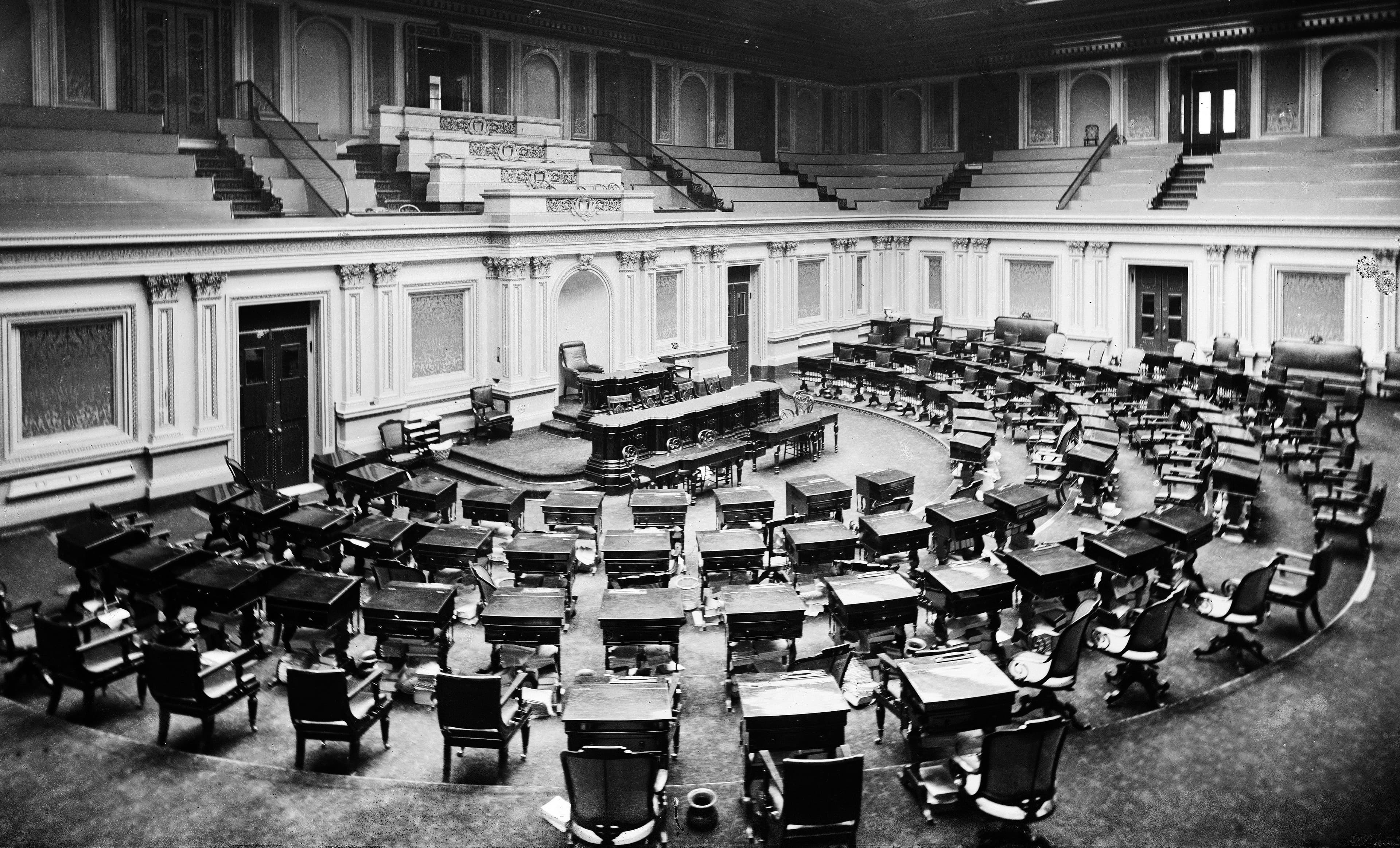
Photo: Brady-Handy Photograph Collection (Library of Congress) / Library of Congress
Article I of the Constitution gives Congress the power to declare war. But since World War II, presidents have sent U.S. forces into combat dozens of times without a formal declaration, citing their authority as . Congress tried to reclaim control in 1973 by passing the over President Nixon's veto. The law requires the president to notify Congress within 48 hours of deploying troops into hostilities and to withdraw them within 60 days unless Congress authorizes the action or extends the deadline.
No president has ever formally acknowledged the as constitutional. Every administration since 1973 — Republican and Democratic — has argued the law unconstitutionally limits the president's authority. Despite multiple military actions including the Gulf War, Iraq, Libya, Syria, and Iran, Congress has never successfully used the resolution to force the withdrawal of U.S. forces.
Trump ordered a naval blockade of Cuba earlier in 2026, using the U.S. Coast Guard and Navy to interdict ships entering and leaving Cuban ports. A naval blockade is historically considered an act of war under both U.S. and international law — the United States classified the 1962 Cuban Missile Crisis quarantine as a 'hostile act' requiring specific legal justification. Trump's blockade has no congressional authorization; the administration argues the president's commander in chief authority and the International Emergency Economic Powers Act are sufficient legal basis.
Senators Tim Kaine, Ruben Gallego, and Adam Schiff introduced S.J.Res. 124 using the War Powers Resolution's expedited procedures, which allow the Senate to bypass committee referral and bring the resolution to the floor on a privileged basis. The resolution declared that the Coast Guard's blockade constitutes 'hostilities' triggering the resolution's requirements and that Trump must get congressional authorization within 60 days or remove the forces.
The April 28 vote fell almost entirely along party lines. Republicans voted 49-2 against the resolution, with only Susan Collins of Maine and Rand Paul of Kentucky breaking ranks. Collins cited concern about the lack of congressional authorization for an action she called potentially escalatory; Paul has consistently opposed executive branch military actions without congressional approval across multiple administrations, including against Obama's Libya operations in 2011. Democrat John Fetterman of Pennsylvania was the lone Democratic defection, voting with Republicans.
The 51-47 margin reflects a continuing pattern. The Senate has now voted five times since the start of Trump's second term on resolutions invoking the War Powers Resolution against his administration's military operations — including Yemen, Iran, and now Cuba. Republicans have blocked all five. Senate Majority Leader John Thune's caucus has declined to acknowledge the War Powers Resolution as a meaningful constraint on the president's military authority.
The Cuba blockade represents a significant escalation in U.S. policy toward the island nation, which has been subject to a U.S. trade embargo since 1962 under the Cuban Assets Control Regulations. Multiple entities have challenged the blockade as illegal: Cuba's government, international human rights organizations, and U.S. allies including Canada and Spain published formal diplomatic protests. Trump's argument that the blockade is necessary to pressure Cuba to release political prisoners and hold elections has drawn rebuttals from democracy advocates and international law experts, who note that blockades typically restrict humanitarian goods including medicine and food.
Democrats fear military strikes could come next. After Trump unilaterally ordered military strikes on Iran in early 2026 — operations the Senate failed to block through a similar vote — and military support operations in Venezuela, Cuba represents a third potential military theater without formal congressional authorization. Under Article I, only Congress can declare war, but the constitutional mechanism for enforcing that power against a sitting president who has Senate backing has never been successfully exercised.
Cuba's international legal challenge to the blockade gained unprecedented support. The UN General Assembly voted 184-2 on April 26, 2026 to condemn the blockade as a violation of international law. Only the United States and Israel voted against the resolution; Colombia, Ukraine, and Brazil abstained. Cuba's president, Miguel Díaz-Canel Bermúdez, cited the vote as evidence that "the blockaders have run out of arguments."
UN human rights experts filed formal statements with the UN Special Rapporteur on Unilateral Coercive Measures documenting how the blockade violates the International Covenant on Civil and Political Rights and the Convention Against Torture by denying Cubans access to food, medicine, and fuel. International Justice Clinic submissions argued Trump's January 2026 executive order — declaring Cuba an "unusual and extraordinary threat" — lacks credibility and violates the GATT trade obligations of the United States.
The blockade has devastated Cuba's economy and created an acute humanitarian crisis. Since January 2026, foreign-origin tanker arrivals fell from an average of 50 per month in 2025 to just 11 in March 2026 — the lowest since 2017, according to maritime tracking data. Cuba has experienced three total collapses of its electricity grid in early 2026 alone, with daily power outages now endemic. The fuel shortage has paralyzed public transportation, interrupted hospital operations, and crippled agriculture and tourism.
Though Trump allowed limited fuel shipments to Cuba's private sector in March and permitted a Russian tanker to arrive in late March, the scope remains minuscule: the Russian tanker's 730,000 barrels powered the country for barely one week. Trump has threatened tariffs against any nation supplying oil to Cuba, creating extraterritorial pressure on Mexico, Venezuela, Russia, and Iran. The International Court of Justice and General Assembly resolutions affirm that such extraterritorial measures violate international law.
The 1962 Cuban Missile Crisis provides a legal and historical comparison. President Kennedy, like Trump today, invoked emergency authority to conduct a naval "quarantine" of Cuba without a formal . However, Kennedy secured authorization through the Organization of American States (OAS) before implementing the quarantine — a regional collective security process that distinguished his action from unilateral executive power. Kennedy's Justice Department memoranda acknowledged that a blockade legally "assumes the existence of a state of war" and warned that "there is legally no such thing as a 'pacific blockade.'"
Trump's blockade differs fundamentally: no OAS authorization, no congressional notification, and no formal state-of-war declaration. The Trump administration invoked the International Emergency Economic Powers Act (IEEPA), which permits tariffs and sanctions but historically has not been used to justify naval blockades of sovereign nations. Several federal courts have found Trump's use of IEEPA authority illegal on tariff questions, though the maritime blockade itself has not yet faced judicial review.
Related Topics
6
Trump declares Iran war "terminated" to skip the 60-day deadline
Trump's letter claims the war ended while a Strait of Hormuz blockade continues

Representative Chris Smith blocks Democrats' Iran war powers resolution in pro forma session
House Republican ended session before Democrats could vote to end U.S. attacks on Iran
The sixty-day clock on Iran strikes just ran out. Congress can't stop it.
The sixty-day deadline under the War Powers Resolution passed May 1 with no congressional authorization in place. The Senate voted for the sixth time to end the strikes. The House hasn't moved.
House rejects Iran war powers resolution by one vote
One Democrat's no vote left Trump's unauthorized Iran war unchecked
Senate advances Iran war powers resolution for first time, 50-47
Four Republican defections force first-ever Senate procedural win

The House tied 212-212 on ending U.S. strikes against Iran — the closest Congress has ever come to enforcing the War Powers Act
Congress has invoked the War Powers Act's 60-day deadline more than 100 times since 1973 and has never once forced a president to withdraw troops under it
25 questions
Start the review