March 4, 2026
Senate rejects Iran war powers resolution 47-53
Eight failed votes leave Trump''s Iran war legally unchecked as April deadline nears
🏢Legislative Process📜Constitutional Law🛡️National Security
March 4, 2026
Eight failed votes leave Trump''s Iran war legally unchecked as April deadline nears
On March 4, 2026, the Senate voted 47-53 against a resolution that would have forced Trump to withdraw U.S. forces from Iran without explicit congressional authorization for war. It was the eighth failed war powers vote since June 2025.
The resolution was cosponsored by Sen. Tim Kaine (D-VA) and Sen.  Rand Paul (R-KY). Their partnership was unusual: Kaine is a liberal Democrat and Paul is a libertarian-leaning Republican, but both argue that presidents can't wage undeclared wars under the Constitution.
Sen. John Fetterman (D-PA) was the only Democrat to vote against the resolution. He had previously supported the Iran strikes and said Trump had the right to act. His defection meant the resolution couldn't even claim full Democratic unity.
Sen.  Susan Collins (R-ME), Sen. Lisa Murkowski (R-AK), and Sen.
  Todd Young (R-IN) — three senators who had occasionally broken with Trump on other issues — all voted with the Republican majority, effectively giving Trump a green light to continue the war.
The 1973 War Powers Resolution gives presidents 60 days to get congressional approval before withdrawing forces from any unauthorized conflict. Trump launched Operation Epic Fury on February 28, which means the deadline falls around late April 2026.
Sen. Rand Paul (R-KY) quoted James Madison on the Senate floor: Madison wrote in Federalist No. 41 that entrusting the war power to one person would create 'the strongest temptation' to start unnecessary conflicts. Paul said the Founders gave Congress the war power specifically to prevent presidents from starting wars at will.
Senate Minority Leader Chuck Schumer said Trump's administration had given 'different answers every day' about why the strikes were launched, and called the vote a test of whether Congress still took its constitutional role seriously. Six U.S. service members had been killed in Iran by the time the vote took place.
The House was expected to vote on a parallel war powers resolution — H.Con.Res.38 from Rep. Ro Khanna (D-CA) and Rep.  Thomas Massie (R-KY) — within 24 hours, with a similar outcome expected given the Republican majority.
Every war powers resolution vote since June 2025 has failed, establishing a pattern in which Congress' Article I war declaration power has gone entirely unused while the executive wages ongoing combat across multiple theaters.
Under the Constitution's Article I, Section 8, Congress holds the power to declare war. The last formal war declaration was in 1942. Every major U.S. military conflict since — Korea, Vietnam, Iraq, Afghanistan — was fought without a formal declaration, relying instead on authorizations or executive claims.
U.S. Senator (D-VA), co-sponsor of Senate war powers resolution

U.S. Senator (R-KY), co-sponsor of Senate war powers resolution
U.S. Senator (D-PA)

U.S. Senator (R-ME)
U.S. Senate Minority Leader (D-NY)
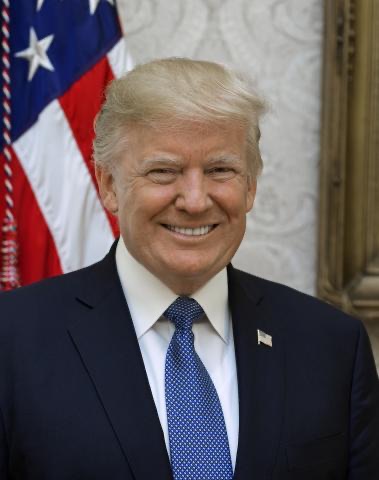
President of the United States
U.S. Senator (R-AK)

U.S. Senator (R-IN)
U.S. Representative (D-CA-17), House war powers resolution co-sponsor

U.S. Representative (R-KY-04), House war powers resolution co-sponsor
civic action
Call your senators and demand an Iran war authorization vote
Congress hasn't declared war since 1942, but it can still demand the president get authorization. Calling your senators on record — especially if they're Republican — creates public accountability for the vote they cast.
Hello, I am [NAME], a constituent from [CITY/STATE]. I am calling about the Senate's March 4, 2026 vote against the Iran war powers resolution.
Key concerns:
Questions to ask:
Specific request: I am asking Senator [NAME] to either demand a formal war authorization debate or vote yes on the next war powers resolution before the 60-day deadline expires.
Question: What is Senator [NAME]'s position on requiring congressional authorization for the Iran war?
Thank you.
research
Read the 1973 War Powers Resolution and track the 60-day clock
The War Powers Resolution is the primary law governing when presidents can use military force without Congress. Understanding its 60-day clock, the notification requirements, and how presidents have historically evaded it gives citizens the tools to evaluate whether Trump is acting lawfully.
research
Track all eight war powers votes using Congress.gov bill records
Every member of Congress has a public voting record. Looking up how your representative voted on each of the eight war powers resolutions creates a complete picture of who has chosen to leave the war authorization to the president alone.