March 4, 2026
Spain publicly debunks White House lie over cooperation deal


Spain''s foreign minister publicly debunks Leavitt as the bases claim falls apart
🌍Foreign Policy📈Trade📰Media Literacy
March 4, 2026
Spain''s foreign minister publicly debunks Leavitt as the bases claim falls apart
On March 3, 2026, Trump publicly threatened to cut off all trade with Spain after Prime Minister Pedro Sánchez refused to let the U.S. military use jointly-operated bases at Rota and Morón in southern Spain for strikes on Iran. Sánchez said the attacks were 'unjustifiable' and that Spain wouldn't be 'complicit in something that is bad for the world.'
On March 4, White House Press Secretary Karoline Leavitt told reporters at a formal briefing: 'With respect to Spain, I think they heard the president's message yesterday loud and clear. It's my understanding, over the past several hours, they've agreed to cooperate with the U.S. military. The U.S. military is coordinating with their counterparts in Spain.' She cited no source, agreement, or official communication.
Within minutes of Leavitt's statement, Spanish Foreign Minister José Manuel Albares appeared on Cadena Ser radio and directly contradicted her: 'I can refute the White House spokesperson. The position of the Spanish government regarding the war in the Middle East, the bombing of Iran and the use of our bases has not changed one iota.' On a second program, he added: 'Not a single comma has changed, and I have no idea whatsoever what they might be referring to.'
Prime Minister Sánchez delivered a nationally televised address on March 4 reiterating Spain's opposition. Without naming Trump directly, he said the conflict risked 'playing Russian roulette' with millions of lives and summarized Spain's position in four words: 'No to the war.' He called the U.S.-Israeli attacks on Iran 'dangerous' and 'unjustifiable.'
Leavitt never retracted or clarified her statement. No White House correction was issued. The White House briefing transcript remains publicly available with the original false claim intact.
Trump's trade embargo threat ran into a structural obstacle: Spain is a European Union member, and the EU negotiates trade on behalf of all 27 member states. Treasury Secretary Scott Bessent acknowledged on CNBC that a trade embargo against Spain would require 'a combination effort' and declined to explain how it would work. Spanish business groups immediately called the U.S. a 'key partner' and urged that trade not be affected.
The EU backed Spain's position. European Commission spokesperson Olof Gill said the EU 'stands in full solidarity with all member states' and is 'ready to act if necessary to safeguard EU interests.' The EU had struck a trade deal with the U.S. the previous year after tariff disputes — making a new trade war with a member state a significant escalation.
Iranian President Masoud Pezeshkian publicly praised Spain's refusal to cooperate with U.S. strikes, calling it an example of 'ethics and awakened consciences' in the West. The White House used that praise to pressure other European allies to distance themselves from Madrid's position.
Trump separately suggested the U.S. could use the Spanish bases without consent: 'We could use their base if we want,' he said, referring to Rota and Morón. Legal experts said unilateral use of allied bases without consent would violate the bilateral Defense Cooperation Agreement between the U.S. and Spain and potentially NATO protocols.
The U.S. operates Naval Station Rota and Morón Air Base under a 1953 bilateral Defense Cooperation Agreement that has been updated multiple times. The agreement requires Spain's consent for operations not covered by NATO or U.N. mandates. Trump's threat to use the bases without permission directly contradicts a treaty ratified by the Senate.
White House Press Secretary
Spanish Foreign Minister
Prime Minister of Spain
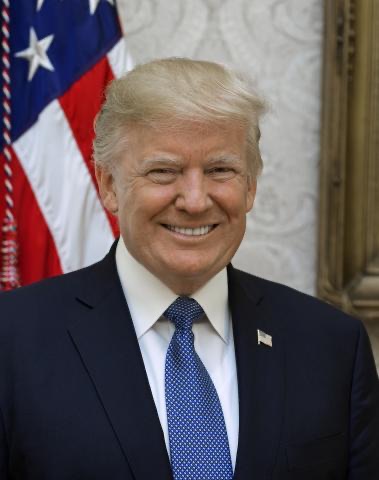
President of the United States
U.S. Treasury Secretary
President of Iran
European Commission Spokesperson
U.S. Secretary of State
Spanish Defense Minister
Former NATO Secretary General; now a senior NATO institutional voice
Spanish Defense Minister
Former NATO Secretary General; now senior NATO institutional voice
research
Verify what White House press briefings claim using primary sources
Every White House press briefing is transcribed and posted publicly. Comparing the official transcript against statements from foreign governments, news agencies, and diplomatic sources is the most basic form of government fact-checking available to citizens.
civic action
Contact your senators to ask about treaty obligations with Spain
The U.S.-Spain Defense Cooperation Agreement is a treaty requiring Senate advice and consent. Senators can demand the administration explain how threatening unilateral base use is consistent with that treaty — and whether any retraction of Leavitt's false claim is owed to a treaty partner.
Hello, I am [NAME], a constituent from [CITY/STATE]. I'm calling about the Trump administration's false claim that Spain agreed to cooperate militarily.
Key concerns:
Questions to ask:
Specific request: I am asking Senator [NAME] to publicly demand the administration retract the false claim that Spain agreed to cooperate and clarify the legal basis for any proposed use of Spanish bases.
Question: Does Senator [NAME] believe the administration's false statement about Spain's position damages U.S. credibility with allies?
Thank you.
research
Track White House press briefing transcripts for accuracy
The Reporters Committee for Freedom of the Press tracks government information practices. Understanding how the White House press office handles corrections to false statements matters for evaluating the credibility of official government communications.