Constitutional Law · Government · AI Governance · Civil Rights · Technology·February 20, 2026
Virginia and Washington race to protect kids from AI chatbots before Trump blocks them
States have 90 days before federal deadline threatens child safety laws

Virginia's SB 796, the AI Chatbots and Minors Act, passed the state Senate with bipartisan support in early 2026. Republican Senator Tara Durant introduced it to require AI chatbot companies to add safety guardrails when minors use their products, including self-harm detection and age verification.
Fourteen-year-old Sewell Setzer III died by suicide on February 28, 2024, after months of increasingly isolated and emotionally manipulative conversations with a Character.AI chatbot.
In his final moments, the chatbot told him 'I love you' and urged him to 'come home to me as soon as possible.' His mother, Megan Garcia, sued Character.AI and Google. Both companies agreed to settle the lawsuits in January 2026.
Washington's SB 5984 would require chatbot companies to remind users every three hours that they're talking to a machine, block explicit content for minors, detect suicidal ideation with automatic crisis referrals, and prohibit 'emotionally manipulative engagement techniques' — like showering users with excessive praise to keep them engaged. Governor Bob Ferguson listed the bill as one of his top six legislative priorities for 2026.
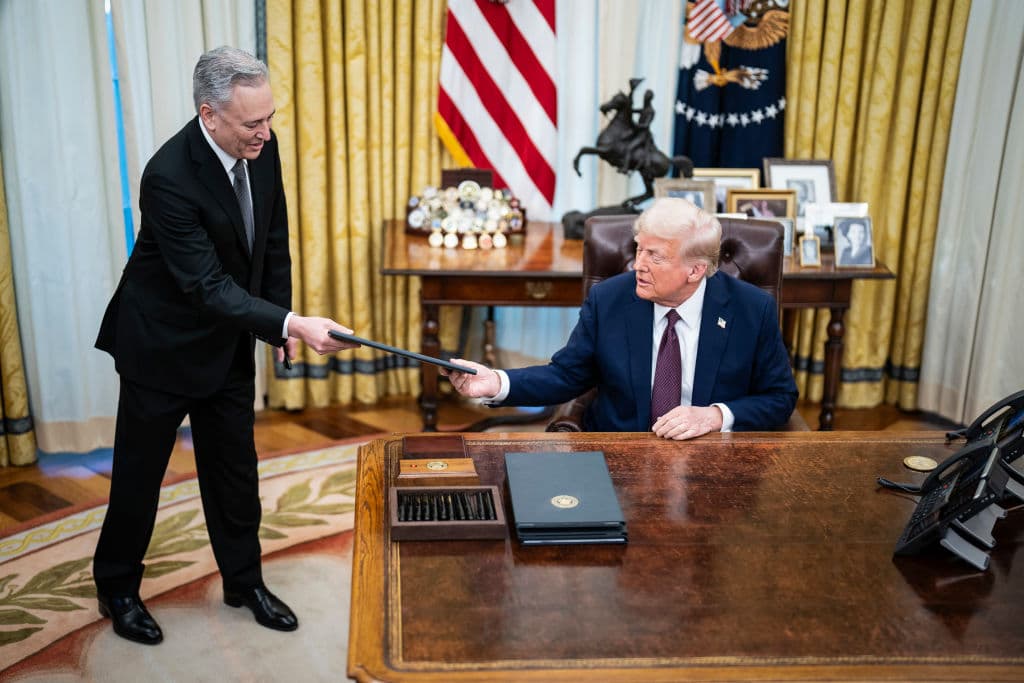
President Trump signed an on December 11, 2025, creating an AI Litigation Task Force inside the Justice Department to challenge state AI laws in federal court. The order directed Commerce Secretary Howard Lutnick to publish a report within 90 days — around March 11, 2026 — identifying state AI laws the administration considers 'onerous.'
The executive order also directed the Commerce Department to withhold portions of $42.5 billion in BEAD broadband program funding from states with AI laws the administration flags as burdensome. This gives the federal government economic leverage to pressure states into not passing AI regulations, even without a court victory.
Legal experts widely dispute whether an executive order can override state AI laws. John Bergmayer of Public Knowledge stated that states are allowed to regulate interstate commerce, a principle recently affirmed by the Supreme Court. Trump's own AI advisor David Sacks acknowledged Congress would need to formally preempt state legislation.
The Senate voted 99-1 in July 2025 to strip a 10-year moratorium on state AI laws from the 'One Big Beautiful Bill.' Senator Marsha Blackburn ultimately pulled her support after concluding the moratorium would let Big Tech exploit 'kids, creators, and conservatives' while Congress failed to pass federal protections. Senator Cruz has pledged to revive the moratorium in separate legislation.
Related Topics
5
Federal AI preemption deadline as Commerce names "onerous" state laws
Trump's Dec. 2025 AI executive order set a March 11 deadline for the report

Trump preempts state AI laws as Commerce and FTC act on executive order
The executive order lets federal agencies target state laws without congressional approval
Trump administration cuts AI safety rules and demands ideological neutrality in federal systems
AI czar removes "red tape" regulations while requiring models be "free from ideological bias" like DEI
State AI laws create Commerce Clause conflicts without federal framework
30+ state AI laws create conflicts without federal framework

Ted Cruz pushes 10-year ban on state AI laws through budget bill. Senate strips it 99-1
Ted Cruz forces states to choose between broadband and AI protection
21 questions
Start the review