Constitutional LawCivil RightsElectionsElectoral Systems
March 4, 2026Texas Republicans end countywide voting, hundreds turned away in Dallas primary
2,316 provisional ballots set aside in majority-Black county after AG blocks extended hours

Photo: Joel Angel Juarez/Reuters
The chaos on March 4, 2026, in Dallas County did not begin at 7 a.m. on Election Day — it began in early 2024, when the Dallas County Republican Party adopted a vision statement calling for paper ballots to be counted entirely by hand, without machines. The man driving that effort was Allen West, a former Florida congressman who moved to Texas, briefly ran the state Republican Party under a QAnon-adjacent slogan, and became Dallas County GOP chair in 2024 with election conspiracy theories as his core platform. West's plan required the county to abandon its countywide vote centers — a system that since 2019 had let any Dallas voter cast a ballot at any of 279 locations — and return to a neighborhood precinct model where voters are assigned to a single, specific polling place. By September 2025, the bipartisan Dallas County Election Commission had hired a new elections administrator, Ohio's Paul Adams, and within a week of his arrival the local GOP voted again to hand-count ballots — this time it passed. Then the financial reality hit: hand-counting 1.7 million ballots was logistically impossible and prohibitively expensive. By December 31, West admitted the hand-count was off the table. But the party kept the precinct-only voting system anyway, even after the original rationale collapsed. Texas Tribune
Under a 2006 Texas state law, political parties in a joint primary must mirror each other's voting systems. When Dallas County Republicans chose precinct-only voting, they automatically forced Dallas County Democrats into the same system — even though Democrats had formally objected, warned of mass confusion, and received no benefit from the change. Dallas County Democratic Party Chair Kardal Coleman spent weeks trying to reverse course through negotiations, but West and the GOP refused. The new precinct maps and polling locations weren't finalized until February 18, 2026 — just 13 days before Election Day. The Texas Secretary of State's official voter website, votetexas.gov, was never updated to reflect the new locations, meaning that voters who checked the state's own system were directed to vote center locations that no longer existed for their party on Election Day. CNN Texas law text
By mid-afternoon on Election Day, roughly one-third of Dallas County voters arriving at polls were encountering serious problems, according to Terri Burke, the Texas Democratic Party executive director. The Dallas County Elections Department website crashed under the volume of confused voters searching for their correct location. At the Anita Martinez Recreation Center in West Dallas, Juston Marine — one of the 75 nonpartisan 'election navigators' deployed by the county — was redirecting every second or third voter who arrived. He was turning away people who had walked two or three miles to vote at what they thought was still their polling place. Veronica Anderson told Votebeat she had walked 2.5 miles and arrived at the Martin Luther King Jr. Community Center only to be told she was at the wrong precinct. 'I walked up here because I want to vote so, so bad,' she said. 'It felt like your self-esteem and everything is torn down.' Brennan Center
Dallas County Democratic Party Chair Kardal Coleman filed an emergency petition, and District Judge Staci Williams signed an order at approximately 5:30 p.m. extending all Democratic polling locations to 9 p.m. Her ruling cited 'mass confusion so severe that the Dallas County Election Department website crashed.' Within minutes, Attorney General Ken Paxton's office moved to block the extension. Paxton argued on procedural grounds that the Democratic Party had not given his office the one-hour advance notice required by a 2025 state law before obtaining an emergency election order. The Texas Supreme Court — all nine justices of which are Republican, all elected in partisan races — sided with Paxton and issued a stay. It ordered all ballots cast by voters not in line by 7 p.m. to be 'separated' from the rest. Two thousand three hundred and sixteen provisional ballots were set aside. The NAACP issued an emergency statement calling the chaos 'documented interference' targeting Black voters and announced a formal investigation. NAACP KERANEWS
The attorney general who rushed to the Texas Supreme Court to block extended voting hours in Dallas was Ken Paxton — a candidate in the same primary election he was regulating. Paxton was challenging incumbent Republican Sen. John Cornyn, and Dallas County is the home base of Democratic Senate candidate Jasmine Crockett, the candidate who stood to benefit most from a large turnout in Dallas. Paxton's legal intervention blocked the extended hours in exactly the county where his Democratic opponent's key constituency lived. No Texas law required him to recuse himself from election matters in which he had a personal stake. He did not do so. Both Cornyn and Paxton fell short of the 50% threshold needed to avoid a runoff and will face each other again on May 26, 2026 — using the same precinct-only system. Texas Tribune
Dallas's 2026 voter suppression story is inseparable from a much longer history of state-sanctioned disenfranchisement. Dallas was a national center of Ku Klux Klan activity in the 1920s — Dr. Hiram Wesley Evans, the city's Commissioner of Health, rose to become the national KKK's Imperial Wizard. Dallas County used poll taxes and white primaries to suppress Black voting through the 1960s. The 1965 Voting Rights Act covered Texas under Section 5's requirement specifically because of this history, meaning any changes to voting laws had to receive federal pre-approval before taking effect. That changed in 2013 when the Supreme Court's Shelby County v. Holder ruling struck down the coverage formula, effectively ending preclearance. Since then, Texas has closed 750 polling locations — more than any other state in the country, according to the Brennan Center for Justice. Dallas County alone closed 74. The 2019 countywide voting system that Republicans just abolished was designed in part as a response to those closures — a way to make voting accessible even as the number of physical locations shrank. Abolishing it reversed that accessibility in a county where Black and Hispanic residents make up the majority. Black Voters Matter Brennan Center
Related Topics
6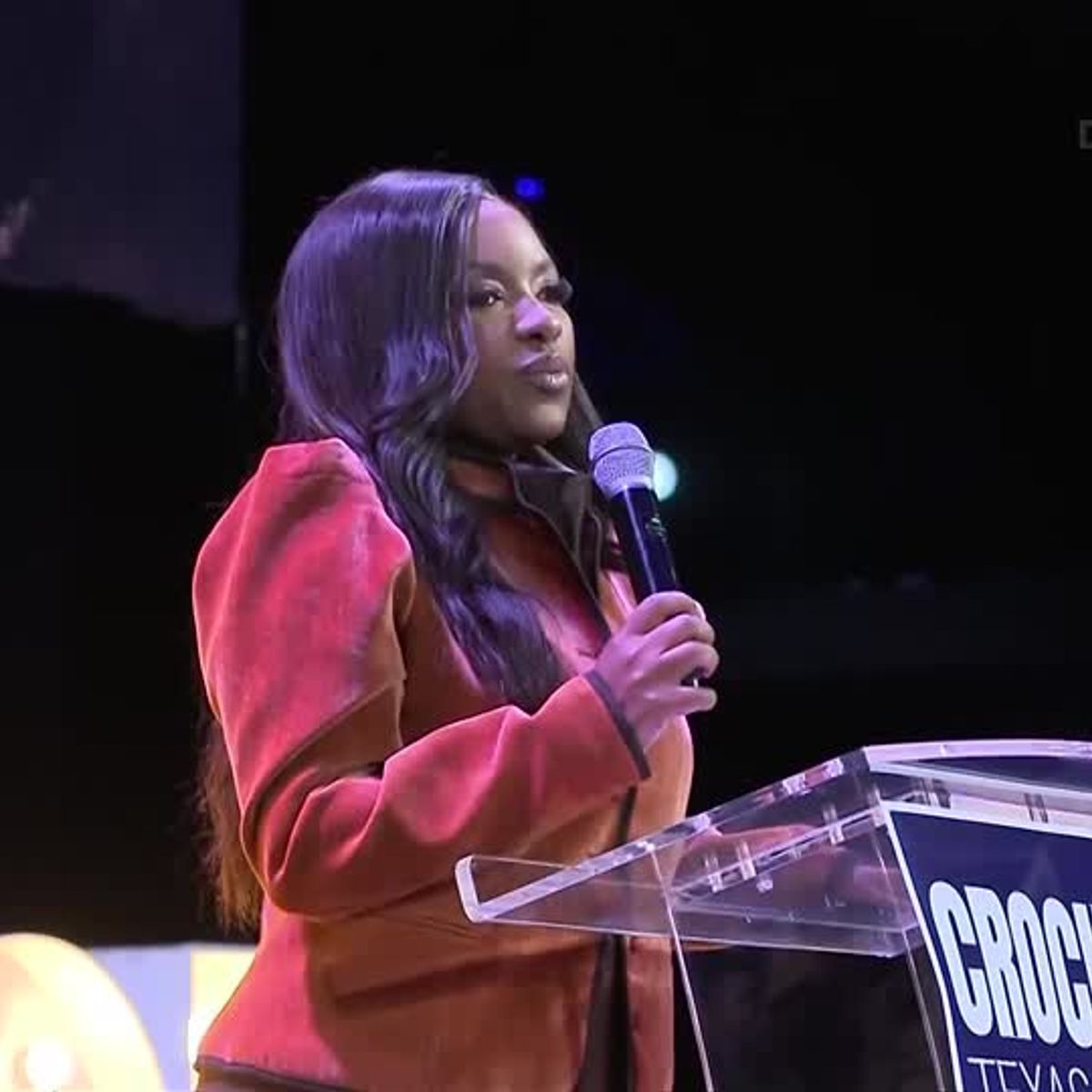
Dallas County GOP scraps countywide voting, thousands of Democrats turned away
Texas AG blocks extended voting after GOP county chair scraps countywide polling sites

Trump allies draft emergency order for federal control over elections
Peter Ticktin and Cleta Mitchell push a plan the Constitution does not allow
States passed 31 restrictive and 30 expansive voting laws in 2025, the most even split since tracking began
The near-even split reflects a decade of post-Shelby County backlash playing out simultaneously in statehouses
DOJ quietly offered states secret deals to purge voter rolls
The DOJ privately offered to purge voters from unverified federal lists — with no public notice required

Justice Department sues Idaho for voter roll access in national oversight campaign
Idaho reversed course on voter roll sharing — DOJ's 30th state lawsuit demands partial SSNs
Justice Department sues 24 states for unredacted voter files with Social Security numbers
Federal courts rejected the California and Oregon demands — and the DOJ is appealing
21 questions
Start the review