May 1, 2026
Trump declares Iran war "terminated" to skip the 60-day deadline


Trump's letter claims the war ended while a Strait of Hormuz blockade continues
🌍Foreign Policy📜Constitutional Law🛡️National Security🏛️Government🏢Legislative Process
May 1, 2026
Trump's letter claims the war ended while a Strait of Hormuz blockade continues
President Trump sent letters on May 1, 2026 to House Speaker  Mike Johnson and Senate President pro tempore Chuck Grassley declaring that "The hostilities that began on February 28, 2026, have terminated." The letters came on the 60th day after Trump notified Congress on March 2 that airstrikes on Iran had begun. Under the , the 60-day mark is the deadline by which the president must either obtain congressional authorization for a conflict or cease military operations.
Trump also stated in the letters that he "does not consider the War Powers Resolution to be constitutionally valid" and would not seek congressional authorization. Every president since Nixon, both Republicans and Democrats, has similarly argued the resolution is an unconstitutional infringement on commander-in-chief powers, though the courts have never definitively resolved the question.
Trump began airstrikes against Iran on February 28, 2026, and notified Congress on March 2 as required by the War Powers Resolution's 48-hour notification provision. The conflict escalated through March and included a naval blockade of the Strait of Hormuz, through which roughly flows. Trump announced a ceasefire on April 7, which has been extended through May.
Despite the ceasefire, no formal peace agreement has been reached, and the Strait of Hormuz blockade has continued. Trump's May 1 letter acknowledged "the threat posed by Iran to the United States and our Armed Forces remains significant." Military experts and Senate Democrats argued that a continuing blockade constitutes an ongoing act of war regardless of whether active fire has been exchanged.
The War Powers Resolution was passed by Congress in 1973 over President Nixon's veto, following the undeclared Vietnam War. The statute gives the president broad authority to deploy forces without prior congressional approval but imposes a after which the president must either obtain an Authorization for Use of Military Force (AUMF) from Congress or withdraw. Congress can also pass a concurrent resolution at any time directing the president to remove forces.
The Senate had voted six times since February 28 to direct Trump to end hostilities, the most recent vote was 47-50 on April 30. None of those votes resulted in a binding outcome because the House declined to take up the resolutions, and Trump indicated he would veto any that reached his desk.
Trump's "terminated hostilities" theory is a novel presidential claim. No previous administration has declared a conflict "terminated" in the middle of an ongoing ceasefire and continuing military posture, including a naval blockade, to avoid the War Powers Resolution's 60-day deadline. The theory rests on the distinction between active combat and non-combat military presence, arguing that a ceasefire converts ongoing military operations into something other than "hostilities" under the statute.
Constitutional law scholars . Sen.  Richard Blumenthal (D-CT) wrote on social media: "There's no pause button in the Constitution, or the War Powers Act. We're at war. We've been at war for 60 days. The blockade alone is a continuing act of war."
Senate Minority Leader Chuck Schumer (D-NY) called Trump's declaration "an illegal war" and said "every day Republicans remain complicit and allow it to continue is another day lives are endangered, chaos erupts, and prices increase." Democratic senators have discussed filing a federal lawsuit challenging the president's authority to continue the conflict without congressional authorization. Legal experts noted that courts have historically been reluctant to intervene in war powers disputes, treating them as political questions.
Roll Call that the Trump administration's letters to Congress were addressed to Johnson and Grassley rather than to the majority leaders, which some congressional experts noted as a procedural signal that Trump was informing Congress rather than consulting it.
The War Powers Resolution's effectiveness has been debated for five decades. Presidents have repeatedly deployed forces into conflict situations, the Gulf War, Kosovo, Libya, Somalia, and others, without obtaining a formal AUMF. Congress has often been reluctant to use its power to cut off funding, which is the most direct statutory lever the legislature has under the resolution. The has documented more than 200 instances since 1973 in which presidents deployed forces into hostile or potentially hostile situations.
The Iran conflict is distinct in scale from most of those deployments. It involves active airstrikes, a naval blockade, and costs the Pentagon has put at $25 billion since February 28. The six Senate votes against the conflict represent the most congressional pushback against a president's war powers claim in decades.
The House has declined to take up any of the Senate's six War Powers resolutions on Iran, with Speaker Johnson describing the Senate votes as "purely symbolic." House Republicans have largely supported Trump's conduct of the conflict. Without House passage, the War Powers resolutions cannot reach Trump's desk, removing the main legislative check on his war-making authority.
Democrats have explored whether a could compel compliance with the War Powers Resolution. Courts have historically declined to rule on war powers disputes as nonjusticiable political questions, but if a plaintiff with clear standing (such as individual members of Congress or active military families) brought a case, some legal scholars argue a court might be forced to engage with whether the "terminated" theory is valid.
The Iran conflict has had significant economic impacts. A has pushed oil prices above $100 per barrel in recent weeks, affecting consumer prices for gasoline, energy, and goods dependent on transportation. The Federal Reserve's four-dissent vote to hold interest rates at 3.5-3.75% in April 2026 cited Iran war-related oil price uncertainty as a factor.
Trump's letters to Congress acknowledged the continuing threat but presented the ceasefire period as a de facto end to hostilities. Whether subsequent military action would restart the 60-day clock is an unresolved question that legal scholars say would need to be decided by the courts.
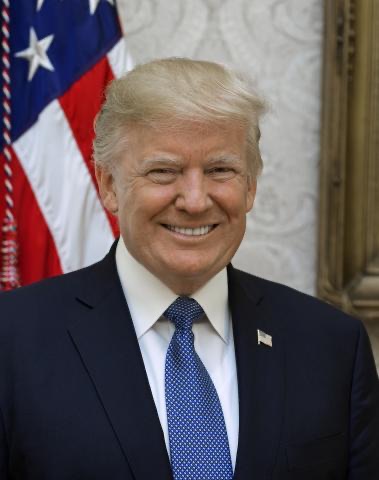
President of the United States, Commander-in-Chief

Speaker of the U.S. House of Representatives (R-LA)
Senate President pro tempore (R-IA)
Senate Minority Leader (D-NY)

Secretary of Defense, Trump administration

U.S. Senator (D-CT)
civic action
Contact your senators to demand a binding War Powers vote
Senators can force floor votes on War Powers resolutions and can push for a binding AUMF vote or concurrent resolution. Calling your senator's office identifies you as a constituent and adds to the public record during oversight periods on war powers.
"Hi, my name is [name] and I'm a constituent calling from [city, state]. I'm calling about the Iran conflict and the War Powers Resolution. Does Senator [name] believe Trump's 'terminated' declaration is a valid interpretation of the 60-day clock? Will they push for a binding War Powers vote? Please log my call."
civic action
Contact your House representative to demand a War Powers vote
Speaker Johnson has blocked all six Senate War Powers resolutions from reaching a House floor vote. Individual members of Congress can sign discharge petitions or publicly pressure leadership to hold a vote. House members represent constituents who are affected by oil prices, deployment of military family members, and potential escalation.
"Hi, I'm [name], a constituent from [city, state]. I'm calling about the War Powers Resolution and the Iran conflict. The Senate has voted six times to direct the president to end hostilities. Does Representative [name] support holding a House vote on a War Powers resolution? Will they sign a discharge petition? Please log my concern."
civic action
Track federal court filings on war powers challenges
Legal organizations including the ACLU and Democracy Forward have discussed filing federal lawsuits challenging the president's authority to continue the Iran conflict without congressional authorization. Members of Congress may also have standing to sue. Tracking these filings via court records and legal advocacy organizations keeps citizens informed of the judicial branch's role.
"I'm contacting your organization to ask about any pending or planned federal lawsuit challenging the president's War Powers Resolution compliance regarding the Iran conflict. I'd like to know how to track filings and whether there are opportunities for public comment."