January 20, 2026
Trump signs order restricting Wall Street home purchases
Order restricts federal support for investor home purchases
🏘️Housing📋Public Policy
January 20, 2026
Order restricts federal support for investor home purchases
President Trump signed the executive order on Jan. 20, 2026, titled 'Stopping Wall Street from Competing with Main Street Homebuyers.' He first announced the policy on Truth Social on Jan. 7.
The order states that 'large institutional investors should not buy single-family homes that could otherwise be purchased by families.' It directs multiple federal agencies to implement restrictions within their jurisdictions.
The order doesn't ban institutional investors from buying homes outright
It doesn't force existing investors to sell their portfolios
Instead, it restricts federal financing, guarantees, insurance, and securitization for large institutional investor purchases This means investors can still buy homes with private capital, but they can't use federal programs to finance or backstop those purchases.
Treasury Secretary Scott Bessent must define 'large institutional investor' and 'single-family home' by Feb. 19, 2026. The order generally defines large institutional investors as entities owning 1,000 or more homes.
However, Bessent suggested he might consider a threshold as low as 12 to 24 homes. This definition will determine which investors face restrictions and which don't.
The order exempts build-to-rent properties
These are developments that were 'planned, permitted, financed, and constructed as rental communities' from the beginning
Builders can still create rental subdivisions with federal support The restriction only applies to investors buying homes that were built for owner-occupants.
Federal agencies affected include the Treasury Department, Department of Housing and Urban Development, Department of Agriculture, Department of Veterans Affairs, General Services Administration, and the Federal Housing Finance Agency. Each agency must restrict federal financing, guarantees, insurance, or securitization within their programs.
The order directs the Department of Justice and Federal Trade Commission to review acquisitions for anti-competitive effects. It prioritizes antitrust enforcement against coordinated vacancy or pricing among investors. The administration wants to prevent large investors from colluding to restrict supply or inflate rents.
Institutional investors currently own about 450,000 single-family rental homes nationwide as of Jun. 2022, according to the Government Accountability Office. That's 3% of the single-family rental market.
Major players include Blackstone, American Homes 4 Rent, Progress Residential, and Invitation Homes. The market has grown significantly since the 2008 financial crisis when investors bought foreclosed properties.
The order calls for legislation to codify the policy into law. Executive orders can be reversed by future presidents.
Trump wants Congress to pass permanent restrictions on institutional investors. This would make the policy harder to undo after Trump leaves office.
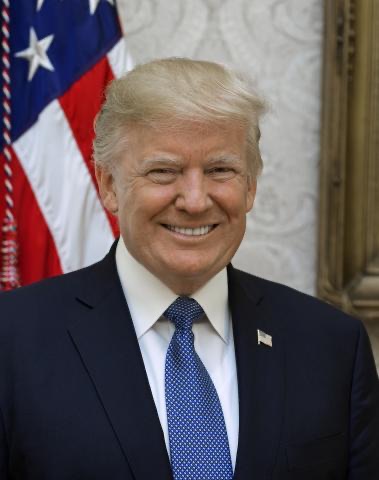
President of the United States
Treasury Secretary
Major institutional investors
civic action
Comment on Treasury's investor and property definitions
Submit public comments by Feb. 19 on how Treasury should define 'large institutional investor' and 'single-family home' to determine which buyers face restrictions.
I'm calling to provide input on the definitions of 'large institutional investor' and 'single-family home' that Secretary Bessent must issue by Feb. 19.
Key points:
Specific request: Define 'large institutional investor' as entities owning 500+ single-family homes to target corporations with actual market power, not small landlords.
Thank you.
understanding
Track agency implementation of federal program restrictions
Monitor how HUD, FHFA, VA, and USDA restrict institutional investor access to FHA loans, Fannie/Freddie backing, VA loans, and rural housing programs.