National SecurityConstitutional LawForeign PolicyGovernment
April 22, 2026Trump extends Iran ceasefire indefinitely, blockade remains
No deadline, no authorization: the US–Iran ceasefire is now open-ended

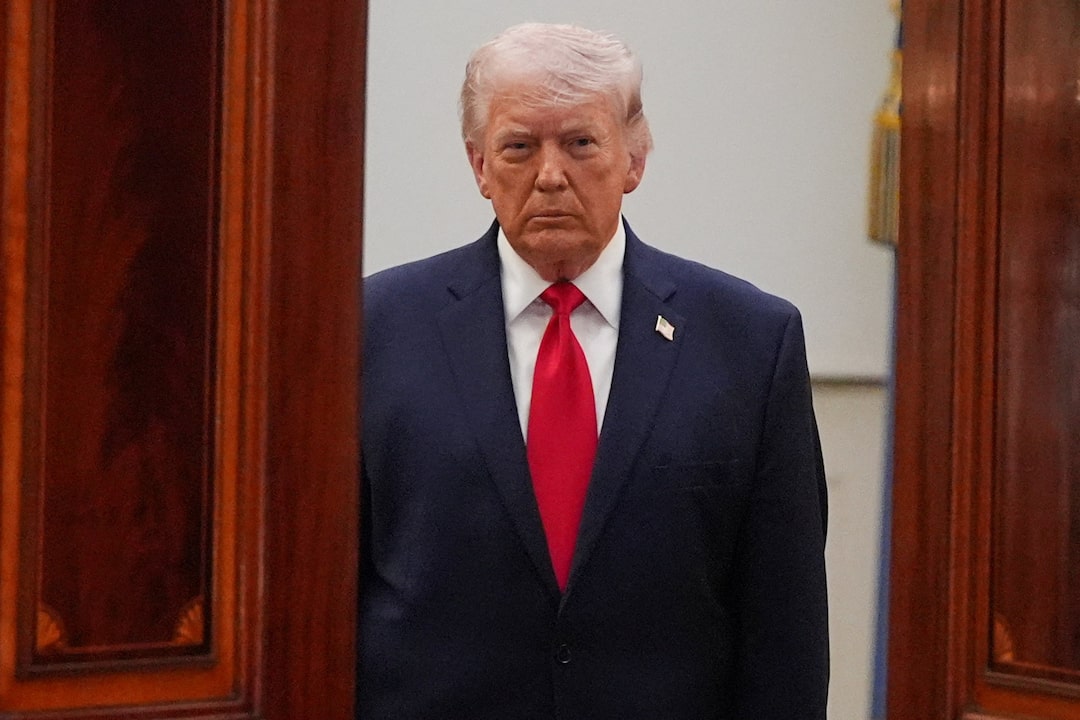
Photo: Julia Demaree Nikhinson / AP
President Trump announced on April 21–22, 2026 that the US–Iran would continue indefinitely, setting the condition that it would last "until such time as" Iran's government submits a "unified proposal" to end hostilities with the US and Israel. Trump cited a personal request from Pakistan's Field Marshal Asim Munir and Prime Minister Shehbaz Sharif. The announcement came hours before the two-week ceasefire was set to expire Wednesday evening.
The shift from a fixed deadline to an open-ended condition represented a significant change in the conflict's framework. Iran must now produce a coherent negotiating position acceptable to its civilian government, its Supreme Leader, and its IRGC military forces before the ceasefire gains any permanence. Trump had explicitly stated on Monday that he would not extend beyond "Wednesday evening Washington time," but reversed that position within 24 hours after Pakistan's diplomatic push.
Despite the ceasefire extension, Trump directed US military forces to maintain the of Iranian ports, stating forces would "remain ready and able" to resume operations. Iran has argued the blockade itself violates the ceasefire terms because it continues to restrict Iranian oil exports and economic activity. On April 22, hours after Trump announced the extension, Iran's Islamic Revolutionary Guard Corps seized two vessels in the Strait of Hormuz.
The continued blockade keeps Iran's economy under severe strain. The Strait of Hormuz carries roughly 20 percent of global oil supply, and the US naval presence has effectively halted Iranian crude exports since operations began in March 2026. Bloomberg reported that Iranian tankers have attempted to break the blockade, with at least two fully laden Iranian oil supertankers sailing past US forces this week, moving roughly 9 million barrels of oil to market.
The required President Trump to notify Congress within 48 hours of deploying forces and limits military operations to 60 days without congressional authorization. The 60-day deadline for Iran operations passed without authorization, and Trump's administration argued the ongoing ceasefire and blockade don't constitute "hostilities" under the law — a position most constitutional scholars dispute. Congress voted four times on resolutions, all failing to reach the 60-vote threshold.
Pakistan has served as the primary diplomatic channel between the US and Iran throughout the conflict. Prime Minister Shehbaz Sharif publicly thanked Trump for "graciously accepting" Pakistan's extension request, calling it an "act of goodwill." Field Marshal Munir brokered the original April 7 ceasefire and secured this first extension, positioning Pakistan as indispensable to any eventual peace deal.
Iran's government faces deep internal divisions over whether and how to negotiate. President Masoud Pezeshkian's civilian government has signaled openness to talks, while IRGC factions and hardliners aligned with Supreme Leader Ali Khamenei have rejected negotiations "under the shadow of threats" as long as the US blockade continues. The IRGC's vessel seizures on the same day as Trump's extension announcement illustrated that Iran's military wing was not coordinating with any diplomatic track.
Vice President JD Vance had been scheduled to depart Joint Base Andrews for Pakistan to conduct the second round of high-stakes peace talks. The administration was dealing with what CNN sources described as "virtual silence from the Iranians" regarding whether they would participate in scheduled talks. Rather than allow the ceasefire to expire and restart military operations, Trump extended it.
Related Topics
6
Iran-US ceasefire expires April 22 after Islamabad talks collapse
US-Iran war talks failed after 21 hours and the ceasefire expires in days
Trump pushed his Iran deadline to Tuesday and threatened to bomb power plants and bridges
Negotiations remained unstable as Trump escalated his public demands around the Strait of Hormuz
US Navy begins blockade of Iranian ports after peace talks fail
Naval blockade of Iran begins without congressional authorization

US-Iran Islamabad talks collapse. Trump threatens naval blockade
21-hour Iran talks fail in Pakistan, Trump posts naval blockade threat
Trump launches Project Freedom to reopen Strait of Hormuz
15,000 US troops move to free 2,000 ships blocked by Iran
.jpg&w=3840&q=75)
Trump issues Iran ultimatum as ceasefire nears collapse
Iran rejects Trump's nuclear demands; ceasefire collapses toward new strikes
18 questions
Start the review