March 7, 2026
Trump expands Iran target list and won't rule out ground troops


No new congressional vote as war escalates beyond air campaign's original scope
🛡️National Security📜Constitutional Law🏛️Government
March 7, 2026
No new congressional vote as war escalates beyond air campaign's original scope
The Trump administration announced on March 7, 2026, that Operation Epic Fury's target list had been expanded to include additional Iranian military, command, and infrastructure targets beyond the original strike package. The administration did not specify which targets were added or what legal authority governed the expansion. The IDF simultaneously reported striking more than 400 targets inside Iran, including three Hezbollah command centers in Lebanon. The expansion of targets was announced one week after the war's launch and before Congress had voted on any authorizing legislation.
Trump's statement to the New York Post — that he did not have 'the yips' with respect to boots on the ground in Iran — was the clearest presidential signal yet that ground forces were under serious consideration. 'The yips' is a sports term describing a sudden loss of nerve at a critical moment. Trump's use of it to describe his willingness to deploy ground troops indicated that ground operations were being discussed internally and that he was not deterred by the prospect. The context was a longer interview in which Trump described the war's progress as exceptional.
Press Secretary  Karoline Leavitt was asked directly at the March 7 briefing whether the president had ruled out deploying ground troops to Iran. Her response — 'Trump always, wisely keeps all options open' — was a non-denial. It is the formula White House press secretaries use when they do not want to rule something out but also do not want to confirm it. Leavitt's non-denial followed similar language from Hegseth in congressional briefings the same day. When two senior officials within hours of each other refuse to rule out the same thing, it is not an accident of phrasing.
Defense Secretary  Pete Hegseth had told members of Congress and the press in the days before March 7 that Operation Epic Fury was 'not a regime-change war' and did not include plans for ground troops. His statements were the primary assurance that lawmakers used when explaining to constituents why they hadn't voted on an AUMF. On March 7, in congressional briefings, Hegseth refused to rule out ground troops — a direct contradiction of his earlier assurances. Senators who had been briefed under those earlier assurances told CNN they were 'alarmed' by the change in posture.
The constitutional question raised by the boots-on-ground signals is different from the air campaign's authorization question, but the two are related. Article II makes the president commander in chief, but Article I gives Congress the power to declare war and to raise and support armies. The War Powers Resolution — passed in 1973 over Nixon's veto — requires the president to notify Congress within 48 hours of deploying forces into hostilities and limits those operations to 60 days unless Congress authorizes them. Trump notified Congress when he launched the air campaign. But if he deploys ground troops to Iran without a new AUMF, the same constitutional framework applies: the deployment is technically unauthorized after 60 days. The 60-day clock started on February 28.
The target list expansion and boots-on-ground consideration came in the context of an operation that was already experiencing Russian intelligence assistance helping Iran strike U.S. forces, the deaths of six soldiers, Iran's claim of U.S. prisoners, and Hezbollah's activation of cross-border strikes in Lebanon. The pattern — initial air campaign, target expansion, boots-on-ground signals — follows the same trajectory as the early weeks of the Iraq War in 2003 and the Libya intervention in 2011, both of which began with stated limited objectives and expanded. Megyn Kelly's on-air comment that she 'honestly can't believe we're doing this again' reflected a fear shared by a segment of conservative commentators who had opposed the Forever Wars.
The IDF's strikes on 400+ targets — including Hezbollah command centers in Lebanon — represent a parallel expansion of the war's geographic scope beyond Iran's borders. The United States and Israel did not publicly coordinate messaging about the Lebanon strikes, and the U.S. has not clarified whether it considers itself engaged in hostilities in Lebanon as well as Iran. If U.S. forces are involved in any way in the Lebanon strikes, or if American personnel are exposed to risk from Hezbollah's counterstrikes, the 60-day War Powers clock may cover a broader geographic footprint than the original Iran notification described.
Trump was asked whether the dignified transfer ceremony he attended that morning — for the six Iowa Army Reserve soldiers killed in Kuwait — made him reconsider putting troops in harm's way. He said, 'We're winning the war by a lot.' He did not answer whether the ceremony affected his thinking on ground troops. The juxtaposition — six soldiers being carried off a plane at Dover, six hours before Trump said he didn't have 'the yips' about sending more — was noted by multiple journalists and Democratic officials as illustrating the gap between the human cost of the war and the president's framing of it.
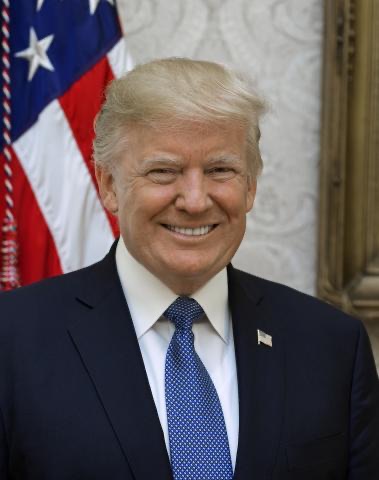
President of the United States, Commander in Chief

Secretary of Defense
White House Press Secretary
Conservative media personality, The Megyn Kelly Show

U.S. Senator (R-Kentucky)

U.S. Representative (R-Kentucky)
civic action
Demand your representative vote on an Iran AUMF before ground troops deploy
The War Powers Resolution gives Congress 60 days to authorize or stop unauthorized military action. That clock started February 28. Ground troops would represent a major escalation that has never received a congressional vote. Calling your representative now — before a ground deployment decision is made — is the only time that call can actually change the outcome.
Hello, I am [NAME], a constituent from [CITY/STATE]. I am calling about Operation Epic Fury and the administration's signals that ground troops in Iran are under consideration.
Key concerns:
Questions to ask:
Specific request: I am asking Representative [NAME] to publicly call for a House vote on an Iran AUMF before the administration deploys ground troops, and to oppose any ground deployment without prior congressional authorization.
Question: Will Representative [NAME] demand a House floor vote on Iran ground troops before any deployment occurs?
Thank you for your time.
research
Track the War Powers Resolution 60-day deadline
The War Powers Resolution (50 U.S.C. § 1541–1548) set a 60-day clock from February 28, 2026. Understanding exactly what the law requires — and what enforcement mechanisms exist if Trump ignores the deadline — tells you what Congress can and cannot do if ground troops are deployed without authorization.
research
Read Lawfare's analysis of presidential war powers and the Iran AUMF question
Lawfare has published detailed legal analysis of the War Powers Resolution, the constitutional limits of presidential military authority, and what a ground deployment in Iran would require legally. It's the most accessible and rigorous source for understanding the constitutional stakes.