National Security · Constitutional Law · Foreign Policy·March 3, 2026
Trump gives four different reasons for the Iran war in four days
No national address, six dead Americans, and no agreed reason why
On March 3, 2026, the fourth day of Operation Epic Fury, the 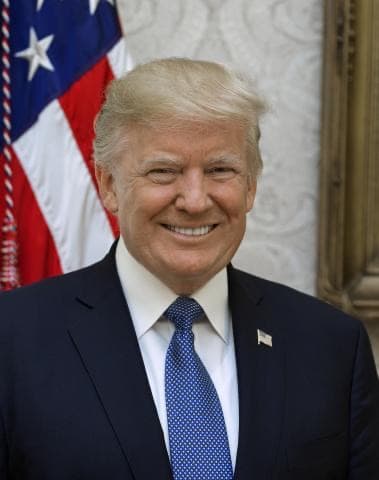 Trump administration had offered at least four distinct and contradictory justifications for going to war with Iran. Trump initially said the goal was to "defend the American people by eliminating imminent threats from the Iranian regime." By Monday, March 2, he expanded the list to include destroying Iran's conventional missile capabilities, sinking its navy, preventing a nuclear weapon, and cutting off funding to proxy terrorist groups. Defense Secretary
  Pete Hegseth told reporters Monday that the war "is not a so-called regime change war" — the same day Trump's Saturday video explicitly called on Iranians to "take over your institutions" and topple their government. Secretary of State
  Marco Rubio then offered a fifth explanation: that the U.S. struck preemptively because "we knew that there was going to be an Israeli action" and American forces would face Iranian retaliation. On Tuesday, Trump contradicted Rubio directly, saying "No, I might've forced their hand" — suggesting the U.S. led rather than followed Israel. Trump never gave a televised address to the nation before or after launching the war, a departure from every prior modern president who took the country into armed conflict.
Key facts
Operation Epic Fury launched on Feb. 28, 2026, when U.S. and Israeli forces conducted coordinated strikes across more than 1,000 targets in Iran. The opening salvo killed Supreme Leader Ayatollah Ali Khamenei, who had led the Islamic Republic since 1989. Trump announced the war's start through a brief Truth Social video — not a formal address from the Oval Office or a joint session of Congress — becoming the first modern president to take the country into a major armed conflict without speaking directly to the nation. No congressional vote was sought or held before the strikes began.
Trump's stated rationale on Feb. 28 was self-defense: the U.S. had to eliminate 'imminent threats from the Iranian regime' to protect Americans. That single justification began fracturing immediately. By March 1, administration officials had layered in three additional objectives — destroying Iran's conventional missile arsenal, sinking its navy, and severing its financial support for proxy groups across the Middle East. None of these supplemental goals had been presented to Congress, publicly debated, or tied to any specific imminent threat. Each amounted to a separate war aim with its own definition of success.
The fifth and most contradictory rationale emerged from Secretary of State Marco Rubio on March 2. Rubio told reporters the U.S. struck preemptively because it knew Israel was about to attack Iran and that American forces stationed throughout the Gulf would face Iranian retaliation. That framing cast the U.S. not as a state acting in its own self-defense but as a party defending itself from anticipated blowback to someone else's military action — a novel and legally fragile theory under the UN Charter's self-defense doctrine.
Trump directly contradicted Rubio the next morning. Asked whether the U.S. had followed Israel into the war, Trump said: 'No, I might've forced their hand.' That single sentence repositioned the U.S. from a reactive participant in an Israeli-led operation to the instigating force that compelled Israel to act — the opposite of what Rubio had said 24 hours earlier. No White House official reconciled the two accounts. By March 3, four days into the war, the administration had offered five distinct and mutually inconsistent explanations for why it had started.
Defense Secretary Pete Hegseth held a Pentagon press conference on March 2 and said flatly that the conflict was 'not a so-called regime change war.' That same day, a Trump video from the war's opening hours continued circulating in which he called on the Iranian people to 'take over your institutions' and topple their government. Israeli forces had already struck the building where Iran's Council of Experts was convening to vote on a new supreme leader — an operation whose explicit purpose, per an IDF official speaking to Axios, was to prevent the selection of Khamenei's successor. Hegseth's claim and the operational reality pointed in opposite directions.
At the State of the Union address weeks before the war, Trump had told Congress that Iran was building missiles that would soon reach the United States. The 2025 Defense Intelligence Agency assessment told a different story: Iran could develop a militarily viable intercontinental ballistic missile by 2035 — and only if it chose to pursue that capability. IAEA Director General Rafael Grossi reported to an emergency session of nuclear officials on March 2 that satellite imagery showed no indication the U.S. or Israel had struck any Iranian nuclear site during the opening days of the war, undermining the nuclear threat rationale entirely.
The UN Security Council convened an emergency session as the war entered its third day. Colombia was the only member to frame its remarks around the prohibition on force under the UN Charter. Chatham House international law scholar Marc Weller published an analysis on March 2 concluding the strikes had no available legal justification: the UN Charter permits force only in genuine self-defense against an actual or imminent attack, or with a Security Council mandate. Neither condition existed. Weller called the combined operations a 'war of regime imposition' rather than self-defense.
Inside the United States, the constitutional questions were equally unresolved. The 📖War Powers Resolution of 1973 requires the president to notify Congress within 48 hours of committing forces to hostilities and bars operations from continuing past 60 days without authorization. Trump filed the required notification, but the Gang of Eight — the eight congressional leaders who receive classified briefings on sensitive operations — reported they had not been informed before the strikes began, a departure from standard practice on major military operations. Sen.  Rand Paul (R-KY) and Rep. Thomas Massie (R-KY) introduced 📖war powers resolutions in both chambers, arguing no authorization for use of military force existed.
Independent analysts who track U.S. foreign policy and strategy said the absence of a coherent, stable rationale was operationally consequential — not just rhetorically embarrassing. Jon Alterman of the Center for Strategic and International Studies said after four days: 'There isn't really a clear strategy. And we need to hear from the president what he wants.' Without a defined war aim, military commanders have no endpoint to plan toward, Congress has no basis to evaluate the operation, and allies have no framework for understanding what the U.S. expects of them. Germany, France, Italy, and Spain all declined to participate, citing the absence of a UN mandate and the lack of consultation before the strikes began.
The breakdown in allied consultation was itself a measure of how the war was decided. Every NATO member that publicly responded to the operation cited the same grievance: they had not been consulted. Standard practice for major U.S. military operations involving allied basing or airspace is pre-notification, if not coordination. Spain formally denied the U.S. use of the Rota naval base and Morón Air Base. Trump responded by threatening to cut off all trade with Spain — a response that defense analysts said deepened the alliance rift rather than closing it, and that raised questions about whether the administration had a diplomatic strategy to match its military one.
Related Topics
6📜
Congress scrambles to vote on war powers after Iran strikes begin
On February 28, 2026, hours after Trump announced "major combat operations" in Iran without asking Congress, lawmakers rushed to force a vote on H.Con.Res.38, the Khanna-Massie Iran War Powers Resolution. The bipartisan measure, introduced by Rep. Thomas Massie (R-KY) and Rep. Ro Khanna (D-CA), would direct the president to pull U.S. forces out of Iran unless Congress explicitly authorizes war. The Constitution grants Congress, not the president, the sole power to declare war, but presidents have routinely conducted military operations without a formal war declaration since World War II. Trump did not notify Congress before launching strikes, briefing only a small group of senior leaders through the "Gang of Eight" process. Senate Democrats Tim Kaine (D-VA) and Rand Paul (R-KY) have a parallel Senate resolution, and Kaine immediately called for the Senate to return to session. Under the 1973 War Powers Resolution, Trump faces a 60-day clock: he must receive congressional authorization or withdraw forces by late April 2026.
117% match
17 questions
💥
US and Israel launch Operation Epic Fury seeking regime change in Iran
On February 28, 2026, the United States and Israel launched coordinated military strikes on Iran, a joint operation the Pentagon named "Operation Epic Fury" and Israel called "Operation Roaring Lion." The strikes hit over 30 sites including areas near Tehran, Isfahan, Qom, Karaj, and Kermanshah, targeting Iran's missile infrastructure, military headquarters, and senior IRGC commanders. President Trump announced the attacks in an eight-minute video on Truth Social, calling them "major combat operations" and urging Iranians to "take over your government." Iran retaliated within hours, firing ballistic missiles and drones at Israel and U.S. military bases in Bahrain, Kuwait, Qatar, and Saudi Arabia. The strikes followed the collapse of the latest round of nuclear negotiations: just one day earlier, Oman's foreign minister had declared peace was "within reach" after Iran agreed to degrade its enriched uranium stockpiles. This is the second time the Trump administration launched military action against Iran in eight months, following the 12-day war in June 2025 that significantly weakened Iran's air defenses and nuclear infrastructure. At least 57 people were killed when an Israeli strike hit an elementary school in southern Iran, according to Iran's state-run IRNA news agency.
116% match
24 questions
🛡️
US deploys F-22 fighters to Israel for first time amid escalating Iran tensions
By Feb. 22, 2026, the United States had assembled what military analysts and former commanders described as the largest American military buildup in the Middle East since the 2003 invasion of Iraq. The USS Abraham Lincoln carrier strike group had been in the region since late January. The USS Gerald R. Ford, carrying Carrier Strike Group 12, was seen transiting Gibraltar on Feb. 20 heading toward Israel''s coast. Long-range B-52 bombers and B-2 stealth aircraft were placed on higher readiness. F-16s, F-22s, and F-35s were moved forward to regional bases. Alert levels at Al Udeid Air Base in Qatar were raised. CNN reported on Feb. 18 that senior national security officials met in the White House Situation Room to discuss Iran, and that anonymous sources said the military was prepared to strike as early as Feb. 21 — though Trump had not made a final decision. Trump himself had set a public deadline of roughly 10 days at the Feb. 19 Board of Peace meeting. He said, "We may have to take it a step further, or we may not. Maybe we''re going to make a deal." As of Feb. 23, no strike had occurred. Experts warned that Iran has signaled it won''t respond with the relative restraint it showed after the June 2025 U.S. strikes on its nuclear facilities — when Iran gave the U.S. advance warning before targeting Al Udeid with missiles.
115% match
13 questions
⚖️
Trump starts Iran war without Congress triggering constitutional crisis
When U.S. and Israeli forces struck Iran on February 28, 2026, President Trump made no attempt to get congressional authorization, not even after the fact. The Constitution gives Congress alone the power to declare war, a protection built in specifically to prevent a single person from dragging the country into conflict. Trump''s decision to launch what he called "major combat operations" and "war" without a congressional vote triggered an immediate constitutional showdown. House Minority Leader Hakeem Jeffries called for a War Powers resolution vote "immediately." Senate Minority Leader Chuck Schumer said the Senate must "reassert its constitutional duty." Republican Rep. Thomas Massie, one of the lead sponsors of a pre-existing War Powers bill targeting Iran action, called the strikes "acts of war unauthorized by Congress." The War Powers Resolution of 1973 requires the president to notify Congress within 48 hours of committing forces to hostilities and limits unapproved military action to 60 days. Congress was notified, but not briefed on the full scope: Secretary of State Marco Rubio contacted members of the Gang of 8 before the strikes, but notifications referenced ballistic missiles without explaining how expansive the operation would be. Legal scholars noted Trump can cite precedents set by Clinton, Obama, and Biden, all of whom launched military action without congressional declarations, but the scale and stated goal of regime change in Iran test the limits of those precedents in ways no prior president has.
115% match
29 questions
📜
House rejects Iran war powers 219-212 as four Democrats side with Trump, cementing unilateral presidential war authority
The House voted 219-212 on March 5, 2026, to reject a war powers resolution that would have required congressional authorization for continued U.S. military operations in Iran. Two Republicans — Reps. Thomas Massie (R-KY) and Warren Davidson (R-OH) — broke with their party to support the measure, while four Democrats — Reps. Henry Cuellar (TX), Jared Golden (ME), Greg Landsman (OH), and Juan Vargas (CA) — voted with the Republican majority to defeat it. The vote came one day after the Senate rejected a similar resolution 47-53. The resolution, co-sponsored by Massie and Rep. Ro Khanna (D-CA), invoked the 1973 War Powers Resolution — a law Congress passed during the Vietnam War to prevent presidents from sending troops into sustained combat without legislative approval. Both votes failed, meaning Trump retains unlimited authority to continue military operations in Iran without any vote of Congress. The United States has not formally declared war since 1942, in World War II.
113% match
25 questions
🔄
They all promised no regime change in Iran. The record says otherwise
For a decade, Donald Trump built his political identity on opposing the kind of foreign wars that cost the United States trillions of dollars and thousands of lives. He said it at the 2016 Republican National Convention, in countless rallies, and in campaign ads that ran through the 2024 election. Vice President JD Vance wrote op-eds about it. Defense Secretary Pete Hegseth pledged it just two months before Operation Epic Fury launched. Secretary of State Marco Rubio said it explicitly on Fox News after the June 2025 nuclear strikes: "We're not into the regime change business here." Then, at 3 a.m. on February 28, 2026, Trump announced "massive and ongoing" combat operations in Iran, and called on Iranians to topple their own government. The fracture that followed split not just Democrats and Republicans but the MAGA movement itself. Former Rep. Marjorie Taylor Greene published a 694-word denunciation calling it "the worst betrayal." Tucker Carlson, who had visited the White House the week before trying to stop the war, called it "absolutely disgusting and evil." Former Vice President Kamala Harris said Trump was "dragging the United States into a war the American people do not want." Sen. Bernie Sanders called it "an illegal, premeditated and unconstitutional war." And Rand Paul quoted the Founders. The politicians who spent years telling voters they stood against regime change now had to answer for the one they launched.
113% match
44 questions
Related
Categories that may be relevant to you
5 topics available

May 23, 2026
DOJ scrubs hundreds of Jan. 6 prosecution records from website
May 22, 2026
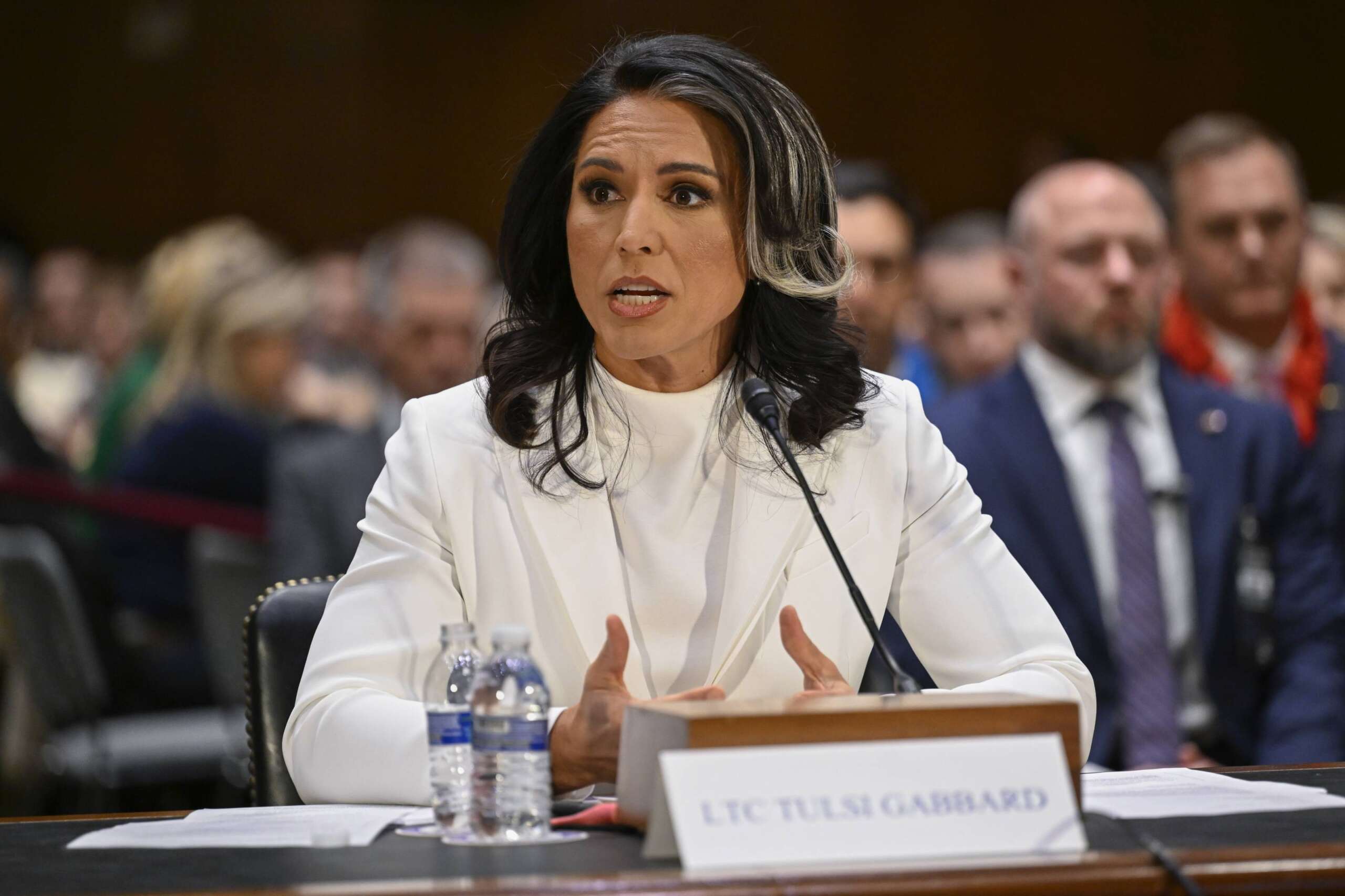
Gabbard resigns as director of national intelligence
May 22, 2026
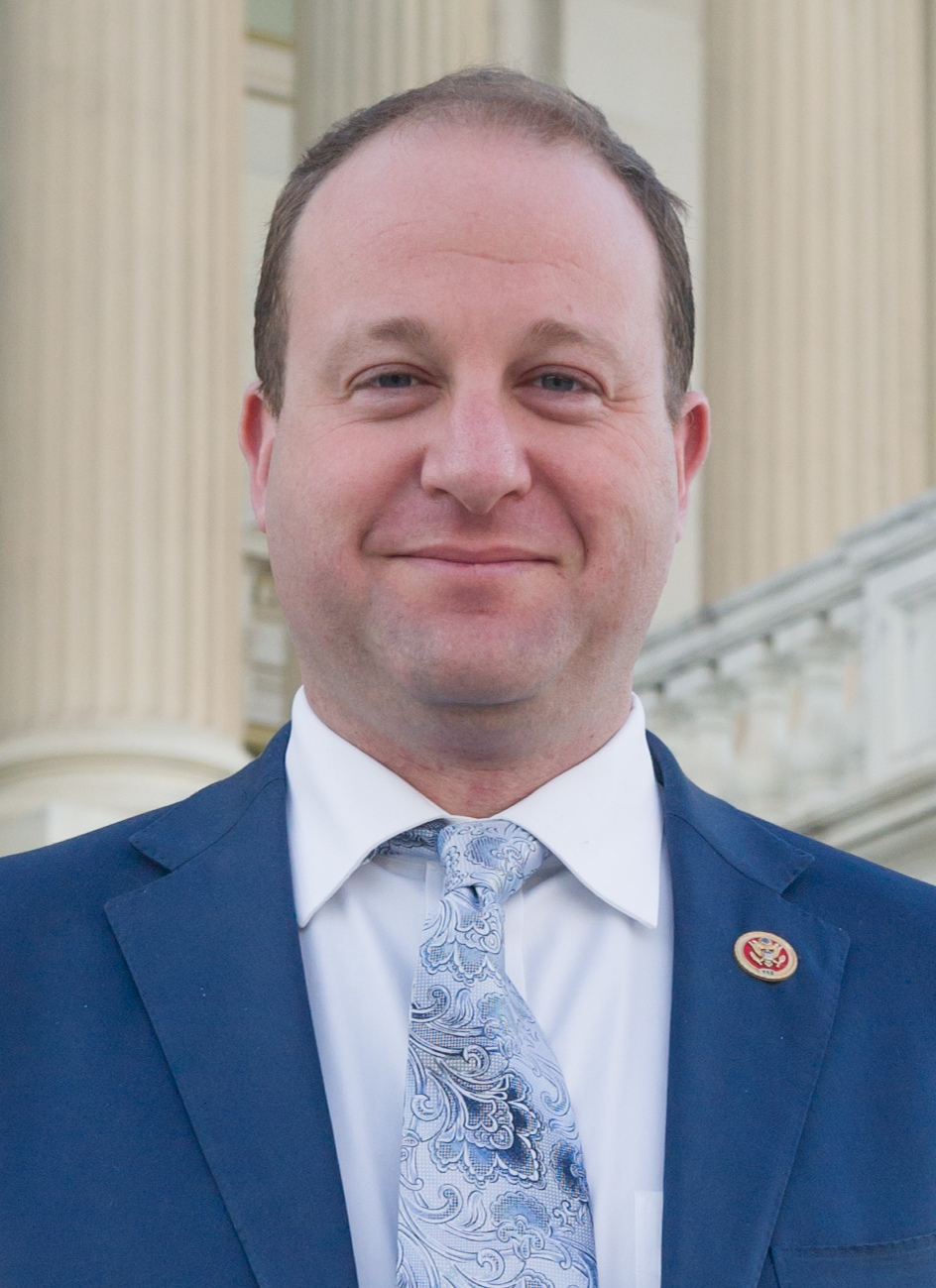
Colorado closes legal gap for defendants found unfit to stand trial
🔍
May 22, 2026
FTC fines Cox Media Group $930K for fake AI listening ad service
🏫
May 22, 2026
Tennessee governor signs Memphis schools state takeover into law
View All Government Topics
769 topics
20 questions
Start the review