May 4, 2026
Trump launches Project Freedom to reopen Strait of Hormuz

15,000 US troops move to free 2,000 ships blocked by Iran
🌍Foreign Policy🛡️National Security🏛️Government📜Constitutional Law
May 4, 2026
15,000 US troops move to free 2,000 ships blocked by Iran
President Trump announced on May 3, 2026 that the United States would begin escorting stranded commercial ships through the Strait of Hormuz, naming the effort 'Project Freedom.' US Central Command, led by Admiral Brad Cooper, said the operation would start Monday and use 15,000 service members, guided-missile destroyers, more than 100 land and sea-based aircraft, and multi-domain unmanned platforms. The Strait of Hormuz is the world's most critical oil chokepoint, carrying roughly a quarter of all seaborne oil trade.
The International Maritime Organization estimates that about 20,000 seafarers are stranded aboard roughly 2,000 vessels in the Persian Gulf. Iran blockaded the Strait after the US and Israel launched airstrikes on Tehran on February 28, 2026, cutting off access to and from the Persian Gulf for international shipping. The blockade has disrupted global energy markets and supply chains for three months.
The 2026 Iran conflict began on February 28, when CENTCOM Commander Admiral Brad Cooper ordered US airstrikes on Iran in coordination with Israeli forces. Iran responded by closing the Strait of Hormuz and launching missile attacks against US regional bases. A ceasefire brokered through Pakistan, Qatar, and Oman took effect on April 8, halting active strikes but leaving the Strait closed and negotiations unresolved.
Since the ceasefire, talks between Tehran and Washington have stalled over the fundamental terms of any final deal. Iran demands the US recognize its right to enrich uranium and withdraw forces from the region. The US has demanded Iran dismantle its nuclear infrastructure. Neither side has agreed to the other's core conditions, leaving both the ceasefire and the Strait's status in limbo.
Iran declared Project Freedom a ceasefire violation. Ebrahim Azizi, head of Iran's parliament National Security Commission, warned that any US military interference in the Strait would breach the April 8 agreement. Maj. Gen. Ali Abdollahi, commander of Iran's Khatam al-Anbiya Central Headquarters, went further and said that 'any foreign armed force, especially the invading US army, if they intend to approach and enter the Strait of Hormuz, will be subjected to attack.'
Two American-flagged merchant vessels completed transit through the Strait on May 4 under US military escort — the first commercial crossings since February. Iran did not immediately fire on the convoy, but Abdollahi's threat remained in effect and Iranian patrol boats were reported nearby. The operation opened a direct military confrontation risk between US and Iranian forces despite the ceasefire.
The Strait of Hormuz is 21 miles wide at its narrowest point between Iran and Oman. About 17 million barrels of oil pass through it daily, representing roughly 25% of all seaborne oil trade. Qatar, Kuwait, Iraq, and Saudi Arabia all depend on it for petroleum exports. The closure since February has redirected tankers around the Cape of Good Hope, adding weeks and significant cost to shipments. Global fuel prices have risen sharply, and fertilizer and LNG shortages have affected food production in import-dependent countries.
The United States itself does not depend heavily on Gulf oil, since domestic shale production supplies most US needs. But US allies in Europe and Asia — especially Japan, South Korea, and India — rely on Persian Gulf oil. The economic pressure from the Strait's closure has created diplomatic friction between Washington and those allies, who have pushed Trump to negotiate rather than escalate.
Trump invoked his authority as commander in chief under Article II, Section 2 of the Constitution to order Project Freedom. He did not seek congressional authorization, consult the War Powers Resolution, or submit a formal report to Congress describing the deployment. Under the 1973 War Powers Resolution, the president must notify Congress within 48 hours of introducing forces into hostilities and must withdraw them within 60 days absent congressional authorization.
The 60-day clock from the February 28 start of hostilities expired on or around April 29, 2026 — before Project Freedom was announced. The ceasefire's effect on the War Powers clock is legally contested. Some scholars argue the clock paused during the ceasefire; others argue it continued running and Trump is now legally required to withdraw forces. Congress has not voted on an Authorization for Use of Military Force related to Iran.
Iran submitted a 14-point counter-proposal to the United States via Pakistani intermediary on May 2, 2026. The plan called for a 30-day timetable to resolve all outstanding issues, a guarantee the US and Israel would not attack Iran again, a US military withdrawal from the region surrounding Iran, the release of frozen Iranian assets estimated at more than $100 billion, payment of war reparations, and the lifting of all US sanctions. It also proposed a new international mechanism governing the Strait of Hormuz rather than unilateral US military access.
Iran's foreign ministry explicitly stated the proposal contains no provisions related to Iran's nuclear program. Tehran said nuclear-related issues would be addressed in a separate, subsequent round of talks, and it demanded the US first acknowledge Iran's right to enrich uranium for peaceful purposes. The US position remains that Iran must dismantle its nuclear enrichment infrastructure entirely. Washington conveyed its initial response to the 14-point plan via Pakistan, and Iran said it was reviewing that response.
Trump's decision to launch Project Freedom while still receiving Iran's peace proposal raised questions about the administration's diplomatic strategy. Secretary of War  Pete Hegseth appeared alongside Admiral Cooper to announce the military details, while Trump simultaneously told reporters he was having 'very positive discussions' with Iran. The operation effectively applies military pressure during ongoing negotiations — a tactic Trump has used repeatedly but one that Iran's leadership said makes a deal harder.
Allies in Europe and Asia expressed concern. Several European nations have naval vessels and commercial interests in the Persian Gulf and pushed Washington to coordinate before launching a military operation that could trigger a new round of hostilities. Some Republican senators, including members of the Armed Services Committee, asked the White House to brief Congress on the legal basis for Project Freedom before ships began moving.
The constitutional questions surrounding Project Freedom extend beyond the War Powers clock. Congress has not declared war against Iran or passed an AUMF. Trump has asserted that the February airstrikes, the ongoing ceasefire posture, and Project Freedom all fall within his commander-in-chief authority as responses to ongoing Iranian aggression. Critics argue that escorting commercial ships through a foreign country's claimed territorial waters constitutes an act of war requiring congressional authorization.
Lower courts have generally refused to hear War Powers cases on justiciability grounds, ruling that only Congress has standing to challenge presidential military decisions. This has given every president since Nixon effectively unchecked short-to-medium-term military authority, so long as Congress does not move to cut off funding or force a withdrawal vote.
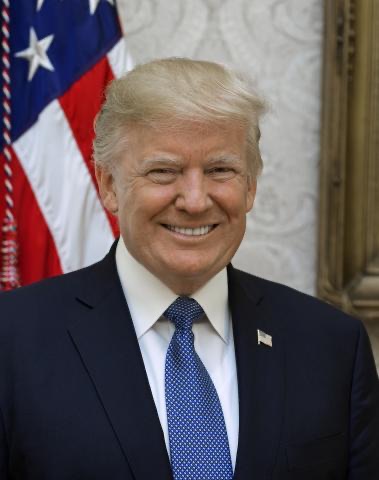
President of the United States
Admiral, Commander of US Central Command

Secretary of War
Major General, Commander of Iran's Khatam al-Anbiya Central Headquarters
Head of Iran Parliament's National Security and Foreign Policy Commission
civic action
Contact your senator about the War Powers Resolution
Congress has not authorized military operations in Iran under the War Powers Resolution, and the 60-day clock from the February 28 airstrikes may have already expired. You can contact your senator to ask whether they support an AUMF vote or will invoke the War Powers Resolution to require one.
Hi, I'm [name] from [city, state]. I'm calling about the War Powers Resolution and the US military operations in the Strait of Hormuz. The 60-day authorization clock from the February 28 Iran airstrikes may have already expired, and no congressional AUMF has been passed. I'd like to know whether Senator [name] supports requiring the president to seek formal congressional authorization before continuing military operations, including Project Freedom. Will they co-sponsor a resolution invoking the War Powers Act?
civic action
Contact your representative to call for a floor vote on Iran authorization
The Constitution gives Congress the power to declare war. House members can use discharge petitions, floor motions, or NDAA amendments to force a vote on authorizing military operations in Iran.
Hi, my name is [name] from [city, state]. I'm calling about US military operations in Iran and the Strait of Hormuz. Project Freedom involves 15,000 troops and risks renewed conflict with Iran despite an ongoing ceasefire. I want to ask whether Representative [name] will push for a floor vote on an Authorization for Use of Military Force for Iran, and whether they'll support the War Powers Resolution being invoked.
research
Track Strait of Hormuz trade and energy impacts using EIA data
The US Energy Information Administration publishes regular data on the Strait of Hormuz's role in global oil markets and the economic effects of disruptions.
Visit the EIA's oil transport chokepoints page at eia.gov/finance/markets/crudeoil/transport.php to see daily oil flow data through the Strait of Hormuz and impact estimates when disrupted.