Trump publicly pressures Ukraine to concede territory to Russia

🌍Foreign Policy🏛️Government🛡️National Security
On February 16, 2026, President Trump told reporters aboard Air Force One: 'Ukraine better come to the table fast — it's all I'm telling you.' He made the statement one day before his special envoy  Steve Witkoff and adviser Jared Kushner attended two days of trilateral talks in Geneva between U.S., Russian, and Ukrainian delegations. The remark publicly aligned U.S. pressure with Russia's core negotiating demand, not Ukraine's.
Russia is demanding that Ukraine withdraw from the roughly 20 percent of Donetsk Oblast that Ukrainian forces still control, and that all negotiating parties formally recognize Russian sovereignty over the four Ukrainian oblasts Russia claims — Donetsk, Luhansk, Zaporizhzhia, and Kherson — including areas Russia has not yet captured militarily. Russian Security Council Deputy Chair Dmitry Medvedev stated on February 2, 2026 that Moscow's demands 'remain unchanged,' including neutrality, demilitarization, and cession of all four oblasts.
Ukraine's position is to freeze current front lines rather than withdraw further. Zelensky has rejected ceding the remaining Ukrainian-controlled parts of Donetsk, calling any such proposal 'unbelievable.'
Ukraine has proposed that any deal be put to a national referendum, but both Kyiv and analysts believe a deal requiring Ukrainian withdrawal from Donetsk would be voted down. Zelensky also demanded a security guarantee of at least 20 years from the U.S. as a precondition for any agreement.
Zelensky publicly challenged Trump's framing at the Munich Security Conference on February 15, saying the U.S. 'too often' discusses concessions 'only in the context of Ukraine, not Russia.' On February 17, after Trump's Air Force One statement, Zelensky said Trump was acting 'not fair' by publicly calling on Ukraine to concede rather than pressing Russia equally. He told reporters: 'It is a little bit of pressure, yes.'
Steve Witkoff is a wealthy real estate developer who has been a Trump friend for decades. Jared Kushner, Trump's son-in-law, holds no official government title.
Both are conducting diplomacy without the formal structures of the State Department or National Security Council — a deliberate departure from traditional U.S. diplomatic channels.
CNN described Trump as 'betting on diplomacy without diplomats.' The approach sidelines career foreign service officers with Ukraine expertise.
The Geneva talks on February 17-18 divided into two subgroups: a military track discussing ceasefire monitoring and force disengagement, and a political track on territorial boundaries and sovereignty
Military discussions made 'almost everything agreed upon' on monitoring mechanisms
Political discussions stalled Russia introduced a new demand during the talks — that all participating countries formally recognize Donbas as Russian before any deal — which Ukraine and Europe rejected.
European allies were largely excluded from the Geneva framework. EU Commission President Ursula von der Leyen stated Ukraine's borders 'cannot be changed by force,' its military 'must not be weakened,' and Ukraine has a right to its 'European destiny.'
German Foreign Minister Johann Wadephul characterized the talks as a 'decisive success' for Europe but also noted that NATO's core security concerns were 'excluded from the framework.' Multiple European officials told the Financial Times the approach signaled Washington was 'losing interest in close cooperation with its allies.'
International mediation theory distinguishes between 'neutral' and 'interested' mediators. In neutral mediation, the mediator holds no stake in the outcome and treats parties equally.
In 'interested' or 'power' mediation, a powerful state uses leverage to shape outcomes — often taking one side's position to move negotiations forward. Harvard's Program on Negotiation has found that when mediators are seen as biased, the losing party's willingness to comply with any resulting agreement drops significantly, raising questions about the durability of any Ukraine deal negotiated under these conditions.
The U.S. historically has struggled to act as an impartial mediator in conflicts where it has strategic interests. In the Oslo Accords process, senior State Department official Aaron David Miller later wrote that the U.S. acted as 'Israel's attorney,' pre-coordinating U.S. positions with Israel before presenting them to Palestinian negotiators.
That perceived bias contributed to Palestinian mistrust and the eventual collapse of the Camp David 2000 talks. The Ukraine situation raises parallel questions: if Russia knows the U.S. is pressing Ukraine harder than Russia, does that reduce Russia's incentive to compromise?
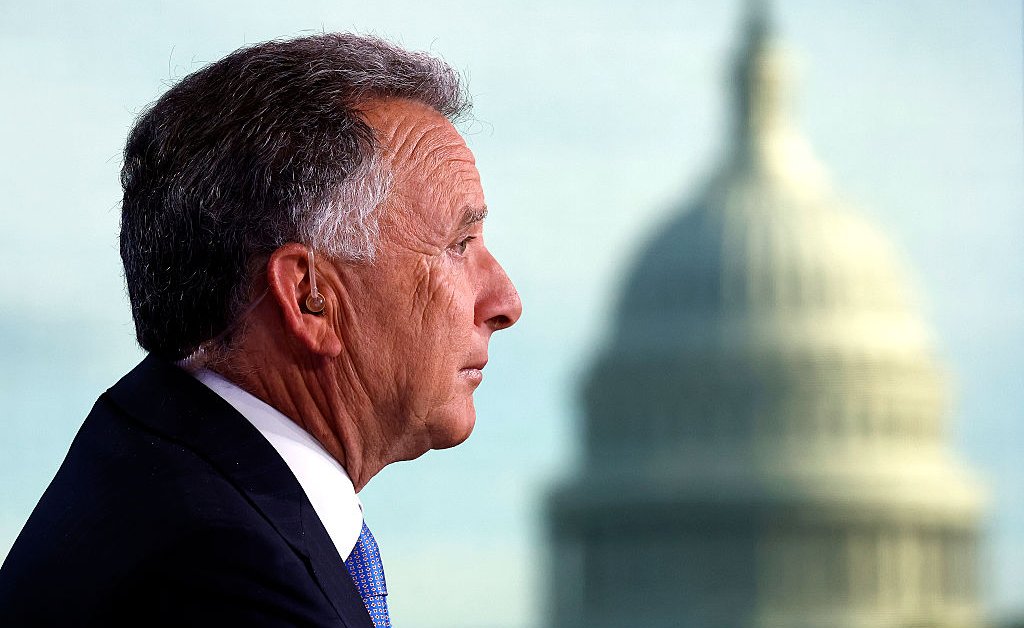
President of the United States; U.S. lead on Ukraine peace negotiations
U.S. Special Envoy for Peace Missions
Informal Trump adviser; Trump son-in-law
President of Ukraine
President, European Commission
Deputy Chair, Russian Security Council
civic action
Contact your senators and representative about U.S. Ukraine policy oversight
Congress has constitutional authority over foreign policy, including declaring war and authorizing military aid. The House passed a defense policy bill limiting military withdrawal from Europe and authorizing Ukraine security assistance, even as the Trump administration requested no such funding. You can contact your representatives to express your views on U.S. policy toward the negotiations.
When calling your senator or representative: 'I'm calling about the Ukraine peace negotiations. I'm concerned that the U.S. position appears to be pressuring Ukraine more than Russia to make territorial concessions. Can you tell me what oversight the Foreign Relations Committee is exercising over these negotiations, and whether the administration is consulting Congress as required?'
media literacy
Track what the Geneva talks actually produced versus what the U.S. described
White House spokesperson Caroline Levitt described 'significant progress' after the Geneva talks. Zelensky described stalled political talks and a new Russian precondition. NATO allies said their concerns were 'excluded from the framework.' Reading primary sources — the Kyiv Independent, Novaya Gazeta Europe, and Al Jazeera's live coverage — alongside official U.S. readouts gives a more complete picture of what actually happened.
To evaluate diplomatic news: First, read the official U.S. readout (White House press secretary statement). Then read Zelensky's own statement. Then read independent Ukrainian and European coverage. Ask: what concrete agreements were reached? What specifically stalled? What new demands were introduced? Who described 'progress' and what did they mean by it?
civic education
Understand what international law says about forced territorial changes
Article 2(4) of the UN Charter prohibits the use of force to change another state's territorial integrity. The Council on Foreign Relations and multiple international law scholars have characterized Russia's invasion as a 'flagrant violation' of Article 2(4). Understanding this legal baseline matters for evaluating what any peace deal would mean — and why Ukrainian officials say ceding occupied territory would be 'illegal' under their own constitution and international norms.
To understand the legal framework: The UN Charter's Article 2(4) prohibits using force to change borders. Russia's 2022 invasion violated this provision. Any peace deal that recognizes Russian control of seized territory involves a tension between ending active conflict and legitimizing a border change achieved through force. This doesn't mean a deal is impossible — states have signed such agreements before — but it explains why Ukraine and European allies frame the territorial question as a matter of legal principle, not just negotiating preference.