March 8, 2026
UK reverses on Iran war bases; Trump says he won't forget
Starmer gave the US the bases it asked for and Trump rebuked him anyway
🌍Foreign Policy🛡️National Security🏛️Government🔍Policy Analysis
March 8, 2026
Starmer gave the US the bases it asked for and Trump rebuked him anyway
Diego Garcia and RAF Fairford are two of the most strategically significant military assets the UK operates jointly with the United States. Diego Garcia sits 2,200 miles from Iran in the Indian Ocean and is home to B-2 stealth bombers and B-52 heavy bombers capable of carrying the Massive Ordnance Penetrator, a 30,000-pound bomb designed specifically to destroy hardened underground facilities like Iran's Fordow nuclear site. RAF Fairford in Gloucestershire is the only UK base certified for B-2 operations in Europe.
In the weeks before Trump launched Operation Epic Fury on Feb. 28, 2026, Starmer reportedly refused U.S. requests for access to both facilities. CNN, the Times of Israel, and Fox News all reported independently that Starmer declined to authorize U.S. use of Diego Garcia and UK bases for offensive strikes against Iran. UK officials described Starmer's position as a refusal to participate in what they characterized as a unilateral U.S. military escalation without explicit UK parliamentary authorization.
Starmer's reversal came on March 7-8, after Operation Epic Fury was already a week old. The UK Defence Ministry issued a statement saying Britain had authorized U.S. access to its military bases for 'limited defensive purposes.' That framing gave Starmer political cover with Labour Party critics at home while still providing the U.S. with the access it had sought.
In part, the UK's initial refusal reflected a genuine legal concern: UK legal advisers warned that under international law, there is no clear distinction between a state carrying out an attack and states supporting it if they have 'knowledge of the circumstances of the internationally wrongful act.' That legal risk didn't disappear after the reversal. It was managed politically rather than resolved legally.
Trump's response to the UK reversal was a public rebuke. He posted on Truth Social: 'The United Kingdom, our once Great Ally, maybe the Greatest of them all, is finally giving serious thought to sending two aircraft carriers to the Middle East.' He followed with: 'That's OK, Prime Minister Starmer, we don't need them any longer — But we will remember. We don't need people that join Wars after we've already won!'
The post came after the UK had just given Trump what he asked for. Trump's complaint was not about the eventual decision but about the delay. The public humiliation of Starmer served as a warning to other allies: hesitation has a cost, even if you eventually cooperate. Several European foreign ministers cited Trump's treatment of Starmer as proof that supporting the U.S. on the Iran war carried political risk regardless of the decision they made.
Starmer held a phone call with Trump on March 8, 2026, after the Truth Social post. The UK government's readout said the two leaders discussed 'military co-operation through the use of RAF bases in support of the collective self-defence of partners in the region' and that Starmer expressed 'heartfelt condolences' for the six U.S. soldiers killed that day. The readout did not address Trump's public criticism.
At home, Starmer faced an immediate backlash from within his own Labour Party. Several Labour MPs said the government should have sought parliamentary approval before authorizing U.S. military use of UK bases. UK law does not require a parliamentary vote for the executive to authorize foreign military access to British soil, but the convention of consulting Parliament on significant military decisions is well-established. Starmer bypassed that convention, and critics inside and outside Labour said it weakened democratic oversight of Britain's role in the conflict.
Diego Garcia sits on territory whose sovereignty Starmer agreed in 2024 to transfer to Mauritius. The deal was signed formally on May 22, 2025, with the UK retaining a 99-year lease on Diego Garcia and paying Mauritius roughly £3.4 billion over that period. The deal was motivated in part by a 2019 International Court of Justice advisory opinion declaring UK administration of the Chagos Archipelago unlawful.
Trump had initially approved the deal in April 2025 but reversed course by January 2026, calling it 'a gift to China' and publicly attacking Starmer over it. The UK Parliament paused ratification in January 2026 amid pressure from the Trump administration. As of March 2026, the deal had not been formally ratified, leaving Diego Garcia's long-term legal status unresolved at the same moment the base was being used for active U.S. military operations.
B-2 bombers flying from Diego Garcia can strike Iran and return to base without refueling. The aircraft has a combat radius of roughly 4,000 nautical miles, making Diego Garcia's distance from Iran, 2,200 miles, well within operational range. The B-2 can carry up to 40,000 pounds of ordnance, including the Massive Ordnance Penetrator designed to penetrate hardened underground bunkers where Iran's uranium enrichment facility at Fordow is located.
Without Diego Garcia, the U.S. would need carrier-based strike aircraft with shorter range or in-flight refueling, both of which increase operational complexity and reduce strike force flexibility. RAF Fairford's certification for B-2 operations gives the U.S. a European staging option that adds range and redundancy to its strike posture against hardened targets.
The UK Parliament debate on the base authorization was contentious. Labour MPs from the left wing questioned why Starmer granted access without parliamentary approval. Conservative opposition leader Kemi Badenoch argued the UK should have authorized it faster and without conditions. The Liberal Democrats called for a formal parliamentary vote.
Starmer's government said the executive power to grant base access is established under the 1966 Diego Garcia treaty and doesn't require Parliament, technically correct, but the political backlash showed that democratic convention was being overridden. Parliament wanted a say but couldn't force one, illustrating a gap in UK constitutional practice where executive authority over military basing decisions faces no formal legislative check.
'Limited defensive purposes' has no agreed legal definition in the UK-U.S. base access agreement. The 1966 treaty permits joint use of the base but doesn't distinguish between offensive and defensive operations. The distinction Starmer inserted was political, not legal.
Air defense, missile strikes, and reconnaissance missions can all be framed as defensive depending on context. If the U.S. was dropping munitions on Iranian targets from those bases, the operational difference between offensive and defensive was minimal. The UK's parliamentary oversight could theoretically demand accountability if operations exceeded that framing, but the government gave no enforcement mechanism to back up the distinction it had drawn.
Spain publicly refused U.S. requests for base access for Iran strikes, then disputed the White House's claim that Spain had agreed, creating an open diplomatic rift in February 2026. Germany and France declined to commit military forces but also didn't formally refuse. The pattern across NATO was fragmentation: each ally made independent decisions without collective alliance coordination.
That fragmentation was exactly what Trump's rebuke of Starmer was designed to accelerate. By punishing cooperation with public criticism and offering no reward for compliance, Trump signaled to other allies that supporting the U.S. brought no diplomatic benefit. Several European governments cited the Starmer episode as a reason to stay out of the conflict entirely, reasoning that hesitation and refusal looked identical in terms of Washington's response.
The Chagos Islands sovereignty transfer was supposed to be ratified by 2024 under the original deal timeline. Under the agreement, Mauritius gains sovereignty while the UK retains a 99-year lease on Diego Garcia. Trump opposed it vigorously, calling it a Chinese strategy to gain future leverage over a critical U.S. military base.
Trump's Truth Social post combined both grievances: Starmer's delayed base authorization and the Chagos sovereignty transfer. Starmer was being publicly humiliated simultaneously over a decision he made before the war began and one he made in response to the war. UK opposition leaders from the Conservatives and Reform UK called on Starmer to clarify whether the Chagos deal affected U.S. access rights to Diego Garcia, and at what cost to British taxpayers, given the £3.4 billion lease commitment.
NATO Secretary General Mark Rutte was watching individual ally decisions fracture the alliance's collective posture on the war, with the UK's reversal and Trump's rebuke illustrating the risks of both compliance and non-compliance. No NATO ally had formally authorized offensive strike support as of March 8. The UK's 'defensive purposes' framing was the closest any ally had come to formal involvement, and even that produced a public rebuke from the president it was meant to satisfy.
Each NATO member that refused or hedged its position preserved domestic political standing but reduced the collective credibility of alliance commitments. Each one that cooperated faced public humiliation without gaining diplomatic benefit. The Starmer episode gave concrete form to that dilemma for every European government watching from the sidelines.
Prime Minister of the United Kingdom
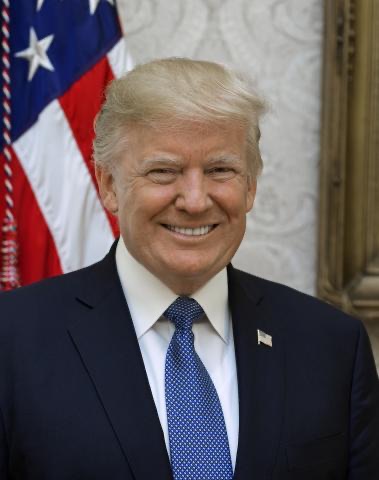
President of the United States
UK Secretary of State for Defence
UK Foreign Secretary
NATO Secretary General
UK Conservative Party Leader, Leader of the Opposition
Reform UK Party Leader, Member of Parliament
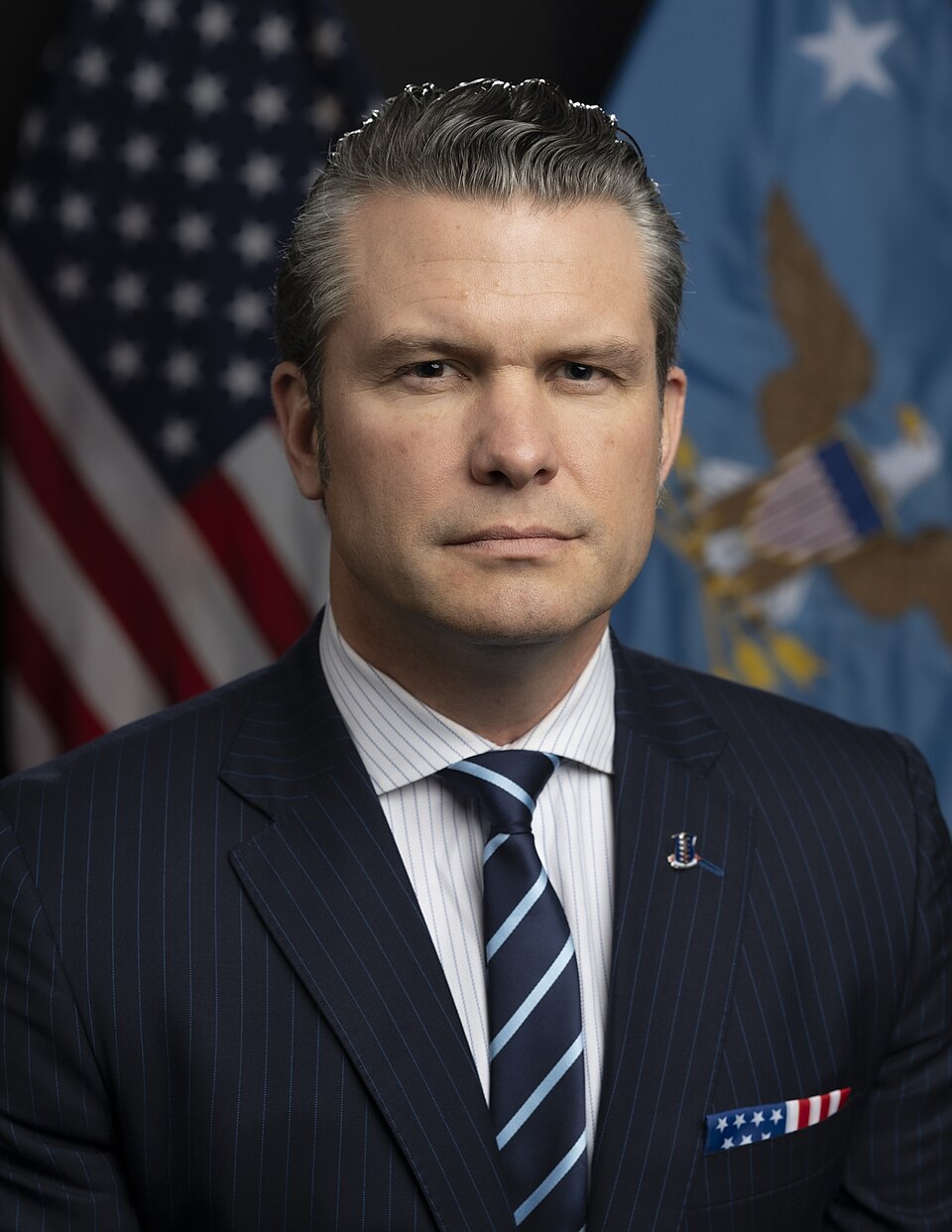
U.S. Secretary of Defense
civic action
Contact your congressional representative about the legal basis for the Iran war
The U.S. is conducting military operations in Iran without a formal declaration of war or a new Authorization for Use of Military Force. The UK base access expands those operations. Congress has the power to demand the legal justification for both the war and the use of allied facilities.
Hi, I'm [name] from [city]. I'm calling about the U.S. military operations in Iran using UK bases at Diego Garcia and RAF Fairford. Congress voted down a war powers resolution 219-212. I want to know whether Representative [name] supports requiring a formal Authorization for Use of Military Force before the U.S. expands operations using allied military facilities. Can you tell me the Representative's position?
civic engagement
Track how U.S. allies are responding to the Iran war through congressional hearings
The Senate Foreign Relations Committee and House Foreign Affairs Committee hold hearings on U.S. military operations abroad. Watching and contacting these committees when allied relations are strained gives citizens a channel to demand transparency on the diplomatic costs of the war.
Hi, I'm calling to ask whether the Senate Foreign Relations Committee plans to hold hearings on the diplomatic impact of Operation Epic Fury, including the UK-U.S. tensions over base access and Trump's public rebuke of Prime Minister Starmer. The public deserves to understand how the war is affecting U.S. alliances.